‘Ted Lasso’ discovers soccer’s clique problem, one that the USWNT has mastered
Spoiler alert: This article contains spoilers for this week’s episode of Ted Lasso Apple TV’s favorite soccer coach, Ted Lasso, has dealt with a lot over the...
Spoiler alert: This article contains spoilers for this week's episode of Ted Lasso
Apple TV's favorite soccer coach, Ted Lasso, has dealt with a lot over the previous three seasons: divorce, egos, bullying, relegation, panic attacks, promotion and Jamie Tartt.
But in the latest episode of season 4, AFC Richmond's women's team has introduced him to a new problem: cliques.
They are inevitable and, at their most extreme, they can tear a team apart.
As Dr. Sharon Fieldstone, Ted's fictional beloved psychologist, explains to former Richmond reporter Trent Crimm on his podcast, if coaches "lose the dressing room, they lose the team."
"Successful teams are happy teams, and happy teams have coaches that establish a culture of communication and trust," she says. "The majority of that happens in the dressing room."
Cliques are a reality of soccer, and they are considerably more complicated than "Ted Lasso" suggests. They exist on almost every team from youth to professional and even championship-winning teams like the 2015 and 2019 U.S. women's national teams.
"Even within our squad, the culture has changed," former U.S. forward Carli Lloyd said in an episode of Hope Solo 's now-defunct podcast recorded in 2022, a few months after her retirement as one of the team's all-time goalscorers. Lloyd and Solo were roommates and close friends during the 2015 World Cup.
"It was really tough and challenging to play these last several years. To be quite honest, I hated it. It wasn't fun going in. It was only for love of the game, really, for me. I wanted to win and wanted to help the team, but the culture within the team was the worst I had ever seen it."
Lloyd and Solo similarly considered themselves "black sheep" within the group.
Expecting 26 players to become best friends simply because they wear the same jersey is unrealistic. Every player enters a locker room with a different history, relationships, loyalties and different amounts of power.
A 16-year-old rookie midfielder might sit next to a 35-year-old defender at the end of her career. A player fighting for her next contract might share a locker with a national team star earning considerably more in salary and endorsements. International players arrive sometimes without speaking the language. Former college and youth teammates reconnect. Others may actively dislike each other after years spent as rivals.
According to a study published in The Sport Psychologist , based on interviews with 18 collegiate athletes across nine teams, athletes considered clique formation "inevitable." Age, tenure, proximity and similarity all helped determine which athletes gravitated toward one another.
So how do you stop a clique from destroying a team? As Dr. Fieldstone explains to Crimm: give them a common enemy. Suddenly, the divisions inside the locker room matter less, and the team can unite against something bigger than itself. Perhaps the best example of this comes from one of the most successful locker rooms in women's soccer history.
The U.S. teams that won back-to-back World Cup titles in 2015 and 2019 were full of enormous personalities, yet they found something more powerful than their competing celebrity. They got angry.
The 2015 World Cup victory was followed by one of the most consequential collective fights in the history of women's sports. The players turned their attention toward U.S. Soccer and what they viewed as systemic inequality in pay, travel, playing conditions and treatment.
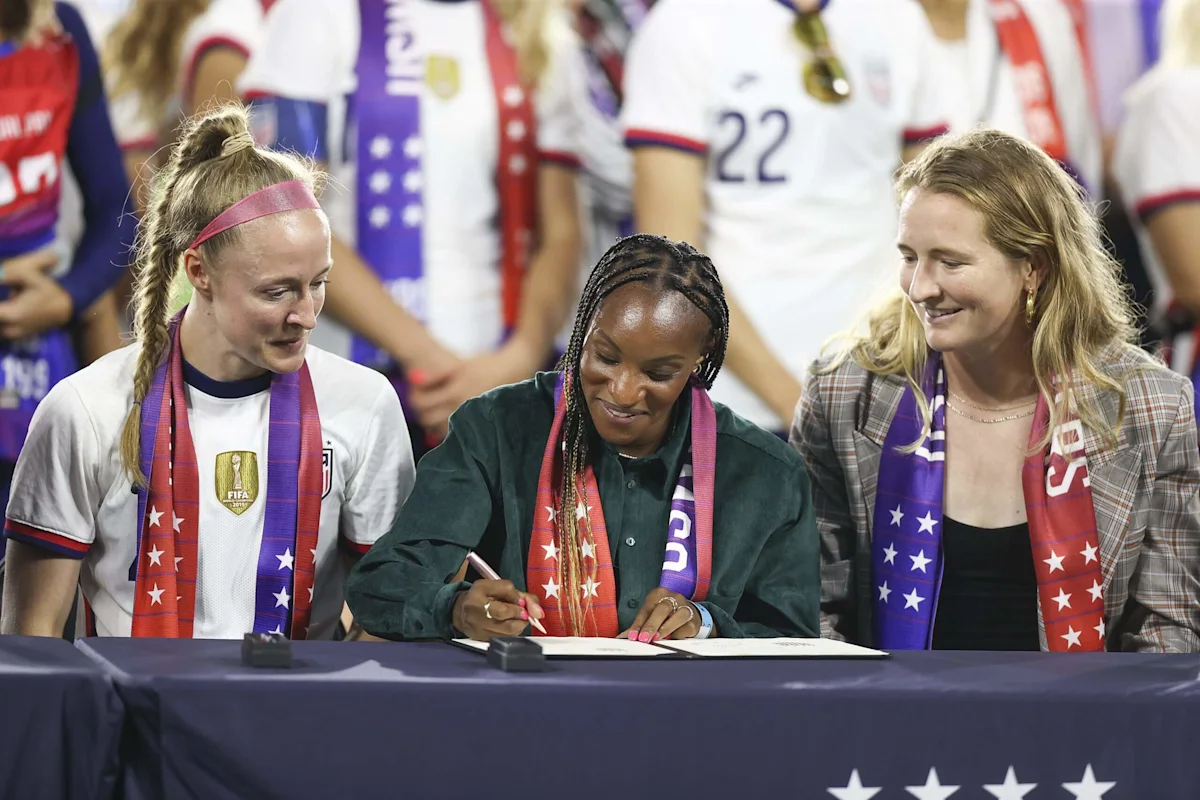
In March 2016, Lloyd, Solo, Alex Morgan , Becky Sauerbrunn and Megan Rapinoe filed an Equal Employment Opportunity Commission complaint alleging wage discrimination against U.S. Soccer.
Sauerbrunn explained at the time that the entire team had agreed to the complaint. The five players had been elected by their teammates to represent them in collective bargaining and therefore became the names attached to the filing.
Players with different personalities, ideologies and levels of fame suddenly had a shared objective: equal pay. The fight was bigger than the cliques.
As the battle extended into the next generation, so did the collective nature of the team.
By the 2019 World Cup, Solo was no longer in goal, but many players from the 2015 squad remained. The fight with U.S. Soccer had escalated dramatically, with 28 USWNT players filing a gender-discrimination lawsuit just months before the tournament that they eventually won.
The U.S. women's national team is hardly the only team to discover that getting everyone pulling in the same direction is easier said than done; but done right it can be effective.
Arsenal and England captain Leah Williamson served as an authenticity consultant for "Ted Lasso's" fourth season, answering writers' questions about women's football throughout production. We can't say for certain which parts of the show she directly advised on. However, Williamson experienced both a club team that overcame reported locker room rifts when Arsenal won the UEFA Champions League and a national team that had plenty of outside noise heading into the 2025 European Championship.
Ahead of the 2025 Euros, England goalkeeper Mary Earps abruptly retired from international football and defender Millie Bright withdrew from selection due to mental and physical burnout. Neither was necessarily in coach Sarina Wiegman's starting line-up plans despite their successful legacy with the team. When giant personalities exit the locker room, it shakes up the dynamics. Still, the team found a way to overcome early tournament struggles to win a second European title. Wiegman's explanation for the success: "B****** get s*** done."
For the U.S., it was fighting for equal pay. For the Lionesses, it was silencing the doubters. For AFC Richmond women, it was trivia and a good old-fashioned pub fight against a group of misogynistic hecklers at the Crown & Anchor.
Because sometimes it's not about being friends. It's about getting s*** done.
US Women's national team, NWSL, Sports Business, Women's Soccer, Culture, Women's Super League
Topics in this story
Gathered from external sources. Rights to this text belong to whoever originally published it.