The biggest lawn mistake people make every fall, according to experts
Here's what pros say you should actually be doing now — plus the gear that makes it easier.
Our experts independently review everything we recommend. If you buy through our links, we may earn commission.
Growing up in Michigan, I spent most of my summers outside, running around on a lush green lawn. Now that I live in Colorado, which gets much, much less rain, keeping my lawn green in the summer is a battle that requires a little more work than mowing it once a week and occasionally remembering to turn on the sprinklers, starting with thinking ahead once fall rolls around. While it might seem like you can stop worrying about your lawn once the kids go back to school and the temps start dropping, that's not the case.
What you do to your lawn over the next few months can have a big impact on what you're working with once the snow melts. Mow too often, stop watering too soon or wait too long to put down grass seed, and you could be making more work for yourself next year.
"This is the time that there's a lot of opportunity to prep yourself for the winter, to get yourself ready for the spring," explains Sara Bendrick , professional landscape designer and host of the DIY Network's I Hate My Yard . "Setting up your yard in the fall will really give you dividends come spring. Fall is when you plant your bulbs and you get rewarded in the spring with your flowers. It's when you prep your lawn so that it can withstand the winter and look beautiful the next year."
Mistake No. 1: Mowing as often as you did all summer
For most of the summer, mowing the lawn once a week makes sense. By the time fall rolls around, sticking to that schedule doesn't. As temperatures drop, your grass doesn't grow as quickly. That means a lawn that needed mowing every seven days in July might be fine going several days longer in September or October.
Depending on where you live, fall tends to be wetter as well. "Typically, you want to be careful around the moisture," says Bendrick. "If it's really raining out, if it's muddy, it's better to avoid mowing than to compact the soil too much."
Those green blades aren't sitting there looking pretty, either. They're still photosynthesizing and helping the plant store energy as it prepares for winter. If the grass doesn't need it, leave it alone. One less weekend chore is a win anyway.
Did you know that Americans use a collective 800 million gallons of gas per year on power tools to maintain the landscapes of their home? This cordless electric lawn mower is a far more efficient alternative to traditional gas mowers — and it also happens to be more powerful. It runs for 30 minutes on a single charge, so you can cut the grass or mulch those leaves in a session or two, then kick back and enjoy the rest of your weekend.
Looking for something you don't need to push? I'm all about this editor-tested self-propelled mower .
This self-propelled mower glides through grass and leaves, sparing your back the strain. And, since it's battery-powered, that means no gas, no fumes and far less noise. My neighbor has this mower and I can attest: You can actually hold a conversation while it runs.
And the real win? Mulching. Instead of bagging, it effortlessly shreds both grass and scattered leaves into fine bits that feed your lawn. Easier on you, better for your yard, better for the environment, quieter for everyone.
Mistake No. 2: Giving your lawn one last buzz cut
I've heard this one plenty of times: Before winter, give the lawn one final, extra-short mow so you don't have to worry about it again until spring. Don't.
"If you are wanting to get [your lawn] ready for the winter, then cutting it a little bit lower is ideal because if it's too high, it will lean over on itself too much," Bendrick advises. "Cut lower than usual, but around 2.5 inches is best. Just don't mow too low and scalp the lawn, as that will stress it out."
Cutting grass dramatically shorter doesn't give you a magical head start on spring. You're removing more of the leaf surface the plant uses to produce energy. For common cool-season grasses like Kentucky bluegrass, tall fescue and perennial ryegrass, the recommended length is between 2.5 to 3 inches.
If you're still rocking a gas-powered mower (there's a good chance my Honda lawn mower will outlive me), don't forget to add some fuel stabilizer before putting it away for the winter.
Fall grass tends to be wetter and more easily sticks to the inside of your mower. Instead of reaching under there with your hand to remove all of those clumps of grass, use a deck scraper to do the job. I like to give my mower a thorough cleaning before winter hits to prevent rust and that awful, rotten-grass smell that quickly fills a shed.
Mistake No. 3: Stopping watering as soon as it cools down
It's 60 degrees outside instead of 90, the grass isn't growing nearly as fast and you're probably not spending every afternoon watching your lawn slowly turn brown. Surely you can turn off the sprinklers, right? Not quite.
While your lawn needs less water in the fall, its roots are still active beneath the surface. You don't want the soil drying out because summer is over. You can start cutting back as temperatures cool and Mother Nature begins helping out with fall rain, but don't shut off your sprinkler system completely.
If you live in an area with freezing winters, you will eventually need to winterize your sprinkler system to prevent damage, but don't confuse winterizing your sprinklers with your lawn never needing another drop of water.
In drier climates, your lawn and garden can still become drought-stressed , especially during long stretches without rain or snow. "If you go through a dry spell, says Bendrick, "turn on the water and give it a little moisture."
There are a couple of important caveats. You don't want to drag out the hose when it's 20 degrees outside and create a backyard skating rink. Colorado State University recommends watering only when the air and soil are above 40 degrees, there's no snow covering the lawn and the water has enough time to soak into the ground before temperatures drop below freezing in order to prevent damage to your lawn.
Your neighbors may think you've lost it when they see you standing outside with a hose in January, but your grass will thank you come April.
When outdoor faucets are left open, frigid air can make its way inside, and when the water inside your pipes freezes, it creates pressure that can be strong enough to cause ruptures. The result? A messy, and potentially very expensive, disaster. After you're done watering, remove your hose and throw on one of these faucet socks for good measure.
You don't need to spend much to keep your lawn watered once the fall rain stops cooperating. This oscillating sprinkler costs less than $20, covers up to 3,000 square feet and lets you adjust the range so you're watering your grass instead of the sidewalk.
Dragging a heavy garden hose out of the garage in the middle of winter is about as appealing as it sounds. This expandable hose weighs just a few pounds and shrinks down when you're finished, making it easy to store and pull out whenever your lawn needs a drink during a dry spell.
Mistake No. 4: Bagging every leaf that lands on your lawn
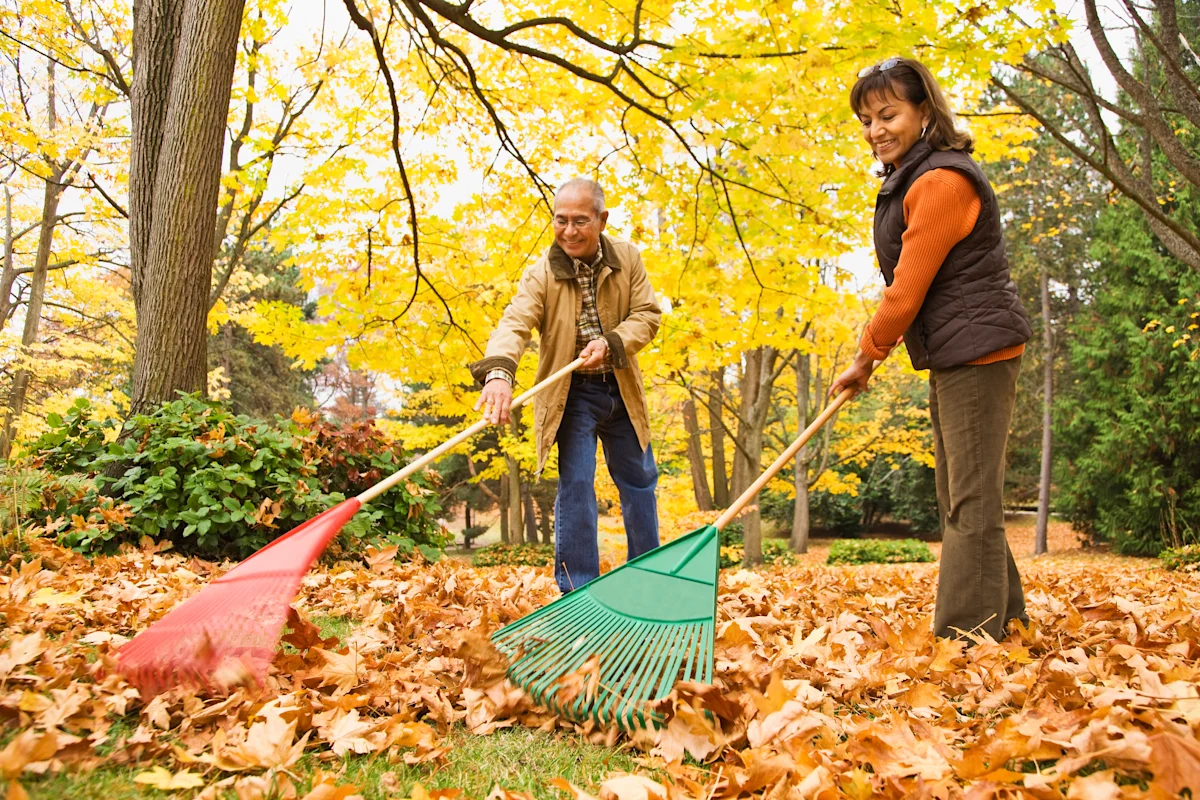
"Leaves are helpful when they decompose and add nutrients to the soil, but when they're collected on your lawn, it just makes a mess," says Bendrick. But if you're spending your weekends filling bag after bag with leaves, I have some good news: You might be working harder than you need to.
Instead of collecting and bagging every last leaf, Bendrick recommends re-using them as food for your soil. The best way to do this is to collect the leaves, shred and then compost them, so that they can be spread evenly, or where your yard needs nutrients the most. "That's a better practice than just leaving the leaves or just running them over with your mower."
There is such a thing as too much of a good thing, though. If the leaves are thick enough that you can barely see the grass underneath, don't leave them there all winter. A heavy, matted layer can block light and smother the grass underneath.
Mulching your leaves is the way to go if you want to return nutrients to your lawn and help it grow back thick and green next spring. But in a tree-filled yard like mine, mulching every single leaf would leave about an inch of leaf dust across the entire lawn. A sweeper like this one easily picks up the excess, without making you haul out the rake or empty your lawn mower bag every 10 feet.
Your yard work may look like Goliath, but this blower/vac/mulcher puts the sling in your hands. One minute the job looms large, the next you're winning with ease. It doesn't just blast leaves into piles (which is pretty darn satisfying) — once they're gathered, it vacuums and mulches them too, turning messy heaps into nutrient-rich lawn food instead of landfill.
I've used (and own) both cordless and corded versions of yard vacs, and while I love the convenience of batteries, corded wins when it comes to sheer power. It blows, vacuums and mulches leaves without losing suction — and you don't have to worry about running out of battery mid-cleanup.
Don't let the Fargo-esque look of this tool scare you off. This electric mulcher makes quick work of twigs, bark and leaves. It's a simple, efficient way to recycle what's already in your yard and feed your soil before winter.
"If I could give this machine eight stars I would. ... Living on a tree-lined street means lots of leaves. The trees are spruce trees, which also tend to shed a good amount of bark. This machine powered through leaves, bark and small twigs effortlessly. And this is only the start of the season! The pile of leaves I gathered together would have taken seven or eight contractor-size trash bags to fill after repeatedly crushing them along the way. [This] filled 2.5 bags in 1/3 of the time. Great machine, wish I bought it sooner," said one reviewer. "Worth every penny."
Many blowers out there have two speeds: on and off. That's what makes this 36-volt blower kit from Stihl stand out. Its variable-speed control lets you dial back the power for lighter jobs instead of blasting grass, leaves and other debris all over the yard. You can also adjust the length of the blower tube to best suit your height or shorten it to get into tight, harder-to-reach areas. "[The BGA 60] is by far my favorite blower," says Bendrick. "I think it's the most versatile between getting enough power, not costing too much and having that variable speed."
Mistake No. 5: Waiting until spring to fix bare spots
Every lawn has that spot. Maybe the dog likes it. Maybe your kids spent all summer running across it. Maybe it's where the inflatable pool sat for three months. Whatever the reason, you've now got a patch of dirt where grass used to be. Don't wait until spring to deal with it.
New grass needs enough time to germinate and establish itself before freezing temperatures arrive. If you're looking outside at the first frost and thinking, I should probably deal with that bare patch, you've likely missed your best window. And once you do seed, keep the surface consistently moist while it germinates.
As far as when to do the seeding? That depends on where you live. "Consult with a local nursery," advises Bendrick. "They will be an excellent resource for what's best in this climate. Should I be seeding now? Should it be early? Should it be later?"
Whether you're putting down fertilizer, grass seed or even rock salt to melt ice on your driveway, this little hand-powered spreader beats trying to distribute it evenly by hand. It's inexpensive, doesn't take up much room in the garage and is a great option if you have a smaller lawn or only need to tackle a few bare spots.
Bare patches can make an otherwise healthy lawn look rough, and this sun and shade mix makes fixing them about as easy as it gets. It combines grass seed with fertilizer, so instead of buying and applying the two separately, you can spread it, water it and let it get to work.
If you've got more ground to cover, upgrade to a walk-behind spreader like this one. The 5,000-square-foot capacity means fewer stops to refill, while the EdgeGuard helps keep fertilizer and grass seed on your lawn instead of scattering it all over your driveway, sidewalk and flower beds.
Don't wait until spring: fall is prime time for weed control. "Weeding in the fall has several benefits," says Tammy Sons, founder and CEO of TN Nursery . "Plants are sending all their energy to the root systems to prepare for winter, which makes removing the entire plant easier and helps prevent regrowth. Weeds are also easier to identify in the fall as all the foliage of desirable plants is dying off."
The way we see it, you've got three options: let the weeds win (not ideal), hire a pro (pricey), or use a tool designed to pull weeds while you stand tall. Weed removers like the Grampa's Weeder use simple leverage to uproot weeds without bending or straining.
Once the weeds are gone, it's worth giving your lawn a little boost. "You can also look at a high potassium (the last number on the fertilizer bag) fertilizer to help feed your lawn through the winter months," explains TJ Breil, better known as the.lawn.dad on Instagram . "Potassium is a great [all-around] nutrient for plants to help them stay healthy during periods of dormancy and kick start the lawn season next year."
With its old-school design, it's easy to see why this clever weeder is such a hit: It's built for use from a standing position, so there's no bending, crouching or back strain required. Simply place the tool over the weed, press it into the soil and lean on the long handle to lift the whole plant — roots and all — in one smooth, non-back-tweaking motion.
More expert-approved fall lawn care gear
You don't need an entire shed full of lawn equipment to get your yard ready for winter. But the right mower, leaf blower, rake and a few other tools can make these jobs a whole lot easier.
"I would say battery at this point rivals gas hand in hand," says Bendrick, adding that it all comes down to which you prefer. "Most people, once they try battery, stick with [it] because they are versatile, they are easier to maintain and store."
Here are some expert-approved picks to help get it done.
A little less Leatherface and a little more Polly Pocket, this compact cutie packs quite a punch. It's battery-powered, so you can take it to the farthest reaches of your backyard, and it has a rubberized-grip handle that's easy to hold, even with just one hand. (There's also a lock button so you don't accidentally start things up while carrying it!)
You'll be grateful you have it on deck once those El Niño-driven fall storms hit — after all, fallen branches can often be a bit too large to trim down by hand.
The CDC reports that falls are the leading cause of injury for adults 65 and older. And while ladders aren't the only reason, they're one of the most common hazards when it comes to yard work like gutter cleaning.
That's where a gutter-cleaning attachment comes in. This attachment makes cleaning gutters a whole lot easier. It connects right to your wet/dry vac or blower and comes with a built-in connector to prevent air leaks — a big upgrade from the DIY setups I've tried in the past. For less than $30, it's an easy investment that saves time, energy and potentially a trip to the ER.
One of the many yardwork tasks I have on my to-do list is to trim the dead branches off the trees in my backyard, which are much easier to identify before the leaves fall. I have a pair of human-powered pruning shears, and after trimming most of last weekend, a giant blister on my hand to go along with them, which makes these battery-powered ones quite the pain-preventing upgrade.
For just $45, you get two 2,000mAh batteries, gloves (which I should've been wearing last week), a spare blade and a hard-sided carrying case to keep it all organized. This is one deal I spent no time thinking about adding to cart.
Come autumn, I use my ladder for everything — washing windows, trimming trees, cleaning gutters, hanging Halloween (and then Christmas) lights and decorations. A good ladder touches almost every chore on the seasonal list. This telescoping example is lighter, easier to use and folds down much smaller than a traditional ladder, making it simple to carry, store or even throw in your trunk.
Fall, specifically before your leaves have fallen, is a great time to get rid of dead and storm-damaged branches, while the healthy branches of the tree are still full of leaves, making it easy to tell which branches need pruning. This battery-powered pole saw is surprisingly lightweight at 8.4 pounds and can extend up to 15 feet (anything higher than that and I'd rather hire an arborist anyway).
If DeWalt isn't your brand of choice, you're not out of luck: the Ryobi 8-inch pole saw and Milwaukee 10-inch Pole Saw Kit are both discounted as well.
Topics in this story
Gathered from external sources. Rights to this text belong to whoever originally published it.