Despite Diwali pollution spike, AQI stays under ‘severe’, for Gurgaon, it’s the 3rd-cleanest post-festival day in 10 years
Gurgaon’s post-Diwali AQI rose to 345 but stayed “very poor,” not “severe,” making it the third-cleanest post-festival day in 10 years due to wind.
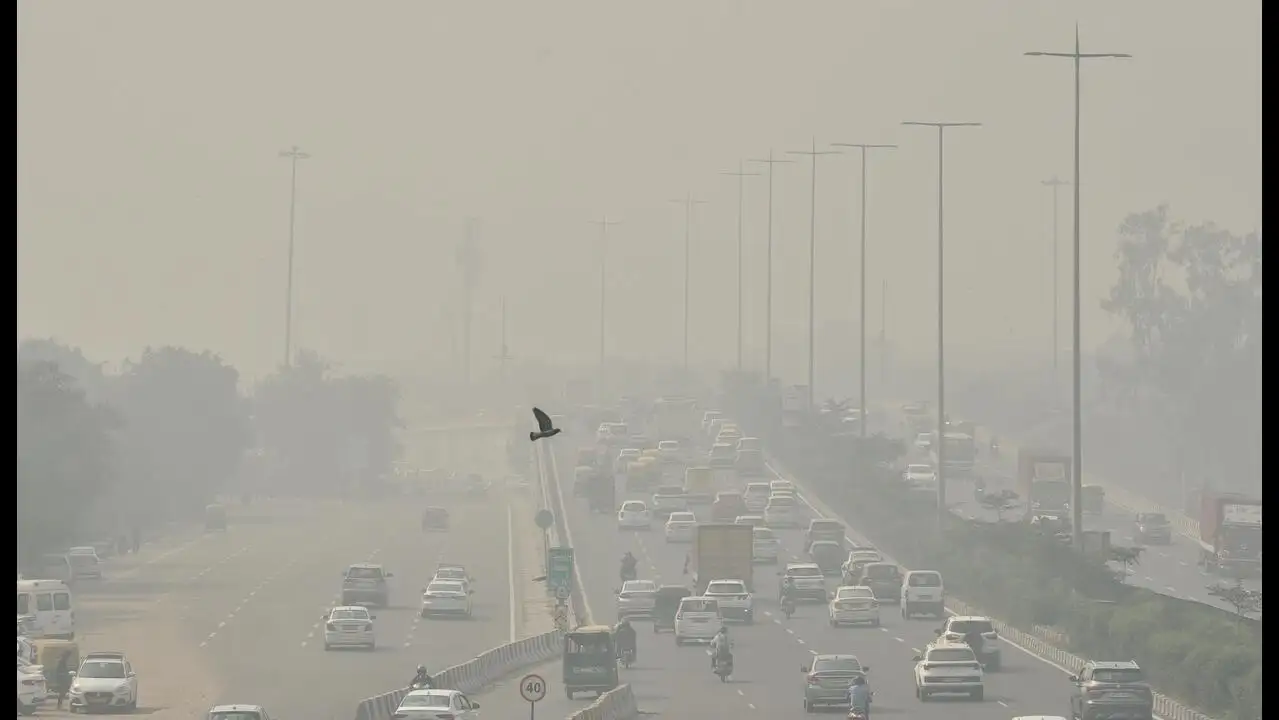
Gurgaon: Firecracker emissions pushed pollution levels up in Gurgaon after Diwali, with the city’s air quality index (AQI) rising 57 points from 288 on Diwali (Nov 8) to 345 on Monday. But thanks to wind, the air quality marginally improved on Sunday, and Monday’s overall pollution level wasn’t any worse than the pre-Diwali level (345), remaining ‘very poor’ but not going into ‘severe’ as feared.As a result, this year’s post-Diwali air is the third-cleanest in the last 10 years. Only 2022 and 2024 recorded cleaner air after the festival, at 292 and 309, respectively.Between 2016 and 2026, the average post-Diwali AQI stood at 381.5, nearly 30% higher than the pre-Diwali average of 293.1. The average reading on Diwali day was 319.2. This year marked the first time in a decade that the city’s AQI remained unchanged between the pre-Diwali and post-Diwali days. The only other instances of an improvement after Diwali were in 2022, when the post-Diwali AQI improved to 292 (poor) from 322 on the festival day, and in 2019, when it was marginally better at 368 from 372 on Diwali.The worst post-Diwali air quality was recorded in 2021, when the AQI surged to 472 (severe), up from 330 on the pre-Diwali day and 395 on Diwali. In 2020, when the city recorded its worst Diwali AQI in a decade at 425, pollution levels climbed further to 460 the following day, against 324 before the festival.Last year, the post-Diwali AQI stood at 370, significantly higher than 294 on Diwali and 245 on the preceding day. In 2023, the post-Diwali AQI deteriorated sharply to 349, from 199 on the pre-Diwali day and 193 on Diwali, despite two days of unexpected, widespread rainfall ahead of the festival.A complete ban on firecrackers was in force from 2020 to 2025. This year, however, restrictions were eased after Supreme Court granted conditional approval for the use of certified green crackers across Delhi-NCR on Nov 7 and 8. Only CSIR-NEERI-certified crackers authorised by PESO and carrying QR codes were permitted during specified morning and evening slots, for a total of three hours each day. From Nov 9, the use of all firecrackers was completely banned.In 2016, when there were no restrictions on bursting crackers, the AQI rose from 337 before Diwali to 431 on the festival day and peaked at 445 the following day.An analysis of 10 years of data shows that firecracker restrictions have been routinely flouted, while meteorological conditions have played a crucial role in determining pollution levels by influencing the dispersal of pollutants.This year, stronger winds initially helped disperse pollutants, but wind speeds slowed towards noon on Monday, reducing the atmosphere’s ability to disperse accumulated pollution. Lower wind speeds can cause pollutants to build up, particularly when emissions from traffic, construction and other urban sources continue. Atmospheric mixing and emissions from multiple sources also influence air quality.Station-level readings from Haryana State Pollution Control Board (HSPCB) show that TERI Gram recorded the worst AQI at 405 (severe) post-Diwali, followed by NISE Gwal Pahari at 339, Vikas Sadan at 319 and Sector 51 at 289. TERI Gram also recorded the worst average PM2.5 concentration at 405 micrograms per cubic meter over the past 24 hours, with a maximum touching 500. Its average PM10 concentration stood at 311 micrograms per cubic meter.NISE Gwal Pahari recorded an average PM2.5 concentration of 339 micrograms per cubic meter and PM10 of 252 micrograms per cubic meter. Vikas Sadan recorded an average of 319 micrograms per cubic meter for PM2.5 and 249 for PM10. Sector 51 recorded the best AQI at 289, with average PM2.5 and PM10 concentrations of 289 and 203 micrograms per cubic meter, respectively.“The wind speed was better yesterday, which helped disperse pollutants. As a result, the AQI improved on Diwali day, but the impact might not last long,” said Dipankar Saha, former head of the air laboratory at Central Pollution Control Board (CPCB).Centre for Research on Energy and Clean Air (CREA) air analyst Manoj Kumar said even short-term exposure to very high levels of air pollution can have adverse health effects. “Breathing polluted air can irritate the respiratory tract, aggravate existing conditions and increase the risk of respiratory symptoms. Children, the elderly and people with pre-existing health conditions, particularly those with respiratory or cardiovascular diseases, are more vulnerable because their bodies may be less equipped to cope with the additional stress. During periods of severe pollution, everyone should minimise prolonged outdoor exposure, especially strenuous physical activity, and take precautions to protect vulnerable individuals,” he said.You Can Also Check: Gold Rate in Gurgaon | Silver Rate in Gurgaon | Bank Holidays in Gurgaon | Public Holidays in Gurgaon | Gurgaon AQI | Weather in Gurgaon | Petrol Price in Gurgaon | Diesel Price in Gurgaon | CNG Price in Gurgaon | LPG Price in GurgaonStay updated with the latest Gurgaon news. Download the TOI App.
Topics in this story
Gathered from external sources. Rights to this text belong to whoever originally published it.