What is being done to stop disruptive cable theft?
The removal of copper cables wipes out telecommunications and costs the UK millions.
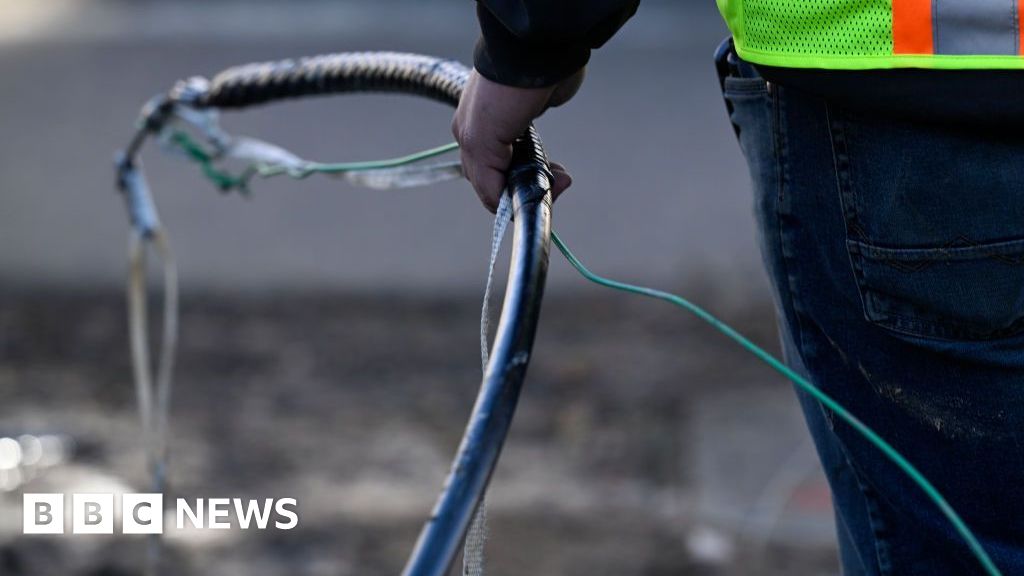
The theft of copper cables can wipe out telecommunications and plunge homes, businesses and transport networks into a digital blackout - as seen during a recent spate in Bedfordshire.
With the scrap value of the metal wires attracting criminal gangs, what is being done to prevent damage to the network and all the disruption it causes?
In the early hours of 12 November, about a mile (1.6km) of underground cable was stolen beside an A-road in Wilstead, near Bedford.
It is understood thieves lifted two separate concrete telecoms covers, cut the cables at either end, then winched them out with machinery.
The theft followed similar incidents near Luton - on the day before Wilstead and a week earlier, on 5 November .
While writing this piece, the BBC learned of another incident at Steppingley , near Flitwick, early on Wednesday.
Police are investigating all four thefts.
The first theft at Luton Road, near Toddington, damaged the broadband network and left some customers without internet and phone services for several days.
Overhead gantry signs stopped working between junctions 12 and 13 of the M1.
Luton Road was still closed so engineers could replace cables when thieves struck again, on the same road, on 11 November.
The day after, thieves stole cables in Wilstead, immediately cutting off about 1,400 customers. Again, internet and phone services were affected - with some customers disconnected for about a week.
Little information has been given on the cable theft at Steppingley on Wednesday, other than it affected more overhead signs on the M1.
Openreach, which builds and maintains much of the UK's broadband and telephone network, said engineers were working to reconnect everyone as quickly as possible.
Previously in the East of England - as is the case across the UK - cable thefts have affected overhead signs on major roads and delayed rail services .
Network Rail said it spent millions of pounds each year as a result of cable theft, but the total cost to the economy – including freight delays to power stations and supermarkets and passenger hold-ups – was even higher.
National Highways said cable theft affected the UK's critical national infrastructure and diverted resources away from other important work.
It said repairs were still under way on overhead gantries on the M1 and A14 in Cambridgeshire.
Between 2013 and 2024, all metal theft - including cables - cost the UK £4.3bn, according to a report by the All-Party Parliamentary Group on metal, stone and heritage crime.
Ellie O'Connor, from Tuda Pharmacy in Toddington, said they had no internet or phone line for several hours after the first incident, which led to a backlog in issuing prescriptions.
"As a workaround, I had to connect the pharmacy up to the hotspot on my mobile phone," she said.
Phil Gooden said his staff were "panicking" at not being able to take calls and online bookings at Herrings Green Activity Farm and Bird of Prey Centre.
It lost its phone and internet for five days when thieves struck in Wilstead.
He believes the outage cost them thousands of pounds as day visitors also could not check whether they were open.
"We lost out hugely, massively on it," he claimed.
David Newbury lives in Cotton End Road, where one of the telecoms covers was lifted. He said he and his neighbours were still waiting to be reconnected a week on from the incident.
"I just had to accept the situation, but without an internet signal, I am isolated completely," he added.
Openreach said its entire network is alarmed and monitored, so police are alerted if anyone cuts cables illegally.
It joined forces with other infrastructure providers, including Network Rail, to lobby the government to introduce the Scrap Metal Dealers Act 2013.
The legislation aims to ensure that sales of scrap metal are accounted for and that all people trading scrap are doing so legitimately.
Local authorities must license scrap metal dealers and have the power to refuse or revoke licenses. Police can close unlicensed scrap yards.
All metal sellers must show verifiable ID, which dealers must record and retain. Cash trades are illegal and punishable by unlimited fines.
On the recent thefts, Det Insp Ben Searle of Bedfordshire Police said it was continuing to work closely with utility providers and neighbouring forces to identify offending patterns, share intelligence and disrupt criminal activity.
People have been urged to keep an eye out for vehicles in remote locations at unusual times and anyone acting suspiciously near infrastructure sites.
James Kelly, chief executive of the British Metals Recycling Association, said the current legislation was adequate but needed "more rigorous enforcement" by councils, which he acknowledged were "overwhelmed".
The price of copper had risen sharply, he said, from less than £7,000 per tonne at the end of 2024 to more than £9,000 in October - making cables a "huge target".
"It's the lack of enforcement of the Scrap Metal Dealers Act that's really driving the crime because people think there will be no punishment for it," he added.
"Councils have this role of inspecting sites to make sure there is proper compliance, and they are simply not doing it to a sufficient degree.
"It encourages the theft of this high-value metal, and those criminals then take it to possibly an unlicensed dealer or try to sell it for cash or process it themselves."
The Local Government Association said metal theft was extremely damaging and costly, and could also cause "significant disruption and distress in our communities".
"Rising rates of theft are concerning, though specific funding could help local authorities and police take joint action to tackle this issue," said Jon Hubbard, chairman of its neighbourhoods committee.
"While councils can take some enforcement action where issues are identified, they do face limited powers to tackle unlicensed operators and must target their resources to support businesses to meet legislative requirements."
A Home Office spokesperson said there was an overall downward trend in metal-related theft following the Act. The latest figures for the year ending March 2026 were 87% lower than those seen in the year ending March 2013.
"We know the devastating impact that cable theft has on individuals, businesses and critical infrastructure, and we are actively engaged with the police and the National Infrastructure Crime Reduction Partnership to target offenders and tackle theft of cables," they added.
Do you have a story suggestion for Beds, Herts or Bucks? Contact us below.
Follow Beds, Herts and Bucks news on BBC Sounds , Facebook , Instagram and X .
Thieves damage a mile of communications cable
More online disruption as cables are stolen - again
Cable theft causes major delays for train travel
Topics in this story
Gathered from external sources. Rights to this text belong to whoever originally published it.