'Enjoying the game has to be the fundamental,' says Tvesa Malik after top-10 finish at India Open
NEW DELHI: For Tvesa Malik, a strong performance at the Women’s Indian Open was as much about mastering her mind as it was about getting her golf right.
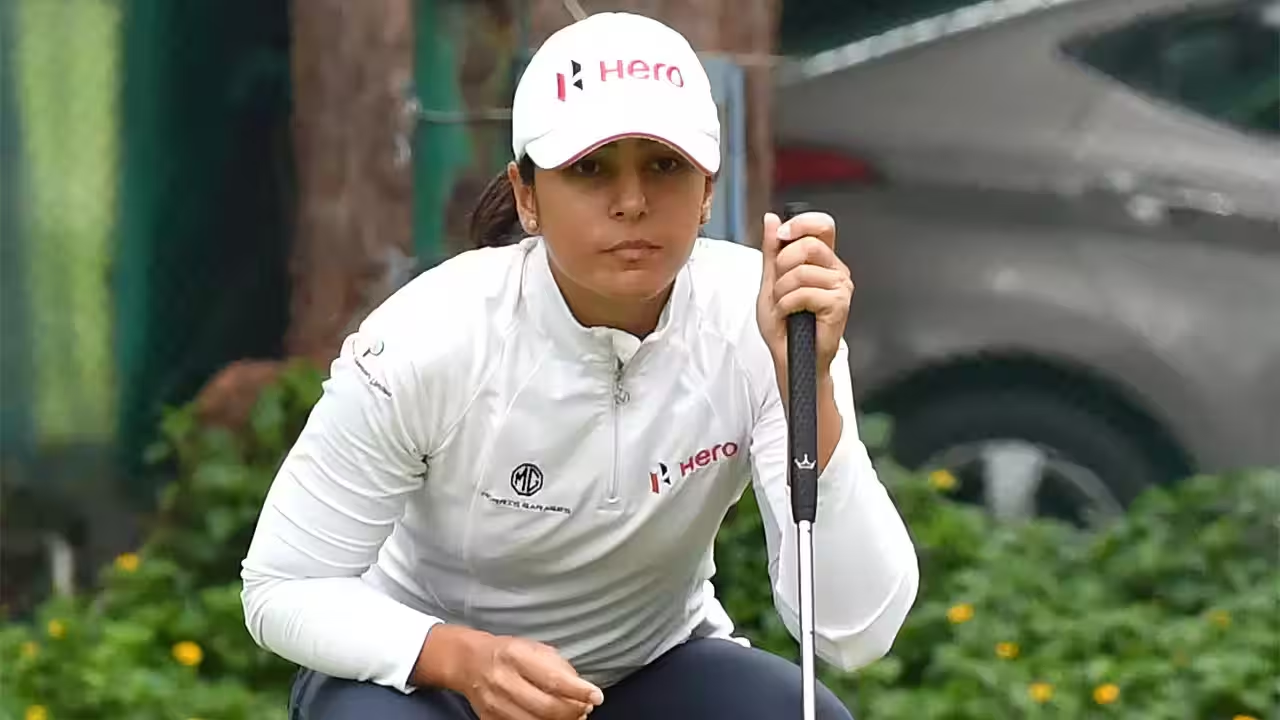
NEW DELHI: For Tvesa Malik, a strong performance at the Women’s Indian Open was as much about mastering her mind as it was about getting her golf right. The Indian golfer finished seventh at the DLF Golf and Country Club in Gurugram, carding a four-round total of one-under 287 (71, 73, 71, 72) to emerge as one of three Indians in the top 10. With Vani Kapoor finishing second and Pranavi Urs sharing fourth place, the home contingent enjoyed an encouraging week at the event.“I think everyone can see it. I’ve always been really proud of how, despite how small the Women’s Golf Association of India (WGAI) started out and how few girls have been playing, so many have gone on to play in Europe and overseas. It’s not an easy standard,” said Tvesa.The progress, she added, has been building for years, with Aditi Ashok establishing herself internationally before Pranavi Urs and other Indian golfers delivered strong performances, including at the Asian Games. The recent Women’s Indian Open, she felt, was another encouraging sign of that development.The emergence of young talent has also caught her attention. Ojaswini Saraswat, who made the cut at the Women’s Indian Open at just 13, offered a glimpse of the potential among the next generation. For Tvesa, however, the key to nurturing young golfers is ensuring that the desire to play comes from within.“A lot of the time, it’s actually their parents who come and ask questions about how they should proceed. For me, it has always been about enjoying the game. That has to be the fundamental. If that is there, the sky is the limit,” she said.She added, “Parents have an important role in helping young players pursue their ambitions, but the goals must ultimately belong to the children themselves.”While younger players today have access to better information and are developing their games at an early age, Tvesa believes they must also learn to manage expectations. The competition is becoming younger and more intense, making it important to balance ambition with patience.Reflecting on Ojaswini’s achievement, she said, “You have to realize that you’re still so young and there’s so much time. Continue learning, ride that experience, and, at the same time, don’t set expectations so high that they become unrealistic.”Tvesa’s own performance at DLF was a reminder of the importance of that balance. The demanding course, known for punishing inaccurate shots and misplaced approaches, requires players to remain composed even when things do not go according to plan.While her ball-striking had been encouraging, she felt her mental approach made the bigger difference during the week.“This year, I felt a bit more accepting of the course. When you play there and you’re from there, the expectations are always high. It’s such a fine line between pushing yourself and almost holding yourself back,” she said.Tvesa, who is familiar with the DLF layout, explained that a single mistake can have a significant impact because of the course’s demanding nature. Accuracy off the tee and precise approach shots are crucial, while missing a green in the wrong place can make even saving par difficult.Her ability to accept those setbacks and move on was particularly encouraging. She recalled how her caddie praised her composure after the final round.“My caddie said the biggest thing was not actually what I had played, but the fact that I didn’t get upset. That impressed him the most,” she said.For Tvesa, patience was the key. Rather than allowing a mistake to affect the rest of her round, she reminded herself that more opportunities would come.That mental adjustment is also central to the challenge she is working to overcome in her professional career. Although she feels her technique has improved significantly, the results have not always reflected the quality of her game.Tvesa, who is married to fellow professional golfer Ajeetesh Sandhu, said, “Your technique is good enough when you’ve practiced and played for this long. Then you have to find the small things that give you an edge. Awareness is a big thing, understanding where I’m making mistakes and why, rather than just spending all my time working on technique,”.Beyond individual performance, Tvesa believes Indian women’s golf needs stronger institutional support to sustain its progress. Drawing on her experience competing on the Ladies European Tour, she pointed to systems in countries such as Sweden, Germany, and Australia, where players receive assistance with accommodation, coaching, physiotherapy, and training facilities.“It’s an expensive game to play, and support is necessary for everybody. Having a team around a player also provides mental reassurance when travel, fatigue, and changing conditions affect performance,” she said.Get the latest Sports News and Live updates. Download the TOI app.
Topics in this story
Gathered from external sources. Rights to this text belong to whoever originally published it.