Why potluck parties are making a big comeback in America
As Americans spend less time socialising, communities are rediscovering an old way of bringing people together.
Trenton, New Jersey — Long tables covered with American-flag tablecloths stand ready in the summer heat, as red, white and blue balloons sway overhead. The few dishes that have arrived are tucked under white mesh covers, while two grills sit at the edge of a driveway across the street.
Small American flags line the path to this grassy area beside a canal and a patch of trees. The trail begins at a large, dark burgundy sign that reads, “Welcome to Hiltonia, founded circa 1920”. The quiet neighbourhood of about 300 single-family homes, well-kept lawns and tree-lined streets is part of Trenton, New Jersey.
Only a handful of residents are mingling as Rich Green and Julie Kroon, a young couple in matching blue T-shirts, arrive with a bowl of corn and bean salad. Soon, others show up, greeting one another enthusiastically as they compliment the festive outfits and ask what everyone has brought to eat. As some struggle to open their folding chairs, others step in to help.
Thomas Emerick, a Hiltonia resident for 26 years, stands near the food table. Wearing a red-and-white striped shirt, he points to his contribution: a Thai black bean salad flavoured with garlic, ginger, cilantro and lime juice.
“You know what? You can have a social event without food, and you know how many people are going to come?” he asked. “Exactly. Now, if you feed them, they will come.”
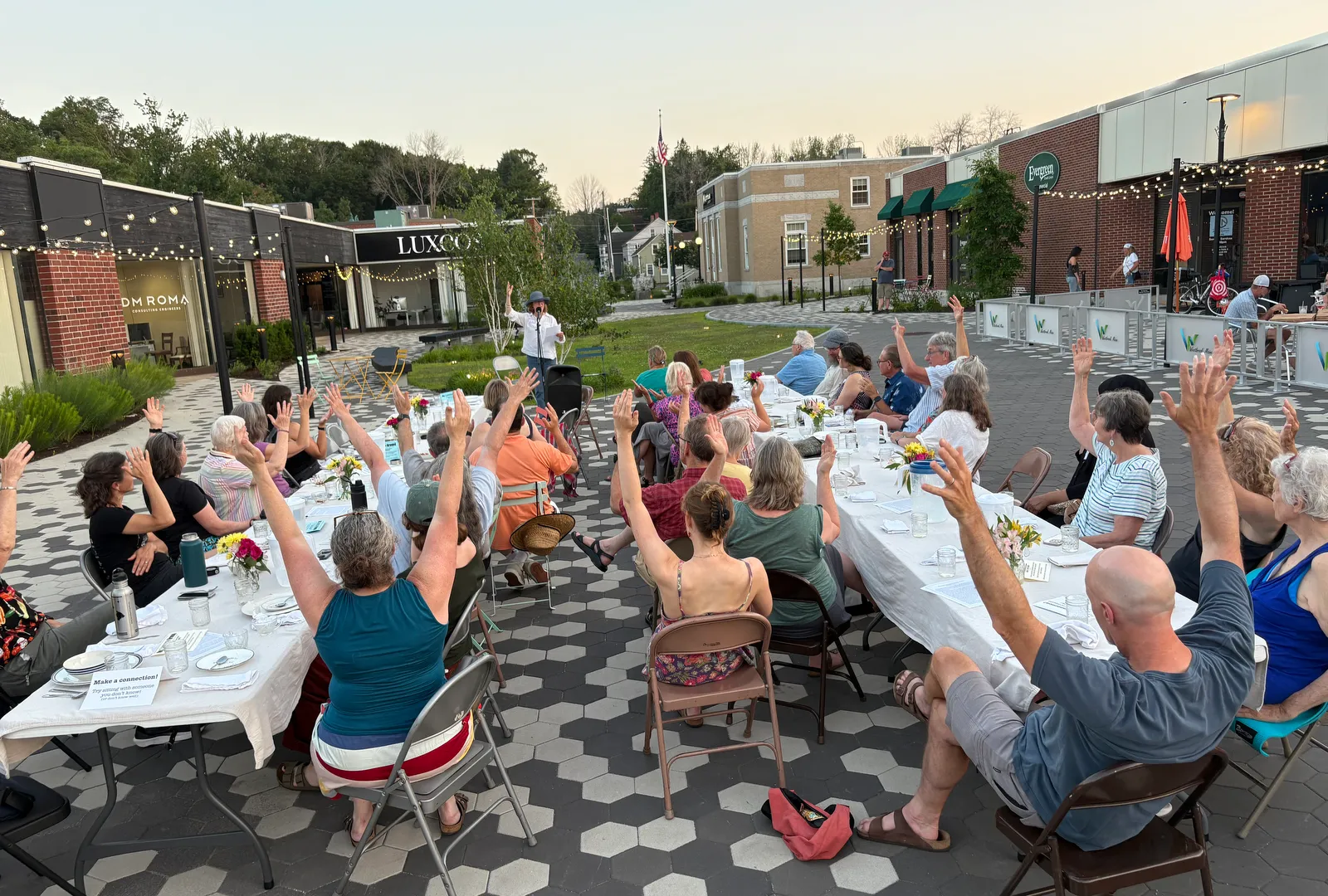
Hiltonia’s gathering was part of America’s Potluck, a nationwide initiative led by the America250 Utah Commission to mark the country’s 250th anniversary through shared meals. But it also reflected a broader effort to rebuild social ties through one of the oldest social rituals: eating together. As loneliness and social divisions grow in the United States, communities, nonprofits and governments are turning to potlucks, communal dinners and other food-based gatherings to create opportunities for connection. Experts say these meals can bring neighbours to the same table, but lasting relationships depend on what happens after the dishes are cleared.
The July 5 America’s Potluck initiative encouraged people in every state to host or attend a potluck, with communities in all 50 states participating . While organisers had intended it to be a one-off event, they said some hosts are already preparing to do it again next year. Hiltonia was one of more than 1,700 such potlucks that took place across the country.
Dressed in a red sleeveless dress and sunglasses, Lily Knezevich, president of the Hiltonia Association, greeted everyone and made sure things were running smoothly at the event. A Hiltonia resident for more than 20 years, Knezevich learned about America’s Potluck through her involvement with Revolution NJ, New Jersey's initiative for organising semiquincentennial events.
The Hiltonia Association tries to keep people engaged with one another and encourages neighbours to support and look out for each other, Knezevich explained. Food is one way to make this happen.
“People naturally like to get together around food,” she said. “It's a great draw.”
Getting people to a table, of course, is the easy part. The tougher question is whether a meal can turn strangers into neighbours and friends — and whether a few hours of togetherness can build lasting connections. Research cannot yet tell us how long those relationships last, but it is beginning to shed light on the social benefits of eating together.
Topics in this story
Gathered from external sources. Rights to this text belong to whoever originally published it.