Oleksandr Gvozdyk reveals 'different' reality of Zuffa Boxing after abrupt release
Ex-champ Gvozdyk is one of the first victims of Zuffa's lose-and-you're-fired clause, mirroring the roster-cut philosophy UFC has long been associated with.
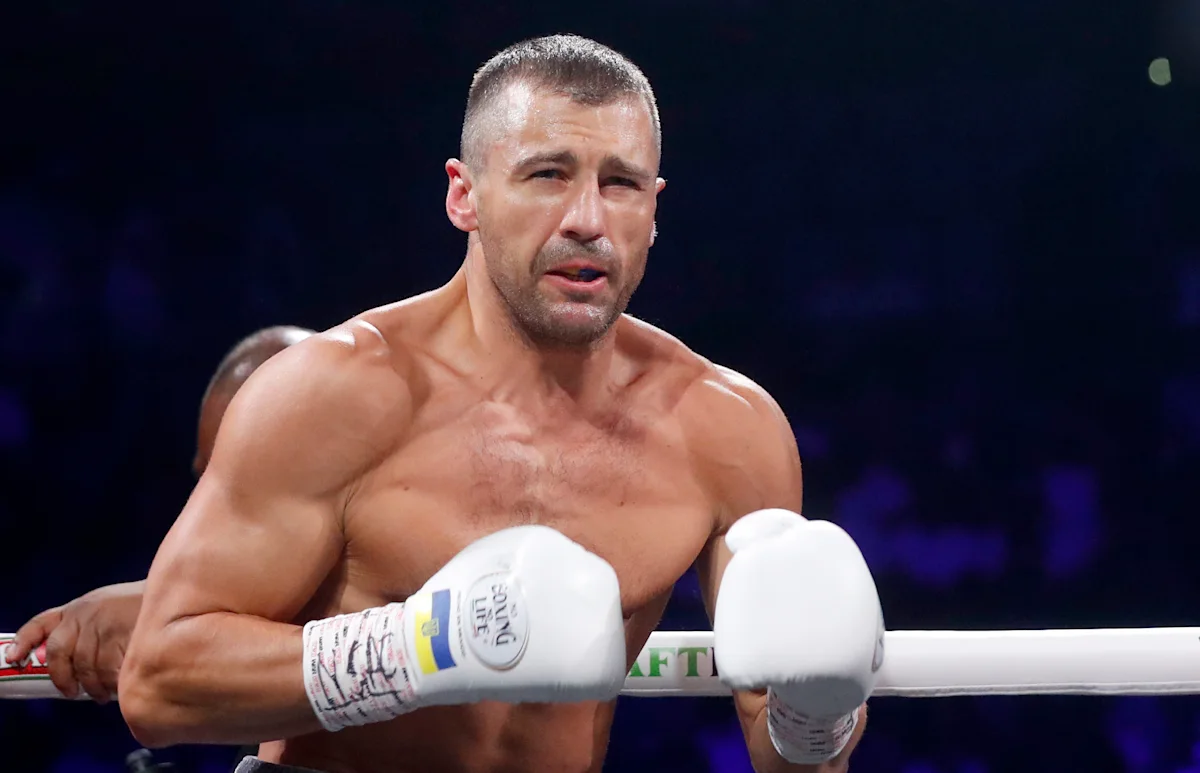
On Feb. 1, Oleksandr Gvozdyk dropped Radivoje Kalajdzic twice in the first six rounds of their light heavyweight contest inside Las Vegas' Meta Apex.
The 39-year-old Ukrainian — six fights into his career comeback — built the kind of lead that should have set up a routine points win against the challenger. But by the end of the seventh, he'd been dropped twice himself and stopped on his feet.
This was Gvozdyk's Zuffa Boxing debut, and it ended not in celebration, but in the first cracks of what would become a quiet, corporate unravelling.
Two months later, an email arrived in his inbox. No phone call, no meeting — just notice that the newest promotional company on the circuit no longer required his services. It proved to be the first example of Zuffa Boxing's much-maligned lose-and-you're-fired clause, mirroring the roster-cut philosophy the UFC has long been associated with. In April, Zuffa Boxing also ended its agreement with Robert Meriwether after his loss to Tony Hirsch Jr.
"They just executed their rights according to the contract," Gvozdyk told Uncrowned. "They don't owe me anything and never promised me anything.
"I lost the fight, and I'm almost 40 years old — other promoters didn't even sign me. Zuffa did. And I understand the reality: it's a growing company, signing fighters with a name to attract more attention. But no one promised to babysit me. They're just moving on."
It would be easy — tempting, even — to write this up as a straightforward tale of ruthless corporate boxing eating one of its own. Gvozdyk, to his credit, refuses to let you. But that doesn't mean the former WBC light heavyweight champion, a man who once stopped Adonis Stevenson to win a world title, isn't without grievances.
This cutthroat approach to promoter-fighter relationships isn't particularly new in the sport, it's just louder, clearer, literally written in black and white within a Zuffa contract. Almost in the image of Dana White, it's brash and unapologetic.
"Zuffa has a different approach compared to other promotional companies," he explained. "Where usually there's one person taking care of 10 tasks; at Zuffa they have 10 people for one task, and it seems like they don't communicate with each other — or maybe they just make it look that way. It's more of a corporate style. The rules are stricter. And if you want to change something, you have to get approval from a bunch of people who don't seem to have the authority to make their own decisions — they always have to ask someone else."
At age 39, coming off his second loss in three fights, Gvozdyk isn't naive about why he was let go. But the shape that it took after his February defeat clearly annoyed him, leaving him with unanswered questions.
"Regarding me, I was never promised anything beyond my contract. They sent me an offer through my manager, and I took it," he said.
"Again, it's a little different from what we're all used to. Basically, in real life it's the same as with other promoters — just more straightforward, with less hypocrisy. I'm talking about my case specifically — I assume the level of your stardom determines the strictness of the rules.
"After my loss, the Zuffa people I communicated with told me they liked my performance despite the outcome, and that we'd be looking at a comeback for late May or June. And I actually believed them — I think they probably believed it too. But, as I said, it seems to me Zuffa has a different business structure, with a clear hierarchy."
This confusion was evident throughout the months following his loss to Kalajdzic, in particular in regards to a post-fight drug test.
"There was an interesting moment — a week before I received the release letter, a random doping test came to me," he continued. "That's weird, because I've been in this business long enough to know that for someone to get tested, somebody has to pay for it. And here I am, after a KO loss, not even knowing what's next, just sitting around — and they come testing me.
"Of course it's possible ... but my imagination — my suspicious side — tells me: what if they wanted to get rid of me, like it was my fault? But it didn't work, because I'm a clean fighter. So after I got a negative result, a week later I received the release letter."
Gvozdyk confirmed that he also passed a drug test before the weigh-in.
His suspicions put to one side, Gvozdyk remains adamant that he was treated exactly to what he signed up for. But he is also acutely aware of his positioning in the sport as an aging former world champion, now with three losses on his ledger.
"I signed a contract, and they acted accordingly. I felt like an asset — but after the loss, I became a liability," he said.
Gvozdyk said he never met White — Zuffa Boxing's co-founder — in the flesh, but this lack of a personal touch hasn't dissuaded him of the opinion that Zuffa Boxing may be the perfect fit for the right fighter.
"Of course, it depends on the conditions. If numbers and everything looks right, I don't see why not," he said. "But I hope they don't go on to take over the sport. That won't be good for fighters. When fighters have fewer options, they will be forced to fight for less.
"At the moment their [Zuffa] title doesn't seem as prestigious as the others that we are used to. But give them some time. With big names like Shakur [Stevenson] signing, people will soon start recognizing its worth."
Topics in this story
Gathered from external sources. Rights to this text belong to whoever originally published it.