Oktagon just debunked a Dana White myth to show MMA’s true potential
IN FOCUS: European promotion Oktagon is making MMA in a football stadium fashionable, writes Will Castle in Frankfurt, and the UFC is missing a trick
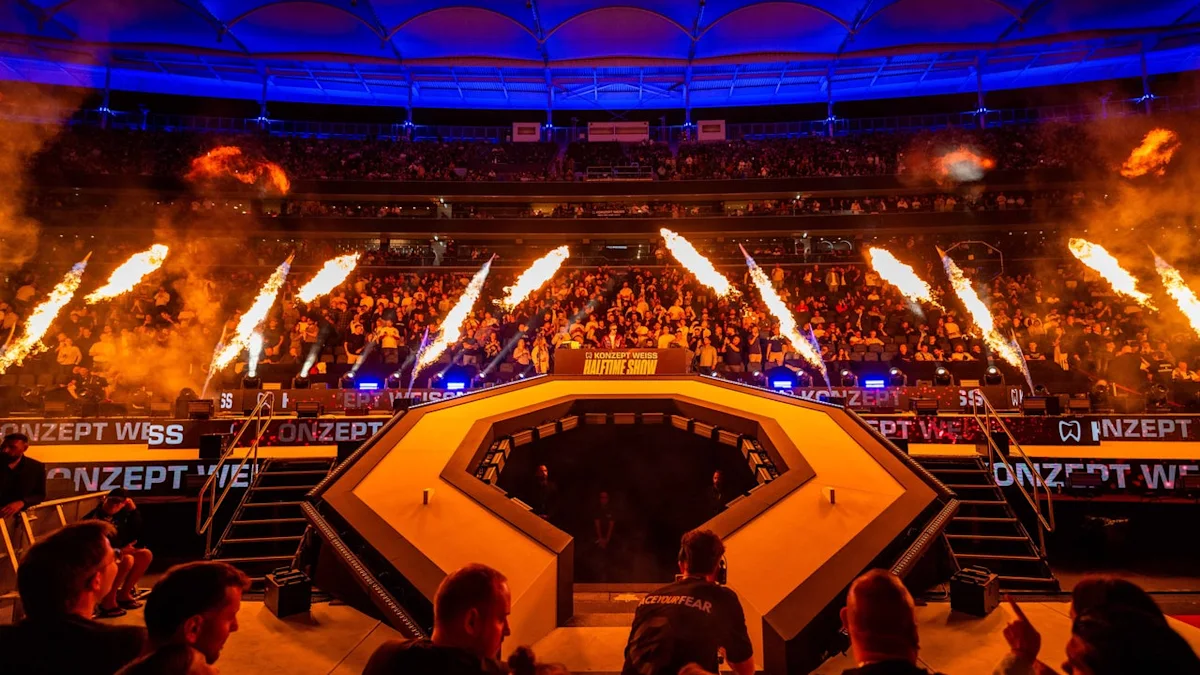
Dana White doesn't like stadium shows. His UFC will never do one. "Nothing will change my mind about a stadium show," White asserted in April 2025. "I am not a fan of stadiums. I like arenas."
He puts his disdain of open-air fight cards down to a lack of atmosphere. Apparently, fans can't make enough noise when not in a closed system.
On Saturday, one European MMA promotion debunked such a myth. Again.
Enter Oktagon. Primarily based in Germany, Slovakia and the Czech Republic, it is very much a regional brand to the UFC's global juggernaut. Yet for the second time in three years, the company has blown White and co out of the water.
In October 2024, Oktagon broke the record for the most-attended MMA show (outside of a couple early-2000s Pride events in Japan) when it welcomed nearly 60,000 fans to Deutsche Bank Park, the home of Bundesliga club Eintracht Frankfurt . Two years on, the company returned for Oktagon 94 trying to go bigger and better.
It could only achieve one or the other. Co-founder Pavol Neruda admitted he had to sacrifice breaking his own attendance record for the sake of the spectacle, chiefly a huge entrance stage which would also become the focal point of one of Oktagon's USPs: a half-time show. Fronted by diamond-selling artist Robin Schulz, what could have easily detracted from the event if done wrong actually proved a hit.
The only downside to the half-time show was that many of the continental fans, likely still baulking at the concept after the abomination we got at the World Cup final, used the musical interlude as their toilet break. There were more empty seats here than at any other point on the seven-hour card. Though that speaks to a different point about the Oktagon faithful.
From the second prelim onwards, the stadium was near-full. Hearing what Michael Obodozie did in the opener – knocking his opponent down, celebrating on the cage, getting told by the referee the fight wasn't over, climbing down before promptly finishing the job, all in one minute and four seconds – may have got any stragglers in the fan zone to sink their pints.
That sort of early turnout is unheard of in the UFC, or any marquee boxing event for that matter. The appreciation of fighting in these parts is like no other, and it's why Oktagon has been able to achieve these heights in just 10 years of existence. "The demand is growing here in Germany. That's what we want to use," Neruda told The Independent .
The action lived up to the occasion. Seven finishes in 10 fights, six in the first round, speaks for itself. The noise was indeed deafening despite White's contention, especially for local heroes Max Coga and Christian Eckerlin, who experienced opposite fortunes in the final two fights. Coga's arm was raised after a barn-burner co-main event with Christian Jungwirth, while Eckerlin was submitted by former champion David Kozma with two seconds left of the headliner's first round amid talk of retirement.
The night didn't exactly go off without a hitch, however, with Oktagon suffering an untimely power cut mid-fight during a featherweight prelim bout between Deniz Ilbay and Hugo Vach. The cage lost its illumination for around two minutes, forcing the fight to be paused. Eardrum-bursting whistles from all four stands ensued.
For a brief period, the worst fears had come true. Sources say Oktagon flagged a potential issue with power supply to Deutsche Bank Park organisers before the event but the necessary improvements weren't made in time. The unprecedented outage left Oktagon personnel scrambling, unsure if power would come back on. Fortunately it did – and moments later, underdog Ilbay knocked Vach out with one devastating right, the second instance of lights out in quick succession.
Ilbay cited his dad's "crazy" training exercises – such as putting a cover over his head while sparring – as the reason why he was able to lock in despite the outage. Vach meanwhile lamented the malfunction for derailing his momentum but insisted: "I don't want to make excuses."
This event did feel like it was about more than fighting. Oktagon came to Frankfurt at a tumultuous time, with protests in the left-leaning city rife amid election success for far-right party AfD in Germany. There was a demonstration in the city centre on the day of the fight. Neruda, perhaps not wanting to alienate any of his fanbase, claimed he was unaware of the political situation – but hailed the power of the sport in "connecting people and destroying boundaries". And it did feel like 58,000 came together for a common cause, for the love of the game.
The biggest MMA event of the year in terms of significance will still go down as the UFC's White House card. That's something even Neruda recognises: "No doubt." But for all the presidential glamour, there was one glaring thing missing on the South Lawn: atmosphere.
It's ironic, given atmosphere lies at the root of White's aversion to stadium shows. But the UFC's loss is Oktagon's gain, who now plan to do this yearly ; this is not a cost-sapping one-time novelty, unlike UFC Freedom 250.
"We want to say to Europe and even to the world that we are here. We are doing something special, and it's worth the watch," Neruda says. Statement made.
Topics in this story
Gathered from external sources. Rights to this text belong to whoever originally published it.