10 Hardest NBA Stars To Coach, Featuring Giannis Antetokounmpo
We rank the 10 hardest NBA stars to coach in the league right now, featuring the recently criticized Giannis Antetokounmpo.
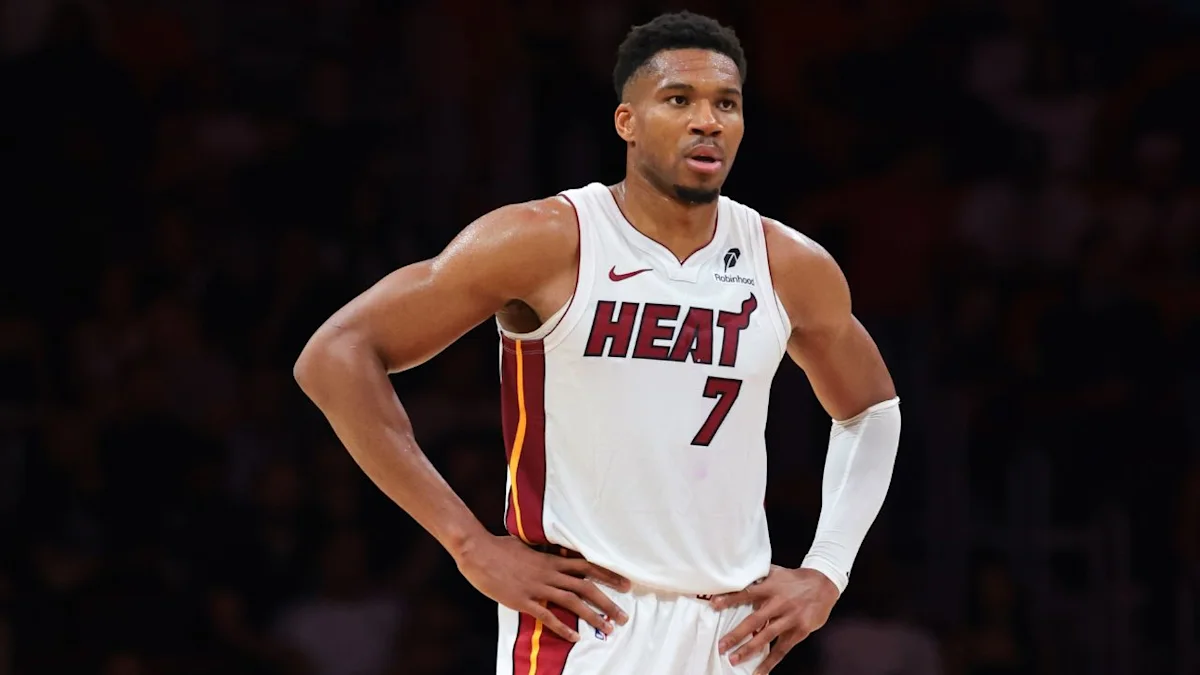
Coaching an NBA superstar is supposed to be a privilege, but it can get ugly at times. There isn't a better example than the criticism aimed at Miami Heat superstar Giannis Antetokounmpo courtesy of Doc Rivers .
Doc Rivers singled out Giannis Antetokounmpo as the most difficult superstar he has ever coached . On the Bill Simmons podcast :
"He's not easy because he plays at this crazy downhill pace," Rivers said. "He's really a difficult guy. I was telling someone this: he has this great passing ability, but he doesn't necessarily have super IQ at the same time. It's really a strange thing. And he really has one way. Downhill, force, like every play. He wants to force it.
"There's times where I wish he did one thing," Rivers continued. "I wish he learned how to execute better. He's one of those guys that you get a lot of them from the U.S., AAU guys that have never needed to execute because they can do it on their own. But that doesn't help the team.
"And I told Giannis this: the thing he needs to still learn is the value of execution. "How important it is when you're in practice and shootarounds to lock in on execution. And now he has a coach who is as good as there is in execution."
Giannis did not exactly embrace the characterization, appearing defensive in his response and pushing back against the criticism in his postgame interview:
"Oh, my God," Antetokounmpo said, via Eric Nehm. "First of all, he's not my coach. My coach is Coach [Erik Spoelstra]. But he's a coach that I've worked in the past. I'm speechless. He made those comments when? Today?"
To be fair, there were some coming to his defense. Erik Spoelstra obviously defended his player , but so did Jason Kidd , who also coached the Greek Freak in the past.
The exchange begs the interesting question: Is Antetokounmpo really one of the NBA's most challenging players to coach, or is his demanding and competitive personality completely misunderstood?
Well, we think Giannis has to be one of the toughest superstars to coach, and here are 10 NBA stars who present some of the toughest coaching challenges in the league.
Rudy Gobert is one of the NBA's greatest defenders, but coaching him requires accepting some limitations. His rim protection, rebounding, and ability to erase mistakes make him incredibly valuable, but he is often offensively inept.
Gobert is not somebody you can simply throw into every lineup and expect the same results. His inability to consistently punish smaller defenders or create his own offense becomes problematic against teams that attack his weaknesses. Not an easy job for Chris Finch to figure things out on offense.
The real headache comes when the playoffs arrive, and opponents start pulling him away from the basket. Finch must decide whether Gobert's defensive brilliance outweighs the spacing problems and small-ball vulnerabilities he can introduce.
We have to make it clear: Gobert is absolutely worth coaching. But maximizing him requires considerably more creativity than his defensive reputation might suggest.
Kyrie Irving is incredibly gifted, and he can get the crowd going in an instant. The problem is that Irving has never been particularly interested in allowing basketball to completely dictate his personal life or individuality.
His career has featured several high-profile departures and complicated relationships with organizations, and it often feels like coaches are walking on needles with the future Hall of Famer. Rookie head coach Dusty May hasn't had issues with Kyrie so far, and his talented guard has held his own at times this season.
But still, coaching Irving needs a delicate balance between authority and trust. A traditional disciplinarian approach is unlikely to work particularly well with someone who is an independent thinker, while giving him too much freedom can create problems for the broader organization.
Irving's basketball talent is not the issue; getting everyone aligned around a common direction is the challenge. Irving can make a coach look brilliant or foolish at the same time, but we guess that just comes with being the GOAT of dribbling a basketball.
Zion Williamson is one of the most frustrating coaching challenges in the NBA because the talent is so extraordinary and the expectations are always so enormous. When healthy, Williamson is virtually unstoppable attacking the basket.
However, questions surrounding his conditioning, availability, and consistency have hindered his development. Coaches are not simply responsible for designing an offense around Zion; they also have to worry about keeping their franchise centerpiece physically ready. As if coaches don't have enough to worry about.
The pressure is particularly intense because the Pelicans have continued investing in Williamson as their future, even when the results have not consistently justified that faith. That puts enormous responsibility on Jamahl Mosley to push him, hold him accountable, and somehow maintain a relationship without losing the player emotionally.
There is no easy answer when your most talented player requires constant attention to physical preparation. It might have been easier back in the day to whip a player into shape, but player empowerment has made Zion a tough player to figure out.
Giannis Antetokounmpo is the most physically overwhelming superstar in basketball, but that dominance can be too much for coaches, hence what Doc Rivers spoke about. Giannis' instinct is to impose his physicality on opponents rather than patiently dissecting every defensive coverage.
That mentality is responsible for much of his greatness, but it can become problematic when opponents build defensive walls and force him into uncomfortable half-court situations. Perhaps that is why the Miami Heat have gotten off to a terrible 4-6 start so far.
Doc Rivers described Giannis as the most difficult superstar he has coached, and he has a point. The disagreement between Rivers and Giannis highlights an uncomfortable reality: coaching an incredibly competitive player sometimes means challenging the very instincts that made him a superstar.
Giannis wants to dominate, and slowing him down or asking him to change his approach is not necessarily going to be received well. We have seen it with players such as Russell Westbrook, and Giannis might fit that mold. His intensity is an enormous asset, but convincing him that the best basketball decision should be to slow down won't always work out.
Draymond Green is one of the best defensive players of his generation, and his basketball IQ makes him an extension of the coaching staff on the floor. Without Green, the Warriors would not have won four championships as the greatest modern dynasty. We recognize that.
Unfortunately, that same intensity can become a nightmare when emotions take over. Technical fouls, fights, ejections, and suspensions have placed Golden State in difficult situations, forcing Steve Kerr to have to deal with the cleanup afterwards.
The challenge is that Green cannot simply be coached like an ordinary role player. His voice carries enormous weight in the locker room, and his relationship with teammates, particularly Stephen Curry, is central to the Warriors' identity.
Kerr must know when to empower him, when to pull him back, and when to accept that his emotional volatility could cost the team. Add his limited scoring to the equation, and Green is a tough player to handle. Kudos to Kerr, who has done as much as anyone could have.
Kawhi Leonard is the ultimate coaching paradox: he is an elite two-way superstar who can change a team's championship goals, but his availability is one of the most difficult variables to manage. Think about this: coaches have to always worry about whether Kawhi plays or not, and the team has to constantly change because of that.
Then there is the communication challenge. Leonard is famously reserved and has gotten away with almost everything in his career so far. His personal approach to managing his career is highly independent, meaning coaches must often navigate a more discreet relationship rather than constant verbal engagement.
The frustration is obvious: when Kawhi is available, he can be one of the best players in the world. But building a championship system around an injury-prone and polarizing personality is a tough job for any coach. Hats off to Darko Rajakovic for keeping the Raptors competitive with Kawhi missing a few games already.
Joel Embiid is a nightmare matchup for opposing defenses, but coaching him could also be a nightmare at times. His injury history, conditioning concerns, and availability have forced coaching staffs to reconsider their plans. You best believe that Nick Nurse is constantly thinking about Embiid's minutes in every game this season.
When Embiid is healthy, Philadelphia can build an entire championship-caliber offense around his ability to score from anywhere. When he is unavailable, however, everything changes. And that's even the case for the current superteam 76ers.
There is also the tactical challenge of maximizing Embiid's offensive preferences. His ability to draw fouls and operate from the mid-range can be devastating, but it occasionally slows the offense and limits opportunities for teammates to attack in rhythm.
Embiid's emotional reactions, visible frustrations, and occasional disagreements with teammates or coaching decisions add another layer of complexity. He is a generational talent, but managing his physical condition and temperament is an enormous undertaking. Perhaps having LeBron James on the roster will signficantly help Nurse's incredibly tough job for this season.
Trae Young is an offensive system on his own, but coaching him means building an offense that moves around a very specific set of preferences. Young thrives with the ball in his hands, particularly in pick-and-roll situations where he can manipulate defenders.
The problem is that this approach can become predictable and overly dependent on one player. If there is a slight variety, Young's impact will significantly decline. That makes it a Trae-or-die system for a player on a max deal.
Defensively, the challenge is even more obvious. Young's physical limitations make him a player opponents actively target, forcing coaching staffs to develop schemes that protect him and prevent opposing guards from exploiting mismatches. Talk about headaches.
Trae can carry an offense, but building a contender around him needs a ton of patience, creativity, and a willingness to accommodate his strengths while confronting his weaknesses.
Luka Doncic is the frontrunner for MVP this season and the best basketball system in the NBA. Nobody can control an offense better right now, so that's a luxury JJ Redick has.
But coaching Luka requires accepting that the offense will frequently operate according to his rhythm, preferences, and decision-making. His heliocentric style can produce spectacular results, but it might come back to bite the Lakers in the playoffs. Redick is likely fully aware of that.
The psychological management is just as demanding, by the way. Luka's constant frustration with officials, frequent complaints, and emotional reactions to unfavorable calls can become distractions that opponents exploit.
Coaches have constantly encouraged him to maintain composure, and it just looks bad across the board at times. His talent is so overwhelming that challenging his habits becomes a delicate balancing act.
Luka can make virtually any coach look like a genius, but getting him to consistently embrace the less glamorous aspects of winning basketball is another matter entirely. Let's see how far Redick can go in that regard.
James Harden tops this list because coaching him has always involved making sure everything else is in order. Harden is one of the greatest offensive players of his generation, but he has to do it his way.
His step-back three-pointer and pick-and-roll mastery are legendary, but the same strengths can become limitations when a coach wants more variety in the offense. With Harden, the offense goes as Harden goes. It doesn't even matter that Donovan Mitchell is beside him right now.
His complicated history with many franchises makes the challenge even more compelling. Houston, Brooklyn, and Philadelphia all experienced turbulence surrounding his relationships with organizational leadership, and it seems that you can't make Harden happy.
Harden is not difficult to coach because of his amazing skill set; he is difficult because his preferences can become the foundation around which everything else must revolve. Getting him to buy into a different offensive identity or accept a reduced role requires exceptional persuasion.
There are many reasons why Harden doesn't have an NBA championship, and while a lot of them come down to bad luck and circumstances, his style of play has to be one of them.
Topics in this story
Gathered from external sources. Rights to this text belong to whoever originally published it.