Caitlin Clark’s family: How parents Brent and Anne Clark and siblings Blake and Colin supported her basketball journey from childhood to WNBA stardom through guidance, discipline and competition
Discover how Caitlin Clark's family shaped her journey to becoming a WNBA star through coaching, support, and competition. Learn about the influences of her parents and siblings in her basketball development.
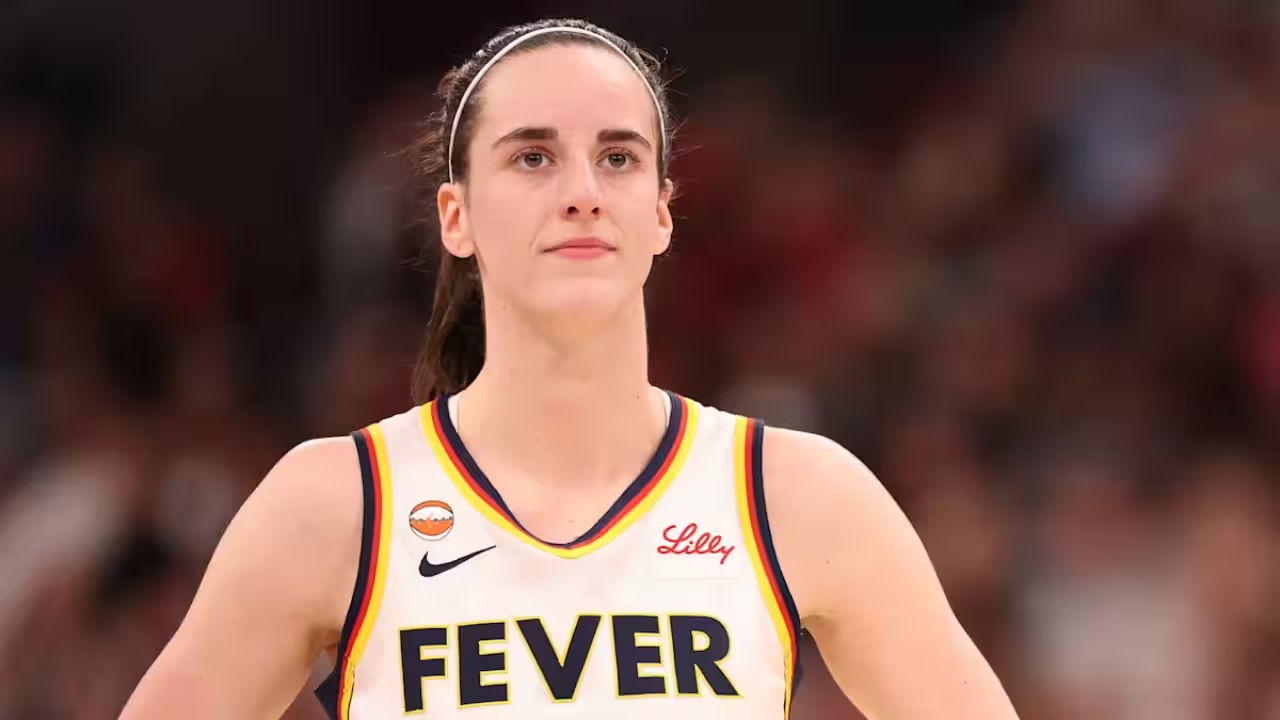
Caitlin Clark’s rise from a young athlete in West Des Moines, Iowa, to a face of the WNBA was buoyed by a family that valued sports, discipline and competition. Basketball was a big part of her childhood long before she became a star with the Indiana Fever, with her parents and brothers helping create an environment in which athletic development was encouraged.Clark’s early success had not been entirely due to natural ability. She was raised with the experience of structured coaching, competitive games and various sports. Her father, Brent Clark, was a key factor in her basketball fundamentals, while her mother, Anne Clark, helped in her balance off the court. Her brothers Blake and Colin Clark also helped create a household where sports and competition were a staple of everyday life.How Caitlin Clark’s family built her basketball foundationCaitlin’s father, Brent Clark, was an early influence on her basketball development, and a former college basketball and baseball player at Simpson College; he knew how important it was to develop athletic skills with constant practice. He didn't want to leave his daughter to find her scoring touch by herself, so he emphasized fundamentals, shooting technique and the importance of a solid base.His coaching style was to stress the proper shooting form and then suggest moving on to more advanced attempts. That focus on technique built the habits necessary to compete against increasingly tougher opposition. As Caitlin continued to grow, she gained confidence to take tough shots and set herself up as a long-range shooter.Brent and Anne Clark guided Caitlin Clark’s developmentBrent also helped create opportunities for his daughter to face challenging competition. During her childhood, Caitlin played in boys’ recreational and Amateur Athletic Union (AAU) basketball settings, where she encountered players who could be older or physically stronger. Those experiences exposed her to demanding game situations and encouraged her to improve her decision-making, ball handling and ability to respond to defensive pressure.The experience gained during those formative years became part of the foundation for her later development in high school and college basketball, and her eventual success at the University of Iowa and transition to the WNBA followed years of preparation rather than a sudden breakthrough.Anne Clark provided emotional support and balanceAnne Clark played a complementary role in her daughter's development, while basketball demanded considerable time and attention, family support also meant helping Caitlin maintain perspective as her sporting ambitions grew, and Anne's encouragement provided a source of stability as her daughter navigated the expectations associated with competitive basketball.Anne's contribution illustrates how an athlete's development often depends on more than technical instruction. Also, consistent encouragement, emotional reassurance and a sense of normalcy can help young players manage setbacks while continuing to work toward ambitious goals.Together, Brent and Anne offered different forms of support, and his involvement centered substantially on early basketball instruction and competitive development, while her influence helped provide balance and encouragement. Their roles formed part of the family environment in which Caitlin could pursue basketball seriously from childhood.Blake and Colin Clark strengthened Caitlin Clark’s competitive driveBlake Clark, Caitlin’s older brother, was an important influence on her competitive personality. Growing up alongside an older sibling who participated in sports gave Caitlin regular opportunities to challenge herself; and their interactions helped make competition a familiar part of family life, encouraging her to keep up with someone who had more experience.Their sibling rivalry also extended beyond childhood, during Caitlin’s college career at the University of Iowa, Blake continued to encourage her competitive instincts. ESPN documented how he used a photograph of Iowa’s loss to Creighton in the 2022 NCAA tournament to motivate his sister, sending it to her at different points during the offseason. The gesture reflected their relationship and the role friendly competition continued to play in Caitlin’s development.That influence mattered because elite basketball requires players to respond to disappointment as well as success. Caitlin’s ability to use setbacks as motivation became a notable feature of her rise through college basketball, where she eventually established herself as the NCAA Division I women’s all-time leading scorer before entering the WNBA.Colin Clark shared the family’s athletic interestsColin Clark, Caitlin’s younger brother, also grew up in a family where sports were encouraged. While he followed his own athletic interests, the siblings shared an upbringing shaped by participation, competition and support for one another.Caitlin’s relationship with Colin has also reflected a caring side beyond her competitive personality. ESPN reported that the family nicknamed her “Caitie Mommy” when Colin was a baby because she took such an active role in looking after him. As the siblings grew older, Colin continued to celebrate his sister’s achievements, including during her highly successful college career.The support of both brothers gave Caitlin a family environment in which achievement, encouragement and healthy competition could coexist. Blake’s older-sibling influence and Colin’s relationship with his sister represented different aspects of that support system.Caitlin Clark’s childhood sports shaped her developmentBasketball became Caitlin’s defining sport, but her early athletic experiences extended well beyond the court. Growing up in West Des Moines, Iowa, she participated in softball, volleyball, tennis, golf and soccer. These activities offered opportunities to develop coordination, balance, movement and the ability to adapt to different competitive situations.That foundation continued at Dowling Catholic High School, where Clark became one of Iowa’s leading high school basketball players. She subsequently chose the University of Iowa, where her performances elevated her national profile and helped attract unprecedented attention to women’s college basketball.Clark was the first pick overall in the 2024 WNBA Draft by the Indiana Fever and her transition to the pros was another step in a journey that was started by family support and years of athletic development.Clark’s individual achievements are not diminished by her family’s influence, and her talent, work ethic and ability to perform under pressure are as central to her success as ever. Yet her upbringing is a lesson in how early coaching, emotional support and sibling rivalry can all play a part in an athlete’s development.Caitlin Clark’s ambitions were based on a foundation her family built, from Brent Clark’s focus on fundamentals and Anne Clark’s consistent encouragement, to Blake’s competitive influence and the close relationship she has with Colin. That foundation has traveled with her from childhood basketball courts in Iowa to the national stage with the Indiana Fever.Stay updated with the latest Asian Games 2026 news, check the Asian Games medal tally and complete Asian Games schedule.Get the latest Sports News and Live updates. Download the TOI app.
Topics in this story
Gathered from external sources. Rights to this text belong to whoever originally published it.