“I think he is a role model for young people”: How LeBron James’ $2 million gift transformed “The Decision” into a life-changing moment for kids
NBA News: LeBron James’ “The Decision” became infamous on July 8, 2010, when he announced his move from the Cleveland Cavaliers to the Miami Heat during a live .
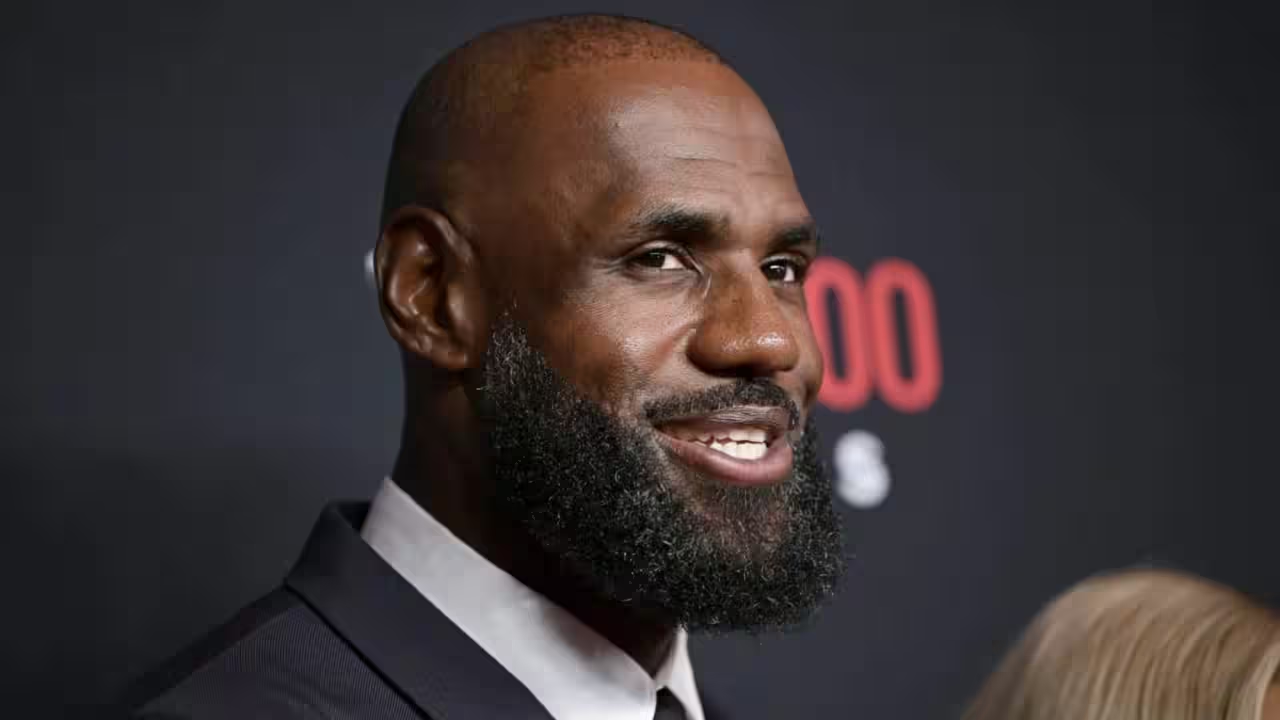
LeBron James’ “The Decision” became infamous on July 8, 2010, when he announced his move from the Cleveland Cavaliers to the Miami Heat during a live ESPN special. But behind the controversial announcement was a charity plan that raised more than $2.5 million for Boys & Girls Clubs across the country. The money helped support youth programs and improve facilities, turning a heavily criticized night into something that gave children a lasting benefit.James chose the Boys & Girls Club of Greenwich, Connecticut, as the setting for the broadcast. The club hosted the event as millions watched James reveal his next team. Yet the most important part of the night had little to do with Miami. LeBron James used “The Decision” to put millions toward children and their communitiesThe charity plan came together just days before the broadcast. On July 7, 2010, ESPN confirmed that proceeds from “The Decision” would go to Boys & Girls Clubs of America to support James’ vision of building basketball courts for young people across the country. James and his marketing company, LRMR Marketing, secured sponsors for the event.The final impact went beyond the initial expectations. Boys & Girls Clubs of America reported that the special generated more than $2.5 million for Clubs in seven markets: Akron, Chicago, Cleveland, Greenwich, Los Angeles, Miami and New York. The money supported youth programs, facility improvements and refurbishment projects.LeBron James later explained why he wanted the announcement to benefit the organization. During his July 9, 2010 appearance on “Good Morning America,” James said, “All the proceeds from the announcement was going to the Boys and Girls Club.” He added that he was happy to be in a position to help because “when you do something for them and you do something that's positive, they never forget about it.”There was another important detail. LeBron James did not make money from the broadcast. Frank Sanchez of Boys & Girls Clubs of America told the Christian Science Monitor on July 9, 2010, that James’ intention was to use the enormous attention around his free agency “to raise dollars and awareness” for the organization. Sanchez added, “LeBron didn’t make a penny” from the event.The Greenwich kids saw a different side of LeBron James that nightThe Boys & Girls Club of Greenwich received about $90,000 from the proceeds, along with 15 desktop computers and several laptops. The money helped refurbish the gym floor and add padding around the court, giving the children a better place to play.The night also created personal memories for the young members inside the club. After the broadcast, James interacted with the children and helped make the event feel less like a television production.That experience stayed with Bob DeAngelo, the club’s executive director at the time. He initially admitted that he was not a James fan. Ten years later, his view had changed significantly.Speaking to The Athletic for its July 8, 2020 retrospective on “The Decision,” DeAngelo said, “I think he means well and I think he is a role model for young people.” He also explained how James’ actions after that night changed his opinion: “That got erased as he went on his journey.”That journey included championships, community work and a much larger public platform. But the charitable side of July 8, 2010, remains one of the clearest reminders that “The Decision” was more than a free-agency announcement.James changed teams that night. He also helped change what a Boys & Girls Club could provide for the children who depended on it.Get the latest Sports News and Live updates. Download the TOI app.
Topics in this story
Gathered from external sources. Rights to this text belong to whoever originally published it.