College sports needs limits | Opinion
Senior Staff Writer Kayra Serpenguzel examines the Senate’s College Sports Bill and the implications for FSU athletes.
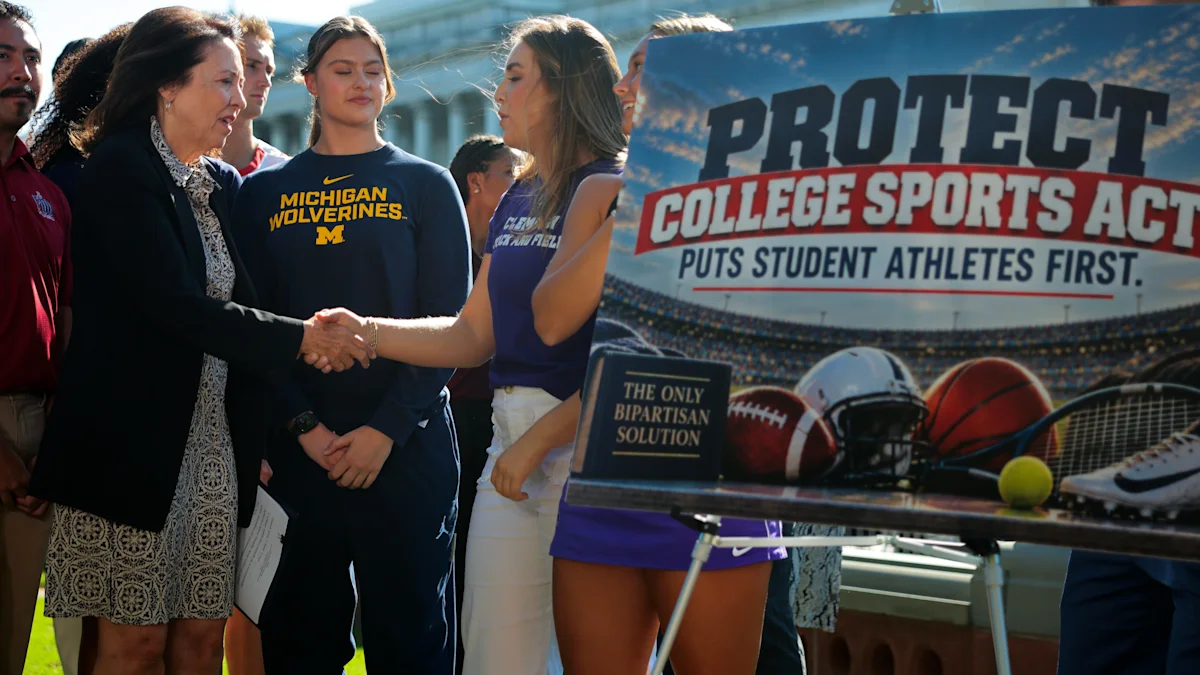
The Protect College Sports Act , created by Senator Ted Cruz and Maria Cantwell, passed the U.S. Senate to maintain national standards for college athletes. This bipartisan bill directly impacts the current NIL (Name, Image, and Likeness) framework, transfer rules, and eligibility requirements.
Yet while this bill instates limits on college athlete compensation and behavior such as transfers and years of eligibility, there are significant gaps this bill isn't addressing. The most imperative of these gaps are coaching pay and facility spending.
Coaching salaries in universities, especially for revenue-generating sports like football and basketball, can average millions of dollars. Division one coaches at the highest level are paid between 8 million and 13.3 million dollars annually.
Facilities for Division I sports are also expensive to maintain and build. The New York Times recently reported on a more than $100 million football indoor training facility at the University of Notre Dame. The Dunlap football center at FSU costs between $138 million and $150 million. There are also immense costs to upgrade facilities to give athletes better resources, as well as to maintain the facilities.
The U.S. Government Accountability Office reported that 94% of NCAA Division 1 athletic programs actually spend more money than they generate. The money necessary to fund these programs, coaches' salaries, and facilities then comes from general funds, taxes, and student fees.
There was initially a proposed amendment titled " Salary Cap for Coaches ," sponsored by Senators Cory Booker and Chris Murphy. The amendment would set a $5 million cap annually per coach. They argued that this bill only limits athlete compensation while leaving coaches with unlimited and unchecked salaries. This amendment failed in the U.S. Senate.
The proposed Senate amendment, if it had passed, would have affected approximately 40% of current coaching salaries for major varsity sports.
"I think that the fact that this bill only addresses the salaries of athletes and not coaches is reflective of the difference between a student-athlete and a professional coach. These athletes are students, primarily a student at that institution, while being a coach is solely a profession," said second-year international affairs major at FSU Ada Jones to the FSView.
Historically, coach compensation exceeds athlete compensation in the NCAA in this "arms race," a perspective agreed upon by Nick Saban , a former football coach for the University of Alabama.
Yet while this bill isn't addressing these major costs for Division 1 sports programs, there are important aspects that it will codify into law. One of the most important aspects of this bill is that athlete compensation will have required disclosures of deals over $600. Additionally, every college athlete is allowed only one "free" transfer, meaning they won't have to sit out that season. After the first transfer, there will be a season where the athlete can't compete in their sport.
"I agree with limiting portal transfers because there's no reason you should be able to go to a different school every year and not commit to the school because it shows a lack of loyalty and makes the school scramble to pay for different athletes, and I think that they would be more bound to their contract; they'd make smarter decisions to the school they commit to," said second-year political science major at FSU Emma Claire Goldstein to the FSView.
One of the sponsors of the bill, Senator Maria Cantwell , said that the PCSA "is about reining in the bad practices that are happening in college sports today, the runaway costs... [and] the runaway arms race in sports spending."
"Historically, college athletes have generated substantial commercial value for the institutions they play for, having limited participation in the profits of their hard work. Athletes deserve a meaningful share in that value," said Cannon Boyles, a second-year, to the FSView.
Through the PCSA, athletes will be given a maximum of 5 years to finish their college sports career, with no exceptions. While this rule is already codified in the NCAA , exceptions like medical waivers, an extra year due to the COVID-19 pandemic, financial incentives from NIL, and redshirt years push beyond the 5-year boundary.
Cam McCormick , a former college football player who was a tight end for the Oregon Ducks and Miami Hurricanes, was granted 9 years of eligibility. Although this is an extreme example, supporters of the bill believe that older athletes who are 27 and 28 years old shouldn't be competing against teenagers.
This bill also may have specific implications for Florida. Senator Rick Scott was one of two GOP "No" votes on the Protect College Sports Act, while Senator Moody voted "Yes" after an amendment on conference realignment. Their initial opposition was due to how, under the PCSA, schools in Big Three conferences like the ACC have to serve three years in probation if they want to switch conferences.
Redshirt years are specific periods where a college athlete doesn't play in official games and competitions to preserve a year of their athletic eligibility. The athlete still practices with their team, receives athletic scholarships, and attends classes.
There are also increased benefits for the athletes in the form of health and academic protections. The athletes will have 5 years of post–eligibility medical coverage for any injuries sustained because of their college sport. There will also be a 10-year degree completion guarantee, with the university honoring the scholarship given to the athlete so they can finish their education.
Another aspect of this bill is the Antitrust protections, which will now be extended to college sports. This bill will therefore give the NCAA and its member schools protection from lawsuits and freedom to set shared rules without being sued. This part of the bill directly addresses the recent House v. NCAA settlement, which established a $20.5 million revenue-sharing cap .
The House of Representatives previously had a similar bill, the Student Compensation and Opportunity through Rights and Endorsements (SCORE) Act, which has stalled twice. The main distinction between this legislation and the PCSA is that college athletes are not seen as employees of the university under the SCORE Act.
The bill is currently with the House of Representatives after it was passed by the Senate. The House isn't set to return until November 9, which is after the midterm election. The White House has expressed earnest support for this bill in a statement to "Save College Sports."
Kayra Serpenguzel is a Political Science and Creative Writing major at Florida State University and a Senior Staff Writer for the Views section of the FSView & Florida Flambeau, the student-run, independent online news service for the FSU community. Email our staff at contact@fsview.com .
Topics in this story
Gathered from external sources. Rights to this text belong to whoever originally published it.