World Series 2026: For the Rays, being the best team in the American League simply wasn't enough
It's unclear if anything could've sufficiently equipped the Rays to take on the buzzsaw that was the 2026 Brewers.
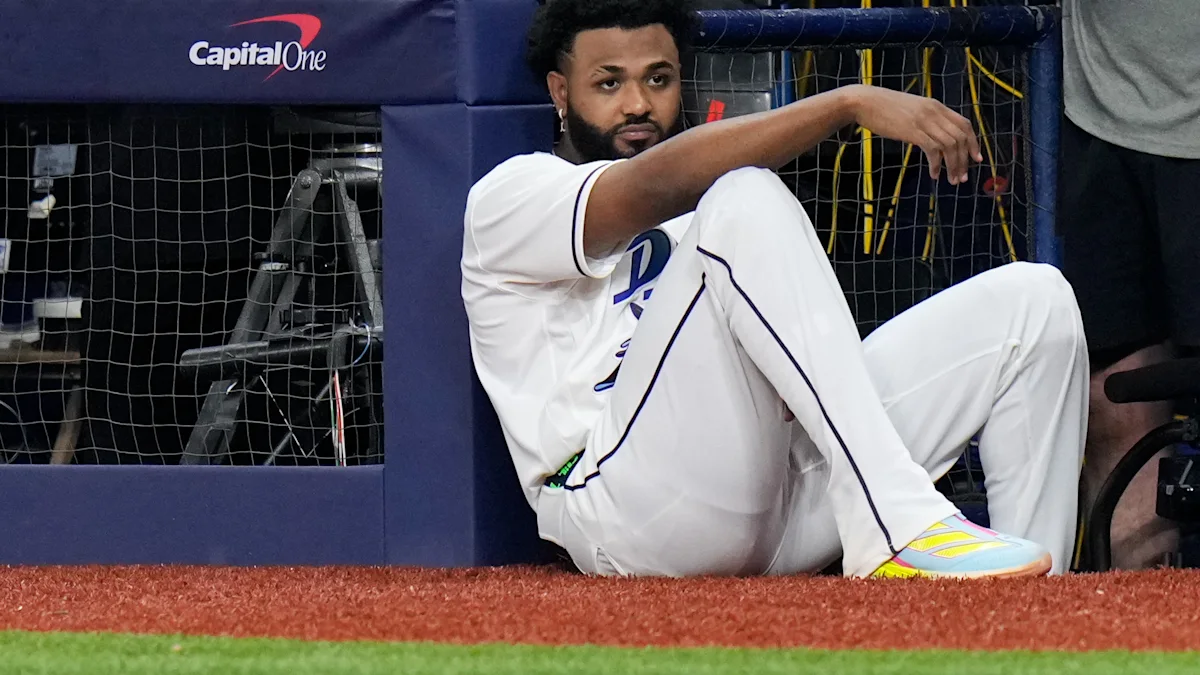
ST. PETERSBURG, Fla. — As the Milwaukee Brewers celebrate the first World Series title in franchise history, the Tampa Bay Rays' quest for baseball's pinnacle presses on.
This year's Fall Classic was the first since 1980 that guaranteed a first-time champion, offering a special opportunity for these particular Brewers and Rays to cement themselves as the group that finally pushed their organization over the finish line. In the end, it was the Brewers who emphatically seized the moment , completing one of the most dominant postseason runs in MLB history and leaving their opponents only to tip their caps.
"It's one of the best teams I've seen at any level, in any sport," Tampa Bay closer Bryan Baker said in the somber home clubhouse after his team's 4-1 loss on Wednesday in Game 5 .
"There are no holes in that team. They did everything they needed to do to win a World Series. So congrats to them — it was an impressive display of baseball."
That the Rays' season ended in a loss — and that their lone win in this year's Fall Classic required a last-gasp walk-off in the bottom of the 12th inning in Game 4 — should not overshadow what got them here in the first place. Tampa Bay was the best team in the American League for the overwhelming majority of the season and fortified that status by sweeping the rival Yankees in the ALDS and taking down the AL Central champion Cleveland Guardians in the ALCS.
But in this particular year, the Rays' distinction as the undisputed class of their league — with their 98 regular-season wins floating above their peers as the outlier in an otherwise lackluster American League — might not have prepared them for the battle-tested juggernaut that awaited on the other side of the bracket. Granted, it's unclear if anything could have sufficiently equipped the Rays — or any team — to take on the buzzsaw that turned out to be the 2026 Brewers.
"That's the best team I've ever played against," ace Drew Rasmussen said afterward.
After exhausting their bullpen to eke out a Game 4 victory in 12 innings to stave off elimination, the Rays' roadmap to another 27 outs in Game 5 was cloudy for manager Kevin Cash. There was some optimism for the early frames after Rasmussen volunteered to start on short rest for the first time in his career, but the plan beyond that was hazy — to say nothing of the ominous outlook on offense, with presumptive NL Cy Young Award winner Jacob Misiorowski starting for Milwaukee on regular rest.
Rasmussen ultimately performed admirably on Wednesday, recording more outs (12) than he did in his disappointing showing in Game 2 (11) while surrendering only one run. But with three elbow surgeries on his ledger, the Rays did not want to push him recklessly, especially given what he could mean for the organization moving forward. The Rays hold a $20 million team option for Rasmussen in 2027, which, if exercised, would simultaneously make him a bargain based on his performance and the highest-paid Ray in franchise history. So even in an elimination game, the Rays would take what they could get from their best pitcher and go from there.
"That guy is a stud," Cash said afterward. "His stuff was as sharp as it could have been."
"We had gone into the game saying it was 60 pitches or four innings. Stuck to that. That was the easiest call in the world to take him out of the ballgame. We've worked very hard with all of our pitchers and pride ourselves on doing right by them. We knew this was a big ask. [We] appreciate Drew Rasmussen so much for taking the ball."
Rasmussen departed after four innings down only 1-0, but it didn't take long before Milwaukee broke through against Tampa Bay's beleaguered bullpen. Cash went to right-hander Kevin Kelly for the fifth against the bottom of the Brewers' order, but across this October, the spot in the lineup barely correlated to how dangerous Milwaukee's bats could be. As such, it was little surprise when 7-8-9 hitters Cooper Pratt, Garrett Mitchell and David Hamilton rattled off three straight singles against Kelly to make it 2-0 Brewers.
Lefty Garrett Cleavinger then entered and struck out Jake Bauers to finish the inning, but he had less success when he returned to the mound in the sixth. He plunked leadoff man Christian Yelich and then surrendered an RBI double to World Series MVP William Contreras before making way for right-hander Tyler Wells — pitching in his fourth straight game and for the third day in a row — who yielded a sacrifice fly to Pratt to make it 4-0.
Meanwhile, Misiorowski was facing little resistance from the Rays' lineup. Tampa Bay mustered only a pair of hits — a Junior Caminero single in the first and a Chandler Simpson single in the fourth — before Misiorowski departed after 5 ⅔ scoreless innings due to a cramp in his right calf . Relievers JoJo Romero, Abner Uribe and Trevor Megill then combined to retire eight of the next nine batters, with only Simpson reaching on a Contreras throwing error in the seventh.
"We ran into a team that had elite starting pitching and then as elite of a bullpen as I've ever seen," Cash said.
In the ninth, the Rays got a pair of doubles from Hicks and Simpson to spoil the shutout, but Megill locked it down to finalize the historic triumph for Milwaukee.
The pair of extra-base hits in the season's final frame boost the totals a tad, but by the end of the series, Tampa Bay's bats had been quieted to a degree few teams had endured in World Series history. The Rays scored just 12 runs across the five games, with their bats combining to slash .182/.224/.242 with one homer, Hicks' first-inning blast in Game 2. Tampa's .466 OPS was the third-lowest in World Series history for a team that played at least five games, ahead of only the 1969 Baltimore Orioles (.430) and the 1905 Philadelphia Athletics (.386).
"They've got one of the best pitching staffs in baseball, and they've got an elite defense, too," Hicks said. "You combine that, and it makes it really tough.
"I don't think we hit how we think we were capable of, but you got to give them credit, too. They were on an unbelievable run."
As the Brewers spilled over the dugout railing and onto the field to celebrate, the Rays lingered to watch and wonder what could have been. The scenes evoked not just respect but also relatability. Both teams have routinely outperformed preseason expectations and thrived in smaller markets, with payrolls dwarfed by big-market behemoths. On Opening Day, FanGraphs forecasted both clubs to win 81 games, giving the Brewers a 4.2% chance and the Rays a 3.2% chance of winning their respective leagues.
Yet here they were, the last two teams standing at the end of October.
"Just proud to be a part of this group," Baker said. "Coming into the season, we were picked fourth or fifth in the division. I think we outshot that a little bit — proved some people wrong."
At the same time, the degree to which the Brewers outclassed the Rays in this Fall Classic highlighted the gaps between the two as Tampa Bay continues its pursuit of its first championship.
"The perspective should be, [now] we know what it takes to win, right?" veteran right-hander Nick Martinez said afterward. "We didn't really play to that standard. Watching a team like that, playing against such a high-caliber team like that should elevate guys' play."
From a roster-construction standpoint, Milwaukee has brilliantly blended the development of ultra-talented homegrown players with an array of impact additions via trade, with free agency hardly relevant to its team-building equation. The Rays too have excelled in trades for years, both identifying lower-level future stars such as Caminero or undervalued young big leaguers such as Yandy Díaz or Rasmussen and striking big at the deadline, as they did this summer with Hicks and right-hander Freddy Peralta.
This season, Tampa Bay made hay by leaning into defensive specialists such as Taylor Walls, Ben Williamson and Jonny DeLuca, with a select few sluggers in Caminero, Díaz and Jonathan Aranda carrying the offensive load. That strategy was enough to dominate in the regular season, even with a top-heavy pitching staff that did not feature the depth of recent elite Rays teams. But as the stakes and the quality of opponent elevated in October, it became more difficult for Tampa Bay's relatively thin lineup to keep pace with a comprehensive club like the Brewers.
Nevertheless, the Rays have the kind of well-respected and creative front office infrastructure that suggests the ongoing wait to win it all might not last much longer. There's also optimism rooted in a new ownership group that has made strides toward securing a new ballpark across the bay in Tampa that could be ready for Opening Day 2029.
But with Milwaukee off the board, the Rays are one of just four franchises still seeking their first World Series title — and none has been to the Fall Classic more frequently than Tampa Bay. To arrive in the final stage and fall short once again — no matter the quality of the opponent — will sting for a while.
"It sucks because we believed with everything we had that we could win it all," Martinez said. "But it was a hell of a ride with a very special group of guys."
Topics in this story
Gathered from external sources. Rights to this text belong to whoever originally published it.