Yankees Birthday of the Day: Snuffy Stirnweiss
The man known as “Snuffy” had two of the best individual seasons in Yankees’ history.
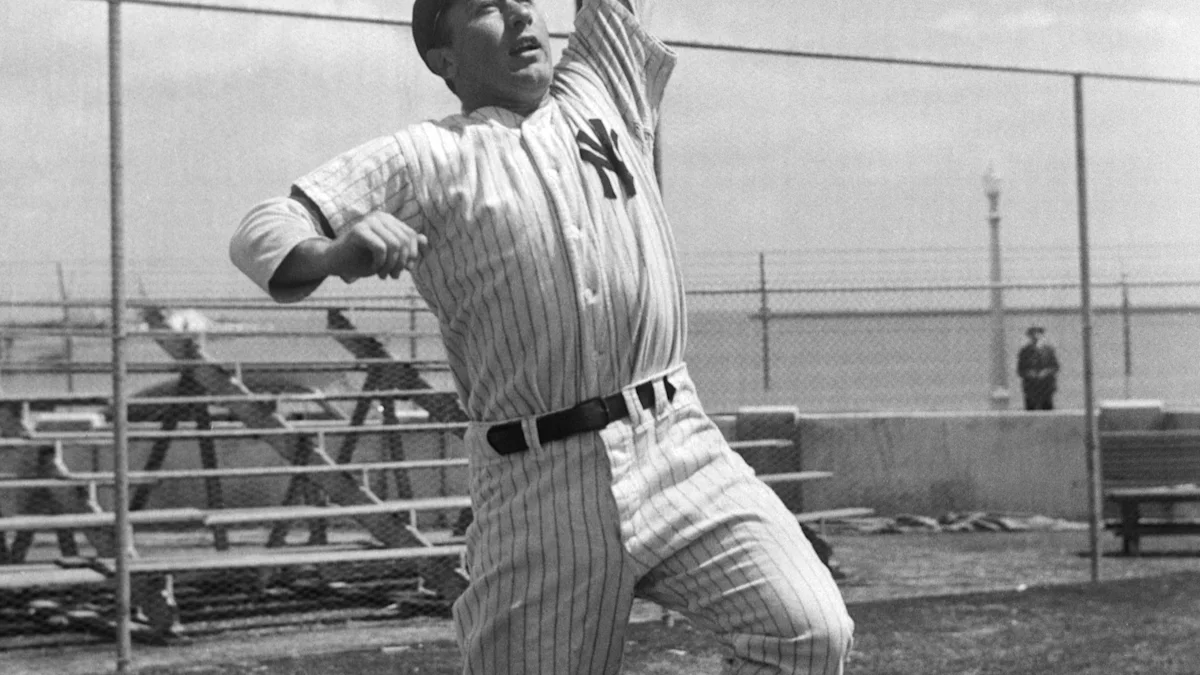
According to Baseball Reference WAR, Babe Ruth, Lou Gehrig, Mickey Mantle, Aaron Judge, Rickey Henderson, Alex Rodriguez, and Joe DiMaggio are the only Yankees position players to have had better single seasons in pinstripes than George "Snuffy" Stirnweiss. All of those guys are either Hall of Famers, on the road to be (Judge), or have the stats to be and aren't in because of…reasons (A-Rod). As for Stirnweiss, his greatness came in part due to circumstances beyond any baseball player's control.
However, his 1944 and '45 seasons are forever in the record books as some of the best in franchise history. On what would have been his 108th birthday, let's look back on the life and times of "Snuffy."
George Henry "Snuffy" Stirnweiss Born: October 26, 1918 (New York, NY) Died: September 15, 1958 (Newark Bay, NJ) Yankees Tenure: 1943-50
George Stirnweiss was born to Andy and Sophie in 1918 in the city he would later play professionally in: New York. He showed an aptitude for athletics from a very early age, starring for Fordham Prep in baseball, football, and basketball. Back then, football was the sport he was arguably best at, and he parlayed that success into a college sports career at the University of North Carolina.
While at UNC, he would captain both the football and baseball teams, the gridiron was primarily where he generated headlines. He did a little bit of everything for the Tar Heels, playing a quarterback/running back hybrid position. (Football was way different in the 1930s.) Besides that, he also punted and returned punts, playing all over the field.
During that time, he was also starring on the baseball field, hitting .390 as a senior. That caught the eye of legendary Yankees' scout Paul Krichell. While Stirnweiss was selected by the then Chicago Cardinals in the second round of the 1940 NFL draft, Krichell and baseball won Stirnweiss over, as he thought the diamond provided him better professional future than the gridiron. Upon his graduation, he inked a deal with the Yankees, who had been his childhood favorite team.
Stirnweiss started his career with the Norfolk Tars of the Piedmondt League. There he got his "Snuffy" nickname. A teammate dubbed him "Snuffy" after seeing Stirnweiss use both chewing tobacco and a cigar, asking Stirnweiss where the snuff was as well.
After a couple good years in the minors, Stirnweiss impressed manager Joe McCarthy in spring training 1943. Impressed by his speed and potential, McCarthy took a liking to him and named him to the team's roster despite the fact that his preferred second base position was occupied by Joe Gordon.
Stirnweiss made his MLB debut on Opening Day of 1943, playing shortstop and hitting leadoff. He recorded his first hit with an RBI single off Early Wynn of the Washington Senators in the fifth inning in a 5-4 win. While he did get the start in a prominent spot in his first big league game, Stirnweiss ended up more in a utility role in the 1943 season. He appeared in 83 games, hitting .219/.333/.288 (82 OPS+), playing mostly at shortstop with Phil Rizzuto away in the military.
That year, Stirnweiss also helped the Yankees to the AL Pennant and a World Series matchup against the Cardinals. He played in just one game and got one plate appearance in the Fall Classic, but it ended up being a bit of an important one. With a runner on first, He laid down a sacrifice bunt attempt with the Yankees down 2-1 in the eighth inning of Game 3. Cardinals' third baseman Whitey Kurowski made an error on the play, allowing all runners to be safe. The Yankees ended up scoring five runs in the frame, as they took a 2-1 lead in the series, which they eventually won in five games.
Gordon was drafted into the military ahead of 1944, and Stirnweiss became the regular second baseman and turned in two of the most underrated great seasons in Yankees' history. In that first season, he led the league in hits (205), triples (16), and stolen bases (55). He finished just a couple points off the batting title and put up, in retrospect, a 139 OPS+ and an AL position player-leading 8.6 rWAR and a 9.0 fWAR. With several other prominent Yankees away, he was the team's best player. Unfortunately for him and the team, without the players that were away serving, the Yankees fell to third in the AL. Despite all that, Stirnweiss finished fourth in MVP voting, and arguably could've won.
So, how do you follow up a historic breakout season? If you're Stirnweiss, you put up an even better one. In 1945, Stirnweiss led the league in hits, runs, triples, stolen bases, batting average, slugging percentage, total bases, rWAR, and fWAR. The most eventful of those leaderboards was the batting title race, which went right down to the last game of the season.
On the final day of 1945, Tony Cuccinello of the White Sox went into the day at .308, leading Stirnweiss, .306, by just a couple points. On that day, Chicago saw their game rained out and wasn't required to be finished. Meanwhile, over in New York, the Yankees played their game. Stirnweiss made the most of things, going 3-for-5. His batting average rounded up just enough to finish at .309, giving him the batting title by just a single point. Historically, that wasn't a particularly high BA to win the title, but Stirnweiss is forever one of a handful of Yankees to have accomplished that feat.
Admittedly, the league as a whole was weakened by players away in the military, and Stirnweiss never reached those peaks again. He still remained a regular for the Yankees for the next several years, helping them to championships in 1947 and '49.
By the end of his Yankee career, Stirnweiss had been overtaken at second base by Jerry Coleman. That led to him being traded to the St. Louis Browns in June 1950. He was traded to Cleveland after that season and spent parts of the next two seasons there. Stirnweiss didn't return to the majors after 1952 but spent a couple years after that playing and managing in the minors. He eventually left baseball to get more stable work.
In 1958, Stirnweiss was working as a foreign freight agent when on September 15th, while on his way to work, he died when the train he was on derailed and slid into Newark Bay. Stirnweiss was sadly one of 48 people who lost their lives in the accident, passing away a month short of his 40th birthday.
In addition to tragically leaving behind a wife and six children, Stirnweiss' death also left his former teammates devastated — especially Rizzuto. The Scooter credited Stirnweiss with helping him eventually land the Yankee broadcaster job, which made him a beloved figure for generations. After the Yankees released Rizzuto as a player, he was irate. Stirnweiss told him to go home and cool down before he did anything he regretted. Rizzuto did so, avoiding harsh public critique of team management or ownership, which might have ended his broadcasting gig before it ever even came about.
Stirnweiss wasn't good enough long enough to get a place in Monument Park or his number retired or anything like that. However, there are few players who has as good a two-year run as he did.
See more of the "Yankees Birthday of the Day" series here .
Topics in this story
Gathered from external sources. Rights to this text belong to whoever originally published it.