Orioles owner David Rubenstein says quiet part out loud before lockout: His MLB peers are making a ton of money
The Orioles owner had some interesting things to say about the league's finances.
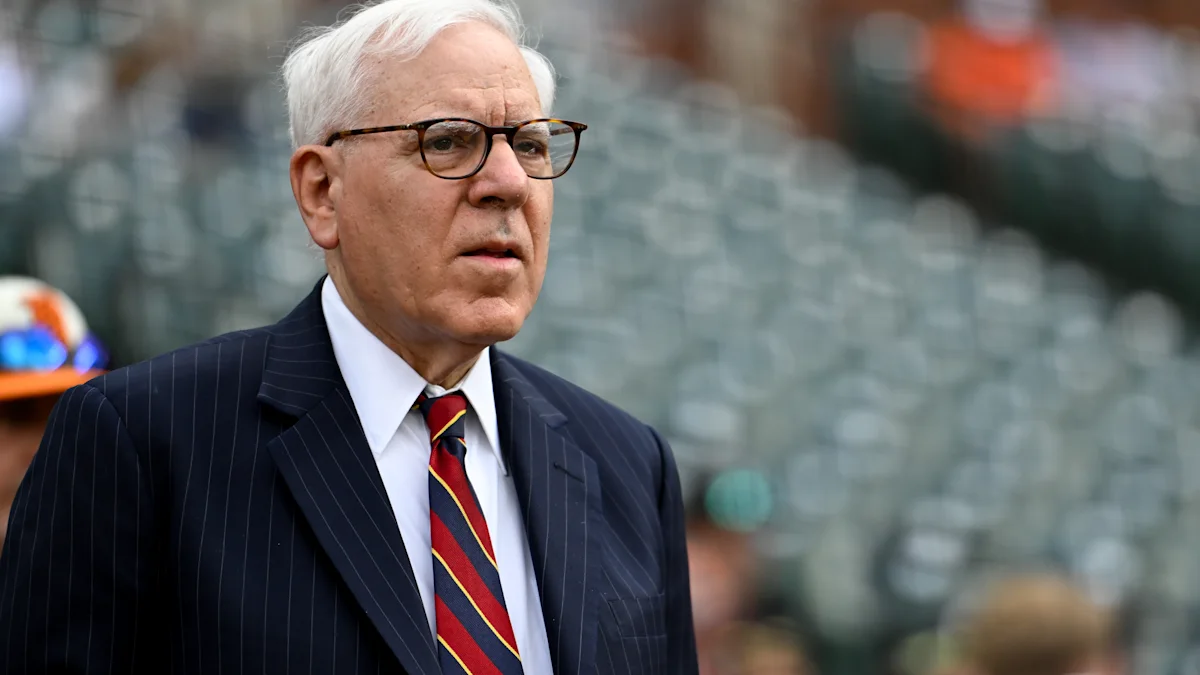
All indications are that we are headed toward an MLB lockout once the 2026 season is over. If that's the case, Baltimore Orioles owner David Rubenstein said the exact opposite of what owners are supposed to say on Thursday.
Speaking with a group of other local team owners at the Economic Club of Washington, D.C., Rubenstein was discussing the unexpected challenges of owning an MLB team when he threw in a little nugget about his thought process in buying the Orioles in the first place.
"A lot of my friends were buying teams, and I realized they're making money. They're making more money than I'm making in private equity," he said. "I thought I should look at it as a financial thing, but ultimately, I bought the Orioles for a philanthropic purpose."
Rubenstein purchased a majority stake in the Orioles from the Angelos family in 2024, at a valuation of $1.725 billion.
It feels obvious to say that MLB owners are making a ton of money, with the income apparently surpassing even what Rubenstein makes from The Carlyle Group private equity firm he co-founded ( which drove his estimated net worth above $4 billion ). Billionaires rarely buy something if they aren't going to make money from it.
However, that's not the image the owners will be projecting once the likely lockout begins. They want a salary cap, so we are about to hear a lot about how the league's finances are unsustainable without a salary cap and how small-market teams such as Rubenstein's Orioles need a salary cap to compete with large-market teams such as the Los Angeles Dodgers ( pay no attention to what happened to that team on Thursday ).
Rubenstein himself has called for a salary cap multiple times. Unless his MLB friends are some combination of Mark Walter (Dodgers), Steve Cohen (New York Mets), John Henry (Boston Red Sox) and the Steinbrenner family (New York Yankees), what he just said undercuts the financial necessity of a cap.
Rubenstein did claim that his peers care about winning more than making money:
"Lots of people want to be owners and lots of people don't realize how hard it is to be an owner. I keep telling people, it's not as easy as I thought," he said. "The owners care more about winning than making money. They're not against making money. Of course, they don't want to lose money. The obsession with winning and beating your competitors is really what drives these people who own these teams. There's nothing as satisfying as winning a championship."
"Lots of people want to be owners and lots of people don't realize how hard it is to be an owner. I keep telling people, it's not as easy as I thought," he said.
"The owners care more about winning than making money. They're not against making money. Of course, they don't want to lose money. The obsession with winning and beating your competitors is really what drives these people who own these teams. There's nothing as satisfying as winning a championship."
Of course, this only matters if public opinion matters in a labor negotiation. MLB has acted as if that's the case, using its main social media accounts to publicly negotiate with the MLB Players Association. But ultimately, it will be representatives of the owners and players in the negotiating room and no one else.
Rubenstein's Orioles tenure has so far not been as successful as hoped, given that he took over the team in the aftermath of a 101-win season with a promise to spend more than his predecessors. The 2024 Orioles were among baseball's more disappointing teams, falling to 91 wins and a wild-card sweep, and the team failed to break .500 in both 2025 and 2026.
That all adds up to a pivotal offseason in Baltimore, even beyond the CBA negotiations.
Topics in this story
Gathered from external sources. Rights to this text belong to whoever originally published it.