Prediction markets are partnering with top athletes and sports teams. Why it’s taking the magic away for many fans
Partnerships between prediction markets and teams have for some, become emblematic of what fans see as unfettered greed permeating throughout sports.
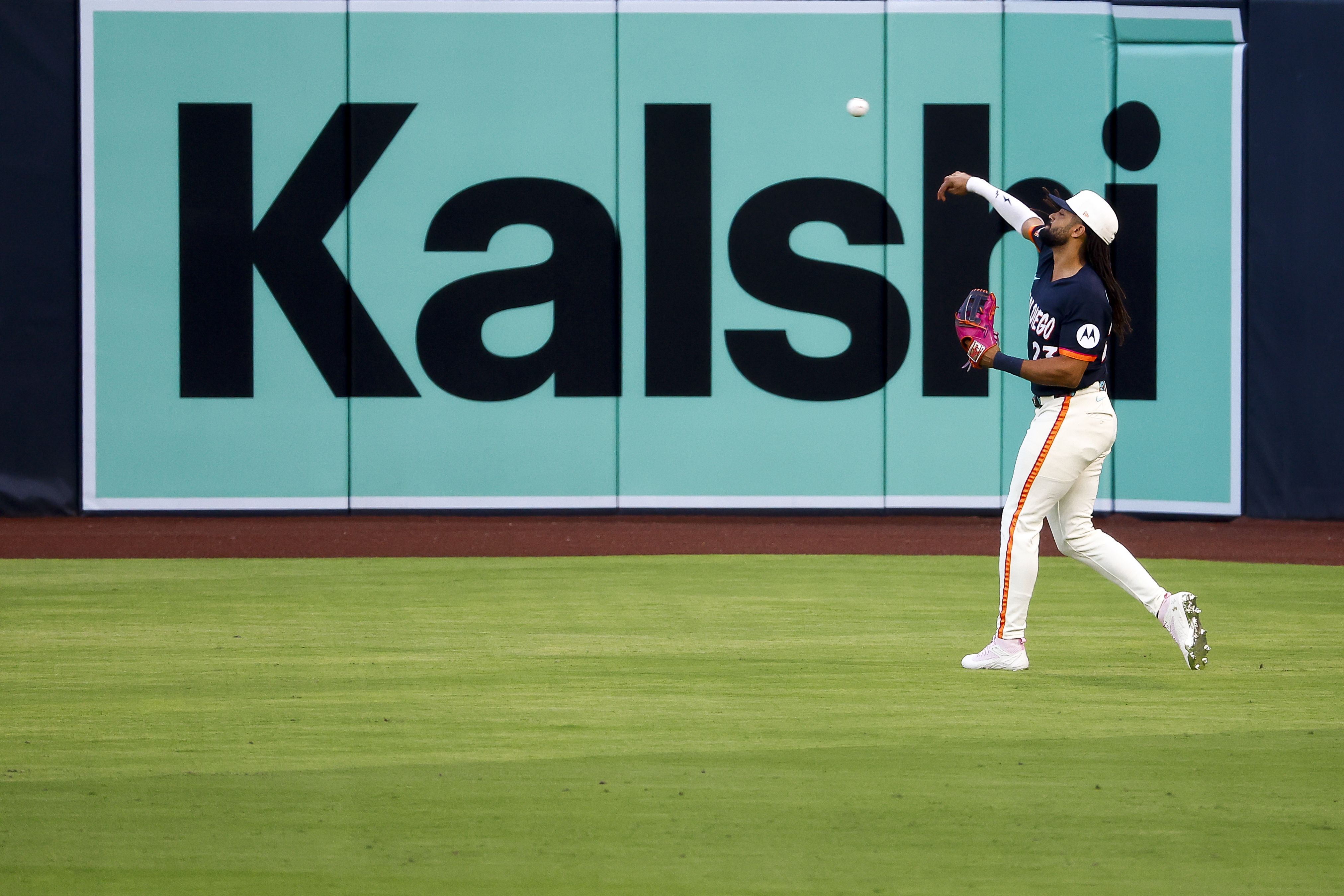
In college, JJ Allison was so successful at sports betting that even the friends of friends who functioned as low-level bookies stopped taking his money. That success translated to legal sports books as well when those debuted. Eventually they, like the bookies, didn’t want him betting with them either. His bets were limited to cents at a time. Prediction markets, however, don’t limit winners. That’s part of why Allison, now 25, prefers them and how he’s able to make a living as a professional prediction market trader. He’s steeped in these platforms, professionally invested, and not prone to conspiratorial concerns about insider trading or game fixing. And yet, when CNN Sports asked to speak with people who bet on sports but don’t like prediction markets partnering with sports leagues, teams or athletes themselves, Allison was among the dozens of fans who reached out. “While I’m obviously very invested in Prediction Markets, I think the permeation of ‘gambling’ into every fabric of society is incredibly detrimental,” he wrote in his initial email. Nowhere is that permeation more widespread than in sports. In the years since a Supreme Court ruling opened the door to legalized sports gambling in 2018, teams and leagues have embraced partnerships that have turned broadcasts, ballparks, arenas and, for a time, an entire regional sports network into billboards for sportsbooks like FanDuel and DraftKings. Eight years into this gambling frenzy, virtually every major sports league in America has one, if not multiple, partnerships with sports books. Most teams do as well. Leagues, like MLB and the NFL, have leveraged these partnerships to try to limit certain kinds of bets that are understood to be particularly vulnerable to manipulation. But the dangers and damages of even legalized sportsbooks are well documented. And their ubiquity, many fans say, feels increasingly oppressive. The result is that some sports enthusiasts who were initially excited about legal opportunities to bet on sports are now resentful of teams and leagues for “shoving it down everyone’s throat,” as 25-year-old Connor Lew from New York City told CNN Sports. These prediction market partnerships have, for some, become emblematic of what fans see as unfettered greed on the part of teams, players, leagues and platforms believed to be degrading their experience of sports writ large. “It’s another version of the fact that you have to have eight streaming platforms if you want to watch every game. They’re looking for every way to extract every last dollar from the fans, and that would be me,” said 54-year-old Rick Brody in Queens, NY. It is in this atmosphere of increasing backlash to sports gambling that nearly a quarter of MLB teams announced partnerships with prediction markets over the summer, following a league-level deal at the start of the season, and were met with a response that reflected not just fatigue, but betrayal. Asked if their particular concern was motivated by the prediction markets specifically or the broader encroachment of gambling into sports, fans differed. For some, the seemingly lax federal regulation and pending litigation around prediction markets raised alarm bells. For others, they lumped them in with sports books. The general consensus was that this latest wave of partnerships felt like a final straw, or a bridge too far. To them, it’s gambling creep – from the shadowy corners of offshore bookies to something mainstream superstar athletes are eager to promote. These fans don’t hate betting – plenty of them partake – but this is different. Many of those who spoke to CNN Sports said they feel like the thing that they love – the thing that connects them to their dad or their mom or their hometown or their friends – is making a mockery of that love. Many of them say these partnerships make the fan feel like a mark for helping the rich get richer. Allison worries everyday fans are being conditioned to see the diamond – or the court or the field – as slot machines and the human athletes as spinning symbols that sometimes align as dollar signs. “If you’re a family going to like the ballpark with your kids on a Saturday afternoon or something, I don’t think that gambling should really be a part of it,” Allison said. “I think that adding a money aspect just kind of incentivizes the wrong thing. “Like people may go and they say, ‘Oh, I’m rooting for the (New York) Yankees to win.’ And then in six years, most people at the Yankees game are there because they want to make money on the Yankees winning. And it’s not really about the Yankees winning or losing – it’s about them making money in the process.” CNN has a partnership with Kalshi and uses its data to cover major events, though CNN editorial employees are prohibited from trading on prediction platforms. The feeling that everyone’s making a buck off the fan When LeBron James announced a partnership with prediction market Polymarket on X – in a video featuring Eli Manning and Derek Jeter, among other celebrities – the replies were filled with accusations that he was “selling out.” “He’s just rubbing it in now huh,” one person posted in response. “It” here is something like financial security – wealth, and how it often seems that in order to have access to it, you must already possess it. The deal is reportedly worth $15 million a year, nearly four times what James is paid to play basketball for the Philadelphia 76ers. But also, to be more specific, it is how the adoration of sports fans made James a billionaire and gave the kid from Akron, Ohio, access to a space labeled “sports” but positioned – as shown on the elevator panel in the Polymarket ad – between “crypto” and the “economy.” What some people who spoke to CNN Sports saw in the ad was an exclusive club of sports celebs reveling in how good it is to be rich – laughing about being part of an inside joke where the punchline is the fans. “I hear rich people state all the time that money doesn’t buy happiness,” Brian Carroll, a 22-year-old professional gambler from Philadelphia, wrote in an email exchange after the partnership was announced, “then see people who already have more money than they could spend in 10 lifetimes willing to make the world worse to get more of it.” “I don’t feel like what I do is immoral. But I do think these things are bad,” he said of the prediction market partnerships when he spoke to CNN Sports before the ad was released. CNN Sports reached out to James’s agent for comment and did not receive a response. Backlash to MLB team partnerships Ahead of this season, Major League Baseball announced a league-level partnership with Polymarket. In July, the New York Mets became the first MLB team to strike an individual deal with a prediction market, partnering with the lesser-known peer-to-peer platform Novig. The announcement was flooded with critiques and the Mets’ post announcing the partnership on X was deleted and reposted multiple times. Soon after, the Yankees announced their own partnership with Polymarket. And then Kalshi announced it had partnered with five other teams, including the Los Angeles Dodgers. Some outlets speculated the muted rollout of Kalshi’s new partnerships was a response to the backlash the New York teams received, although the teams disputed that characterization to CNN Sports. (The Yankees declined to comment on their Polymarket partnership. The Dodgers and Boston Red Sox declined to comment on their Kalshi partnership. The Mets, Atlanta Braves and San Diego Padres did not reply to a request for comment.) “We’re pleased to welcome Kalshi to the Giants family,” said Steve Tseng, senior vice president of partnerships for the San Francisco Giants. “Creating unmatched experiences for our fans is a top priority, and we’re excited to work with Kalshi to deliver on that commitment.” In a statement, Novig said, in part, “The current online sportsbook model is predatory because sportsbooks make money when their customers lose, which creates inherently misaligned incentives. Our exchange model is different: we don’t profit from customer losses, winners are rewarded, and that makes for a fundamentally better product.” “We work with leagues and teams to give fans new ways to engage with the games they love, and with integrity built in from the start,” a Polymarket spokesperson said. Novig also pointed to its 21-and-older age requirement, which is unique among prediction markets. Kalshi did not comment on the fan frustrations specifically. As the law currently stands, prediction companies are treated like financial exchanges and are regulated by the federal government. But dozens of states argue that these companies offer gambling, and they’re fighting in courts across the country to apply their state gaming regulations. The companies are regulated on the federal level by the Commodity Futures Trading Commission, or CFTC, which has historically focused on overseeing soybean futures and oil derivatives. And prediction platforms are required to police insider trading and report fraud on their sites, among other things. But in the words of the Ninth Circuit Court of Appeals, which ruled in August that states can regulate prediction market sites, “the CFTC is not a national gambling regulator.” There is no federal analogue to state laws that restrict deceptive marketing, promote responsible gaming and fund addiction programs. In contrast to other sports entering into partnerships with the prediction markets as they stand, the NFL recently came out in favor of increased regulation. The league, which accounts for the largest volume of trades on prediction markets, filed an amicus brief urging the Supreme Court to let states regulate prediction markets as they do sportsbooks. ‘It’s like when you find out Santa Claus ain’t real’ When CNN Sports put out a call on social media to talk to people who bet on sports but do not like their teams partnering with prediction markets, the callout received dozens of responses. The Kalshi CEO publicly criticized the line of inquiry, and that inspired another deluge of emails. Among the responses, accusations that that these partnerships are “predatory,” “slimy and scammy,” “disingenuous, if not completely hypocritical,” “disgusting,” “dirty,” “dangerous to young people,” and “all so f**king gross.” These are people who care enough about sports – a “sacred medium,” as John B. from Boston called it – to be concerned about these partnerships with prediction markets corrupting the space. They concede that some of this is probably just part of getting older and becoming more cynical about the financial motivations at the core of institutions preying on their emotional investment. And yet, these partnerships inspire a particular fury. “If you make it so overtly about the dollars, then it’s not the magical thing why people love it,” said Alexander Tsipis, a 30-year-old from Boston who was among more than a dozen people CNN Sports spoke to in depth about their objection to these partnerships. “It’s like when you find out Santa Claus ain’t real. Christmas starts to suck,” said Dustin Franklin, a 43-year-old attorney from Tennessee who now lives in West Virginia. “And that’s kind of what it is with gambling and sports.” “I personally think it’s sort of just like a late-stage capitalism thing,” says Miles Grossman, a 25-year-old aspiring sports broadcaster in the New York area. “As wealth gets more concentrated at the top, the masses feel like, ‘Well, I cannot possibly get rich, so at least I could possibly get a little money this way if I play my cards right.’” Grossman has been betting for more than half his life. His dad was a gambler – “what I’d like to call a very responsible sports bettor,” he says. After college, he worked at FanDuel for a stint. These days he gambles on both the legal sportsbooks and on Kalshi. But Grossman says betting and trading seems less cool – “loser s**t” as he puts it – now that they’re omnipresent and the dangers of gambling addiction are widely known. “The idea of getting rich off gambling is such a joke in 2026,” Grossman said. “Like there’s so many barriers to it.” At a time when cost of living is soaring and the job market is precarious, it’s not hard to fathom why more than a quarter of young people say sports gambling is part of their long-term financial plan. But Allison and Carroll are rare exceptions. Broadly speaking, fans don’t get rich from betting on sports – in fact, nearly one-third have gambling debt – and they don’t benefit from partnerships between betting platforms and their favorite teams. It doesn’t make the experience of watching or attending a game better or cheaper. It doesn’t make the on-field or on-court team more likely to win. “But what does come to fruition is some rich dude is getting richer at my f**king expense,” Franklin said. Undermining the public’s confidence? Nobody CNN Sports spoke to speculated that the prediction market partnerships were currently tied to any nefarious schemes within sports. But most mentioned that the increased integration between gambling and sports would inevitably erode public confidence in the product over time. “Not that I’m saying any one individual I would suspect of doing something fraudulent, but it’s just so obviously present as a potential that it’s scary,” said Bobby Fallarino, a 32-year-old teacher from Queens, New York. It’s an optics issue as much as anything else. When scandals are revealed, teams and leagues with close ties to gambling companies are accused of hypocrisy. (It’s worth noting, the CFTC has proposed limiting markets that are especially vulnerable to individual actors.) When the officiating feels unfair or there’s a late-game swing in fortunes that meaningfully alters the outcome, “You start asking, ‘Is the fix in?’ or whatever. Instead of just being like, ‘Oh, that’s crazy,’” said Ben Gibson, a 40-year-old from North Carolina. A Polymarket spokesperson responded to concerns about insider trading by saying, “Insider trading is banned on our platforms, and athletes, coaches, officials and anyone else who can influence an outcome can’t trade. We enforce those rules with advanced, real-time surveillance. We restrict accounts, refer cases to authorities, and strict monitoring has helped lead to federal insider-trading charges. Our league partnerships also let leagues see trading around their games and flag concerns directly.” And Kalshi spokesperson Elisabeth Diana said, “Insider trading happens in all financial markets, from stock markets to prediction markets. Prediction markets distill trading into a single question — narrowing the range of information material to a traded event contract. We may see different types of insiders trying to break the rules, but it also may be simpler to prove insider trading in some of these cases because the material info is narrower and easier to identify. On Kalshi, and under federal law, insider trading is banned. We surveil, investigate, and punish it.” But that doesn’t mean the perception isn’t out there. “People are a lot more likely, I think, to lean into the implication now,” Gibson said of the conspiracy thinking that can follow a controversial call that leads to losing money. “I think the leagues can only blame themselves because this is who they’re partnering with.” And even the respondents who are skeptical of anything actually affecting the integrity of the games, are concerned about the possibility – known to exist beyond sports – of insider trading on the prediction markets. “From layman’s perspective, it just seems like it’s a platform that lends itself so much more to the insider trading,” said Jorge Adames-Reyes, a 25-year-old Harvard Law student, who pointed to what he called a “refreshingly bipartisan effort” to litigate prediction markets as evidence that these platforms have not been sufficiently vetted. At least some of the team partnerships are only through the end of this baseball season. MLB’s league-wide deal reportedly includes exit-clauses in case the legality of prediction markets change. “But in the meantime, (the message seems to be), ‘We’re happy for you to spend your money with us and watch a Mets broadcast and be exposed to Novig commercials,’” Adames-Reyes added. “I think that’s the part that ideologically just makes me feel really uneasy.” Why it matters so much to fans Fans are eager to talk about these prediction market partnerships because they want the people in positions of power to understand that they’re not stupid, even if they find themselves as pawns in enriching people on either side of the deals. No one said they would stop watching their favorite team or betting as the result of these partnerships, but fans still express frustration. “They really are just laughing in your face because Kalshi knows (Milwaukee) Bucks fans aren’t going to stop rooting for Giannis,” Franklin said (referring to Giannis Antetokounmpo’s team at the time of the deal) – and that extends to fans of any team or player with a prediction market partnership. Even the winners understand that gambling on sports comes at a cost. “With betting, it’s very much an anti-fandom,” Carroll, the professional gambler from Philadelphia, said. “Like, it makes it less fun to watch sports.” And sometimes, you have to lose to retain any fun at all. Allison, the professional prediction market trader living in Miami, watched the Super Bowl in Las Vegas this year – epicenter of sports gambling – surrounded by neutral fans. But as a kid, he watched New England Patriots games at home in Massachusetts. The rational part of him that knows how to empirically assess a smart bet knew he should put his money on the Seattle Seahawks to win. “But I kind of felt this moment of betrayal,” he said reflecting on that experience. “Here I am at 25 years old now, betting against the team that I grew up rooting for because I think it’ll make me money. And I felt almost disgusted with that idea.” So, he didn’t. Allison put a little bit of money on the Patriots. They lost, and so did he. Even though he broadly benefits from the system that allows wagering on sports, in this instance he sacrificed some amount of money to prioritize the purity of the fan experience. Fans just want their favorite players, teams and leagues to do the same.
Topics in this story
Gathered from external sources. Rights to this text belong to whoever originally published it.