MLB testing restrictions on outfielder positioning in Arizona Fall League, hoping to boost extra-base hits
Under the new rule, outfielders have to play 'straight up,' rather than shifting in one direction or another based on an opposing hitter's tendencies.
Major League Baseball saw a slight uptick in the amount of runs per game this season, with 4.48 scored. However, the league apparently wants to see more offense — or at least more action on the bases with more doubles and triples in game action.
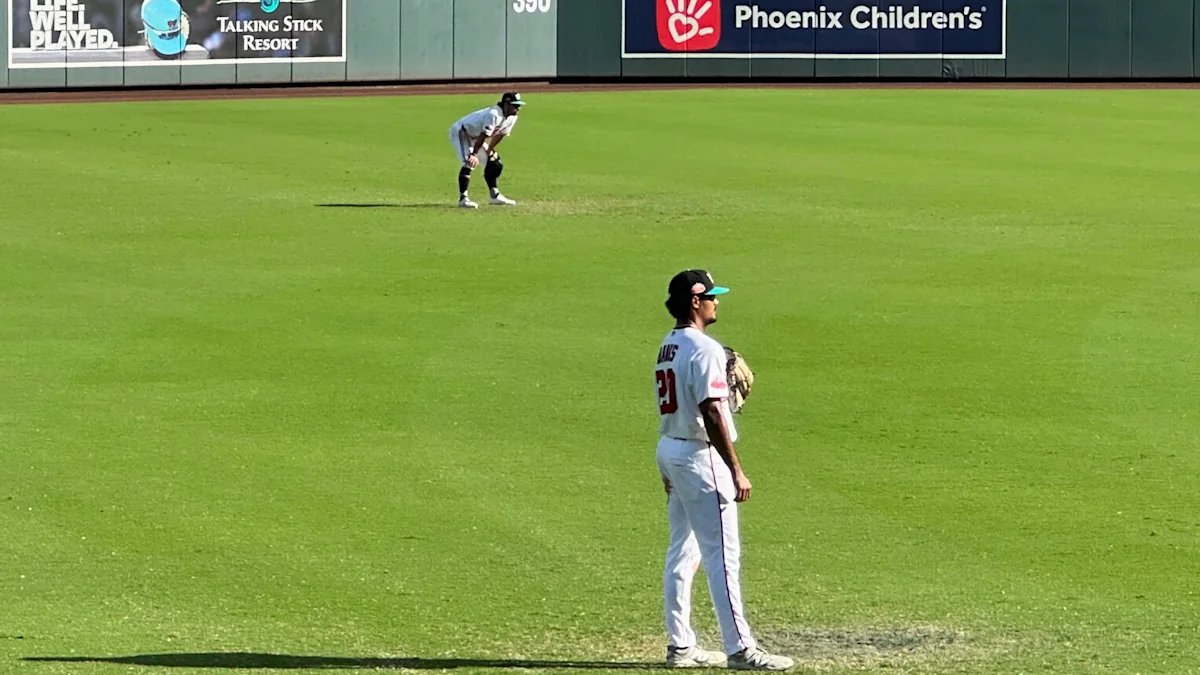
In an effort to boost that activity, MLB is testing a new rule that would require outfielders to play their positions "straight up," rather than shifting in one direction or another to defend against an opposing hitter's tendencies, according to the Associated Press .
The new rule is being tested in the Arizona Fall League, which began on Oct. 3 and news of the restrictions was reported then . Outfielders will be shown whether or not they're positioned correctly by a small video board. If they're playing straight up, a green "O" will be shown for their position. Anyone shading to the left or right, playing more shallow or deep, will see a red "X" telling them to move.
However, the new rule only applies to games being played at Salt River Fields, the spring training home of the Arizona Diamondbacks and Colorado Rockies, because the ballpark has technology similar to what's utilized at MLB stadiums.
"We talked to our guys about embracing it, it only happens in our ballpark, so embrace it and move on," Salt River Rafters manager Ted Tom told the AP . "There's going to be some things that we've never seen before. That's OK, just keep playing."
"The hardest part is cutting off doubles in the gap and they're even turning into triples," Minnesota Twins prospect Kyle DeBarge told the AP's David Brandt . "That's what they told us they wanted in the beginning. So it works."
Though the outfield restrictions are designed to potentially increase offense, the possibility of creating more impressive defensive plays — such as an outfielder running and diving into the gap, or running back to the wall — could increase, as well.
Thus far, one casualty in game play has been bloop singles because the restrictions force outfielders to play more shallow.
"Your first move is always back with how shallow you are — lots of running, said Teo Banks, a Washington Nationals prospect. "But I think there's some part of strategy that's taken away with something like this."
Asked if the new rule might be too drastic of a change, Tom smiled and didn't answer the question.
The Arizona Fall League has already been a testing ground for rules that were later implemented in the minor leagues and then the majors, such as the pitch clock and prohibiting infield shifts.
While those changes have helped increase pace and reduce the length of games, they have had little effect on offense.
The numbers of runs and hits per game have only upticked slightly in the past 15 years or so , while doubles and triples have roughly stayed the same. Batting average has decreased during the past 10 years (though harder-throwing pitchers and more strikeouts is more responsible for that).
Topics in this story
Gathered from external sources. Rights to this text belong to whoever originally published it.