Extremely speedy action by probe agency can create doubt: SC
India News: New Delhi: The speed at which CBI sprang into action on a bribery complaint and laid a trap within hours to catch a public servant could give rise to .
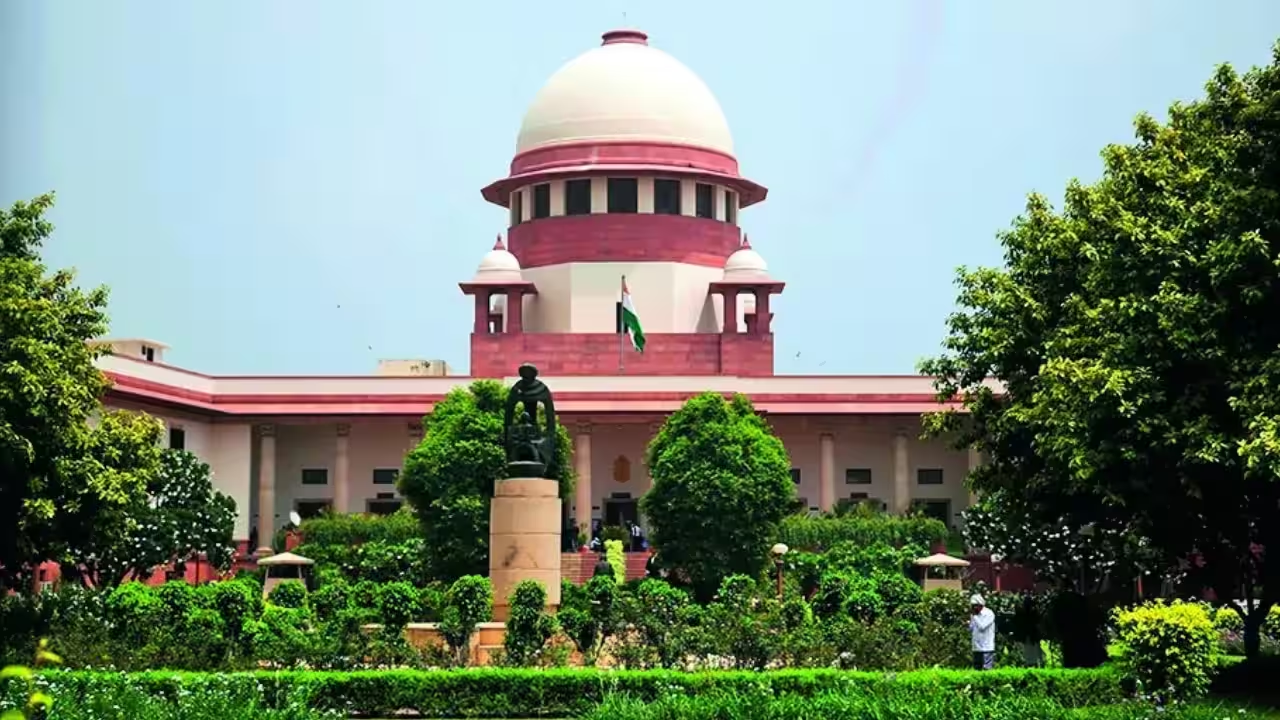
New Delhi: The speed at which CBI sprang into action on a bribery complaint and laid a trap within hours to catch a public servant could give rise to suspicion, which, Supreme Court said, could not be brushed aside and had to be examined.Finding fault with CBI's investigation, Justices Dipankar Datta and N K Singh acquitted the official in a two-decade-old case as he was not caught with the bribe money. It was an intermediary who accepted it and CBI failed to prove it was meant for the accused, SC said.The complaint made in 2005 alleged that the accused, working as a divisional security commissioner in Railway Protection Force, had demanded illegal gratification from subordinate officials for transfers and postings. CBI immediately lodged an FIR and laid a trap just hours later, catching the intermediary.The intermediary, who alleged that he accepted the bribe on behalf of the official, was given a pardon.SC said since the FIR was lodged on Aug 4, 2005, at 2pm and CBI decided to lay the trap on the same day, the agency must have verified the authenticity of the complaint before the trap was planned. "It is surprising that CBI started the investigation of a cognisable offence by way of verifying the complaint of bribery even before the formal FIR was lodged... The entire trap was arranged between 2 pm to 4.30pm. While the investigating agency cannot be faulted for organising the trap in such an extraordinarily speedy manner, it can raise certain doubts. The trial court, however, brushed aside the doubts raised by the appellant," the bench said.The court said criminality under Prevention of Corruption Act did not arise merely because money changed hands. "Before criminal liability can be fastened upon the public servant, the prosecution must establish by reliable evidence that the intermediary was acting under the authority, direction or for the benefit of the accused and that the demand itself was attributable to the accused. Mere receipt of money by a third person cannot automatically result in criminal liability being imputed to a public servant," it said.Get the latest India News and Live updates. Download the TOI app.
Topics in this story
Gathered from external sources. Rights to this text belong to whoever originally published it.