Work began in 1928 on New York Cityâs first municipal airport; today, Floyd Bennett Field spans more than 1,300 acres of grassland and marsh
US News: Floyd Bennett Field was intended to give New York City its own municipal airport when construction began in 1928. Today, the former airfield is part o.
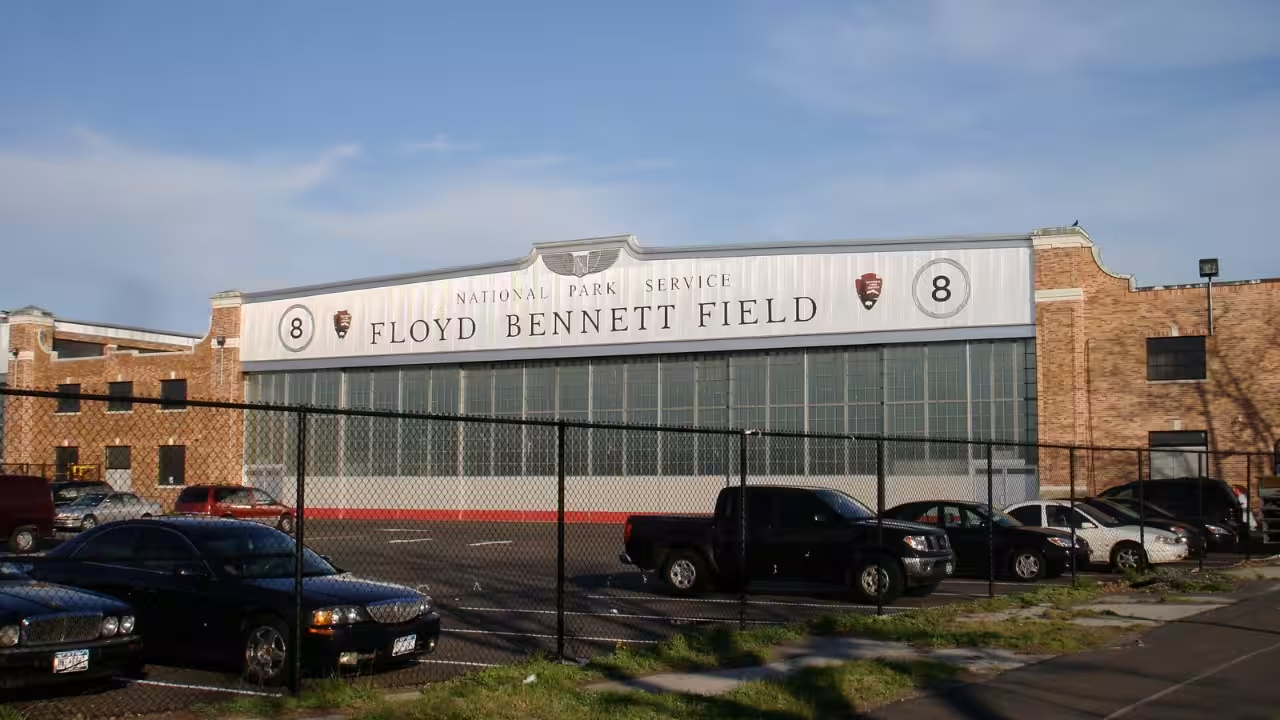
Floyd Bennett Field was intended to give New York City its own municipal airport when construction began in 1928. Today, the former airfield is part of Gateway National Recreation Area and covers more than 1,300 acres of grassland, saltmarshes, tidal mudflats and former aviation facilities. The site in southeastern Brooklyn has changed dramatically since the first airport work began. Its runways and hangars once handled commercial and record-setting flights, and it later became a major naval aviation site before the National Park Service took over the property. The history of Floyd Bennett Field is therefore a record of how one piece of New York City land moved from marshland and landfill to aviation center, military installation and urban recreation area.Construction began in 1928, but the airport opened laterNew York City began transforming the area around Barren Island in 1928, and the project involved waterways, marshes and newly placed fill, as city officials sought to establish an airport within New York's boundaries. The National Park Service's detailed history says the airport was named for naval aviator Floyd Bennett, who had been part of Commander Richard E. Byrd's 1926 flight over the North Pole. Bennett had received the Congressional Medal of Honor and died in 1928 from pneumonia that developed after injuries from an earlier plane crash.Construction took about three years, and the airport was dedicated on May 23, 1931, rather than opening as a completed municipal airport in 1928. The finished complex included concrete runways, four hangars and an administration building that served as the terminal. The site also included facilities for seaplanes, which reflected the importance of Jamaica Bay to the airport's design. A National Park Service historic district account notes that the airport was constructed between 1928 and 1931 by the city's Department of Docks. The project included two main runways, each 100 feet wide, while additional runways were added later.The airport became a center for record-setting flightsFloyd Bennett Field never became the commercial success city officials had hoped for, and New York eventually developed another municipal airport closer to the city's transportation network. That did not make the Brooklyn airfield irrelevant, since between 1931 and 1939, 26 flights that attempted to circle the world or cross the Atlantic began or ended at Floyd Bennett Field, according to the National Park Service.The field also attracted aviators attempting long-distance records. Its location and facilities gave pilots a major base for flights during the period when aviation records were drawing widespread public attention. The airport's role changed as New York expanded its aviation infrastructure. Municipal Airport No. 2, now LaGuardia Airport, opened in 1939. Floyd Bennett Field was subsequently sold to the U.S. Navy, and that transition marked the end of its first chapter as New York City's municipal airport.The Navy took over, and the airfield became a military siteOn June 2, 1941, Naval Air Station New York was dedicated at Floyd Bennett Field, and the Navy expanded the site and continued using it through and after World War II. After the war, the facility became a Naval Air Reserve Training Station in 1946. It was later redesignated as a Naval Air Station within the Naval Air Reserve System, with Navy and Marine squadrons based there and reserve personnel training at the field.The Navy finally deactivated Floyd Bennett Field in 1971. The following year, the property became part of Gateway National Recreation Area under the National Park Service. That transfer changed the purpose of the land again, since instead of serving primarily as an airport or military installation, the site became part of a large urban national recreation area surrounding Jamaica Bay.The former airfield now includes grassland and saltmarshThe National Park Service now describes the area as containing more than 1,300 acres of grassland, saltmarshes, tidal mudflats, a marina and the former airfield. The original control tower and terminal building survive, with the terminal now operating as the William Fitts Ryan Visitor Center. The National Park Service manages the grasslands as habitat, and the site's open landscape supports birds and other wildlife in an area surrounded by one of the country's largest metropolitan regions.Some of the historic aviation structures also remain. The National Park Service is rehabilitating Hangars 3 and 4 as part of a $25 million project intended to preserve the buildings and their Art Deco-era commercial aviation architecture. Visitors can now use parts of the former airport for activities including biking, fishing, bird watching, archery and other recreation. The field is open daily, according to the National Park Service.Floyd Bennett Field is therefore still recognizable as an aviation site, but its function has changed almost completely. The runways and surviving buildings preserve the airport's past, while the surrounding grasslands, saltmarshes and tidal areas have become part of New York City's urban park landscape. The airport once gave New York its first municipal aviation facility and is now one component of a national recreation area, with more than 1,300 acres serving purposes far removed from the city's original plans for the site.Catch the latest World News and Live updates. Download the TOI app.
Topics in this story
Gathered from external sources. Rights to this text belong to whoever originally published it.