Cannonballs unearthed at Alamo nearly 200 years after deadly siege, yet mystery remains
Solid cannonballs unearthed near Alamo Church mark the first such artifacts found at the historic San Antonio site in Texas from the 1836 battle. An expert spoke with Fox News Digital.
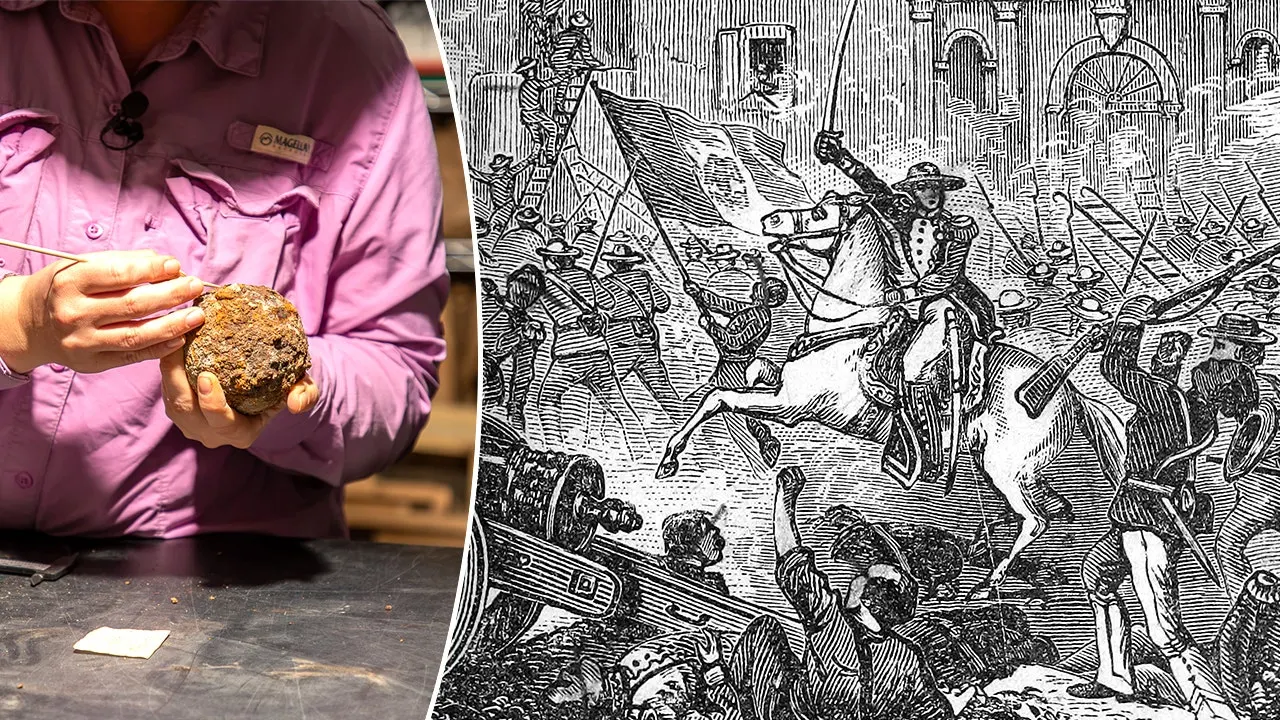
Archaeologists in San Antonio, Texas, have announced the discovery of two solid cannonballs from the Battle of the Alamo — each offering new physical evidence of the historic battle. The discovery, made along the perimeter of Alamo Church in San Antonio, was announced in late October. Officials from the Alamo Trust said the cannonballs were uncovered during ongoing archaeological excavations at the site, and that they "help us remember those individuals that were living here, during the battle," said Tiffany Lindley, head archaeologist at the Alamo Trust. HIDDEN REVOLUTIONARY WAR BAKE HOUSE IS UNCOVERED AFTER SPENDING CENTURIES UNDERGROUND The solid-shot cannonballs vary in size, with the smaller measuring 1.8 inches in diameter and the larger measuring 3.26 inches. The measurements correspond to 1-pounder and 6-pounder cannons, respectively. The discovery follows two other finds made earlier this year: a 4-pounder cannonball found in March, on the eve of the battle's 190th anniversary, and a 6-pounder cannonball found in June. The total number of found cannonballs is now four. Photos show archaeologists carefully cleaning the newly discovered cannonballs, which appear heavily weathered and discolored. The Battle of the Alamo was one of the most important events in Texas history. EXPERTS FINALLY SOLVE MYSTERY OF TEENAGE REVOLUTIONARY WAR SOLDIER 246 YEARS AFTER HIS DEATH The engagement lasted from Feb. 23 to March 6, 1836. It saw Texian forces — including Davy Crockett and William B. Travis — hold off a much larger Mexican army. The 13-day siege ended with Mexican troops overrunning the Texian defenders, a loss that became a rallying cry for the Texas Revolution. The discoveries raise a question: Which army fired the cannonballs? Lindley of the Alamo Trust told Fox News Digital the answer is a bit complicated. REVOLUTIONARY WAR ARTIFACTS UNEARTHED AT SITE OF INFAMOUS COLONIAL AMERICAN HEIST: 'VERY SURPRISED' "We have a good idea [of] three of the cannonballs … They were bronze cannonballs, and that was a type of material used by the Mexican army, so they may have originated with the Mexican army," she said. "They would have been shooting toward the church in this area." She noted, however, that the cannonballs could have been picked up by the Alamo's defenders or others before the battle, so either side may have used them. Determining whether the cannonballs were connected to the battle is more straightforward. Lindley said archaeologists can link the artifacts to the battle through several lines of evidence, including the layers of soil in which they were found, plus other objects recovered nearby. CLICK HERE TO SIGN UP FOR OUR LIFESTYLE NEWSLETTER The same soil deposit contained musket balls and gun parts, while its depth suggested the artifacts were older than others found in layers above it. Lindley said historians helped archaeologists determine that the cannonballs were likely found near a Mexican cannon position outside the Alamo. "They would have been shooting toward the church in this area," she said. CLICK HERE FOR MORE LIFESTYLE NEWS Lindley, who said she was unaware of any solid cannonballs found at the site before the current project, attributed the recent discoveries largely to the size of the excavation area. TEST YOURSELF WITH OUR LATEST LIFESTYLE QUIZ "We have a very large area that we're excavating. And whenever you are digging more, you have more of a chance to find more artifacts," she said. For Lindley, the discovery also puts a tangible piece of the 1836 battle into the hands of modern-day archaeologists. CLICK HERE TO DOWNLOAD THE FOX NEWS APP "Now we have a physical piece of evidence of the sacrifice" made here by those who lived during the battle, she said — "and their memories [have] lived on."
Topics in this story
Gathered from external sources. Rights to this text belong to whoever originally published it.