In 2018, Thailand placed a 1,800kg statue underwater to support coral restoration, with more than 5,000 coral fragments transplanted onto an artificial reef
Rest of World News: Explore how Thailand's remarkable 1,800kg Mazu statue is contributing to coral reef restoration, creating a new marine habitat with over 5,000 coral transplants.
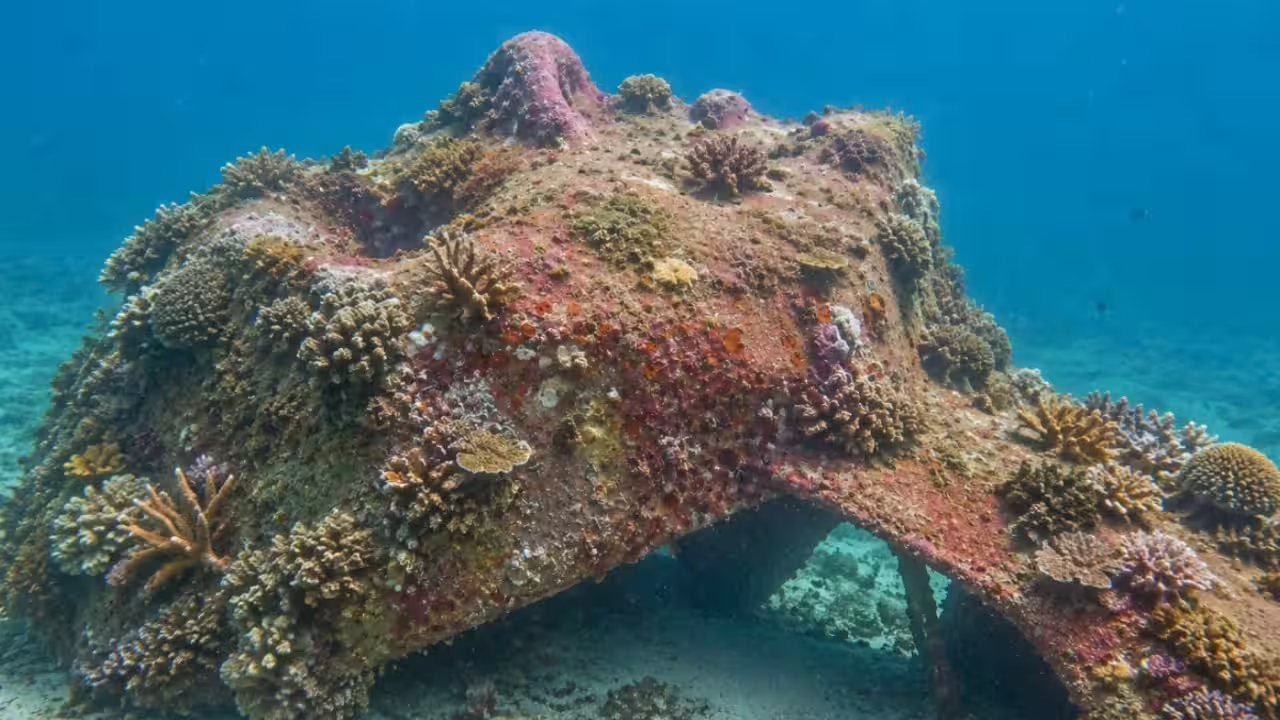
In 2018, on the seabed off Koh Tao, a Thai island in the Gulf of Thailand, an unusual structure appeared. It was a sculpture of Mazu, weighing 1,800 kilograms, a Chinese sea goddess associated with protection at sea. The statue was installed as the centrepiece of an artificial reef. About 36 smaller pyramid-shaped structures were placed underwater, along the sculpture, carrying thousands of coral transplants. The aim was to provide additional hard surfaces for coral growth and create a habitat that marine organisms could use. The World Economic Forum reported in June 2020 that Global Coralition, working with conservation group Eco Koh Tao, had built the sculpture in 2018. The organisation’s page also says that Mazu was deployed in 2018.An underwater statue was transformed into the centre of an artificial reefAn unusual combination of art and marine conservation was brought together by the project. Global Coralition worked with Eco Koh Tao to install the sculpture and its surrounding structures, with the aim of attracting attention to coral restoration while giving transplanted corals suitable habitats to grow. Mazu has been described by the organisation as a symbol of marine protection. The organisation also says that the installation has subsequently turned into a focus for conservation activity around Koh Tao.The project opted to use a recognisable cultural figure as its centrepiece rather than creating an artificial reef entirely from anonymous blocks. The World Economic Forum describes the use of art to get the local communities, divers and other interested parties to participate in marine conservation through the Global Coralition project. The presence of pyramids increased the number of man-made surfaces for the transplantation of coral. More than 5,000 coral fragments were transplanted onto the pyramids. This gave the young, translocated coral colonies a stable surface to settle instead of depending solely on natural hard surfaces.The marine species quickly colonised the structure. Mazu became covered with crustose coralline algae within four months after the placement of the structure in the ocean. The crustose coralline algae are calcifying algae found in coral reef ecosystems.Research at Koh Tao argues that artificial reefs are not natural reefsPublished in Marine Environmental Research in 2021, a peer-reviewed study provides context for projects like Mazu. The paper examined coral recruitment at artificial substructures around Koh Tao and compared the resulting coral communities with those at nearby natural reefs. It included 2,677 coral recruits from nine sites.The findings of the research suggested that artificial reefs can support distinct ecological and functional roles. The data also showed that depth was one factor associated with differences in coral community structures, while the diversity of recruits could not simply be explained by coral spawning dynamics.The study is especially relevant because artificial structures are widely used in Thailand. The researchers of the study noted that concrete structures and decommissioned vessels had been deployed in Thai waters as artificial substrates for coral restoration and marine recreation. In conclusion, the writers of the article pointed out that these artificial reefs have to be seen as playing certain ecological roles and not being used as a replacement for natural reefs. In this case, the Mazu Project can be best described as an artificial-reef and coral-transplantation project rather than a replication of the natural reef.Notably, Mazu offered visibility, an advantage that a conventional concrete reef might not have. The installation attracts hundreds of divers every week and has become a crucial point for marine conservation awareness. Mazu has become an example of how art can be combined with coral-restoration work. The unusual centrepiece also helped turn an ecological intervention into something divers could recognise and visit. Rather than a restoration site that remained largely invisible to the public, the project gave the conservation effort a physical landmark beneath the water.Catch the latest World News and Live updates. Download the TOI app.
Topics in this story
Gathered from external sources. Rights to this text belong to whoever originally published it.