One of Xi’s top security officials has been identified – with the help of a White House guest list
One of China’s most important - and mysterious - security officials has stepped out of the shadows and been identified, thanks in part to a guest list published by the White House.
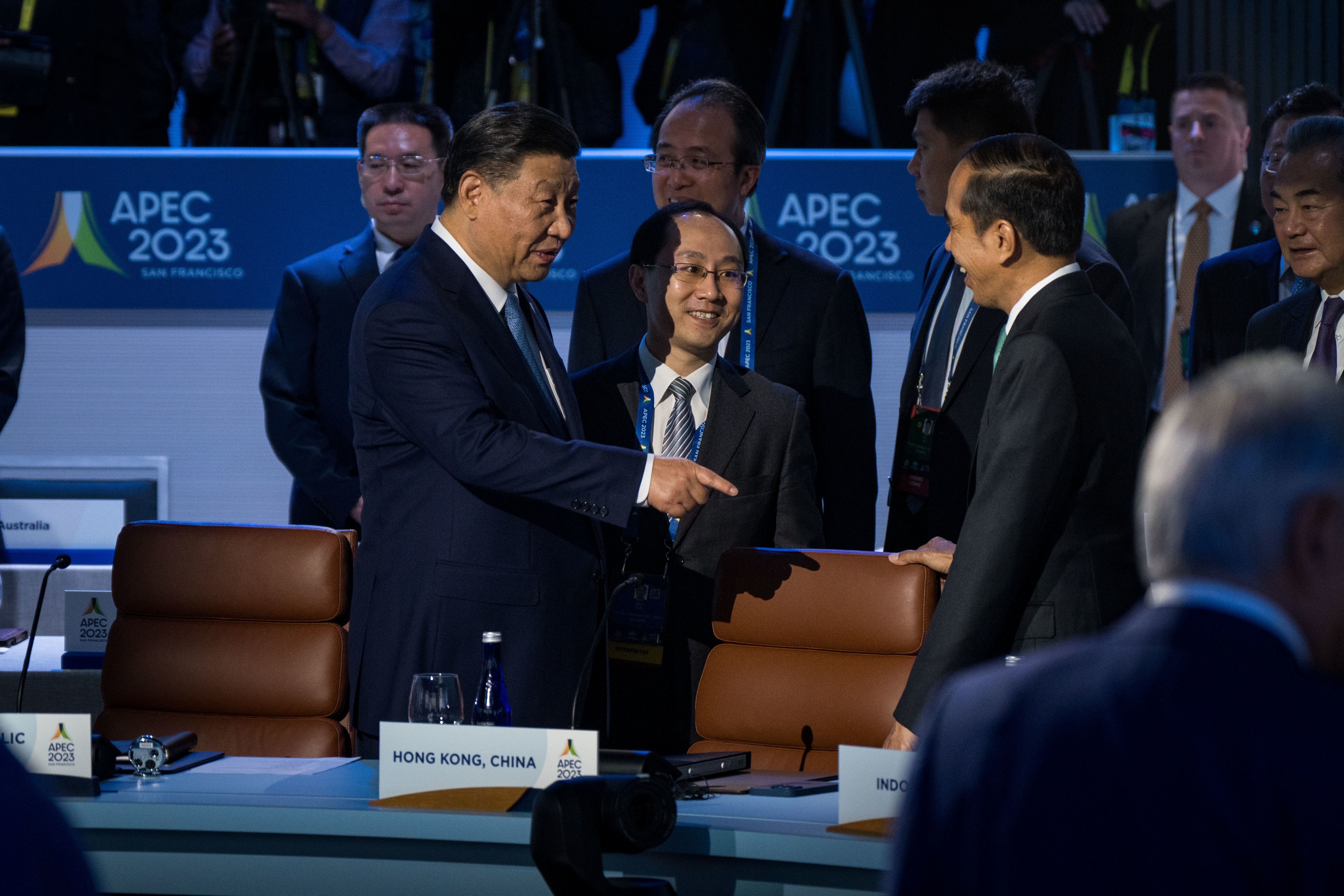
One of China’s most important - and mysterious - security officials has stepped out of the shadows and been identified, thanks in part to a guest list published by the White House. The man, a bespectacled official with a neat crew-cut who has made a handful of appearances alongside Chinese leader Xi Jinping in recent years, has long been considered by China watchers to be Zhou Hongxu, the Director of the Central Guard Bureau, an office similar to the US Secret Service. Beijing has never publicly confirmed Zhou’s job title, and his official biography has few clarifying details. It was only when the White House published a list of Chinese guests and their official titles for the recent state banquet hosted by US President Donald Trump for Xi that Zhou’s official position was finally confirmed. His presence at such a high-stakes diplomatic engagement shines a light on a coterie of younger generation party cadres and security figures that have become some of Xi’s most trusted aides, with the ruling Communist Party’s next national congress that often decides key leadership positions now just a year away. In footage broadcast by state broadcaster Chinese Central Television, Zhou could be seen among guests at the state banquet wearing a buttoned-up Mao suit and standing just behind US Secretary of State Marco Rubio. Zhou also made a rare high profile diplomatic appearance earlier this month when Xi he met with Indian Prime Minister Narendra Modi in New Delhi. He could be seen sitting between China’s two vice ministers of foreign affairs, according to official footage, although state media did not identify him despite his prominent visibility. Analysts said Zhou’s increased public appearances are noteworthy. “Zhou might be the first ever top security guard being involved in such high-profile diplomatic talk, as far as publicly documented appearances are concerned,” Deng Yuwen, a former deputy editor of the Study Times, the official publication of the party’s top training institute, told CNN. Deng said Zhou’s appearance at the White House state banquet may suggest “Xi deliberately wanted to bring him into the public eye. “ “And if Xi is intentionally giving him this kind of exposure, it would suggest that he is being entrusted with greater responsibilities and may be given a more important role in the upcoming leadership reshuffle,” said Deng. A mysterious figure at home The Central Guard Bureau is one of the most secretive parts of China’s vast security apparatus. Much like the US Secret Service, it is tasked with protecting China’s top leaders as well as the Zhongnanhai compound in the heart of Beijing where the country’s leadership resides. Chinese state media has described the bureau as “an exceptionally unusual organization, straddling both the police and military spheres, and one that requires the deep trust of the country’s top leadership.” The opacity surrounding Zhou has become common practice as Beijing looks to tighten information about key officials in recent years, especially those who serve Xi directly. China’s state-run Xinhua news agency has reported that he was chosen as one of the delegates to the Communist Party’s 20th National Congress in 2022, a major political gathering that cemented the political authority of Xi by granting him a precedent-breaking third term. He remains a mysterious and low-profile figure domestically, and his past appearances can only be detected from fleeting state media footage when he accompanied Xi to attend major diplomatic gatherings. But there is almost nothing about his education and background – or whether he had a career in China’s military or security services. Older images published by Chinese state media have shown Zhou attending various events with his name card showing on the table. When Xi held a summit with Nepalese President Bidhya Devi Bhandari in Kathmandu in October 2019, Zhou was seen sitting behind China’s leader. Zhou also accompanied Xi to the APEC summit in San Francisco in 2023. Zhou’s predecessor was Wang Shaojun, who died in April 2023. Chinese state media, which only confirmed his death three months after the fact, cited an unspecified illness as the cause. It was only following his death that state media confirmed his position at the time as Director of the Central Guard Bureau. A successor has never been announced. It is likely that, like Wang, Zhou came up through China’s People’s Liberation Army (PLA). Zhou was seen attending inspection tour with Wang in 2018 when Xi toured the PLA’s Northern Theater Command and both Wang and Zhou were wearing military uniforms. The Central Guard Bureau was founded in 1950 but it traces its origins back to the period of the Chinese civil war when Mao Zedong’s Communists were locked in battle with their Nationalist foes. Its first chief, Wang Dongxing, was one of Mao personal guards. Wang’s later became the party’s vice chairman and a member of the party’s politburo standing committee. According to a report from state-affiliated media China Net in 2014 – one of the few official articles on the bureau - its organizational structure sits within China’s Ministry of Public Security, where it is known as “Bureau 9”. But it operates independent of the ministry and answers to Xi’s cabinet. Key leadership reshuffle The black box of China’s elite politics has long been a source of fascination for journalists, scholars and foreign governments alike. Speculation and reading the tea leaves within Chinese official announcement and state media reports also tends to intensify in the run-up to major Communist Party meetings. In October next year, the party will hold the 21st National Congress, a twice-a-decade political gathering that usually sees significant leadership reshuffles. Most of current senior officials will be over 70 years old by then, including China’s top diplomat Wang Yi, who turns 73 next year. Observers will watch closely for whether a younger generation of cadres will get promoted into key positions of power, especially the party’s politburo and its standing committee, the equivalent of Xi’s inner circle. Other key younger officials who attended the White House banquet were Chinese foreign ministry spokesperson Mao Ning, 53, Hong Lei, the 57-year-old protocol chief of China’s foreign ministry and Lu Luhua, Xi’s personal secretary, who has become a near permanent fixture for overseas visits.
Topics in this story
Gathered from external sources. Rights to this text belong to whoever originally published it.