A 19-year-old Australian farmer’s son developed a drone system for moving cattle; his startup raised $1.2 million to expand
A 19-year-old Australian farmer’s son has developed an autonomous drone system to move cattle, with his startup, GrazeMate, raising $1.2 million in
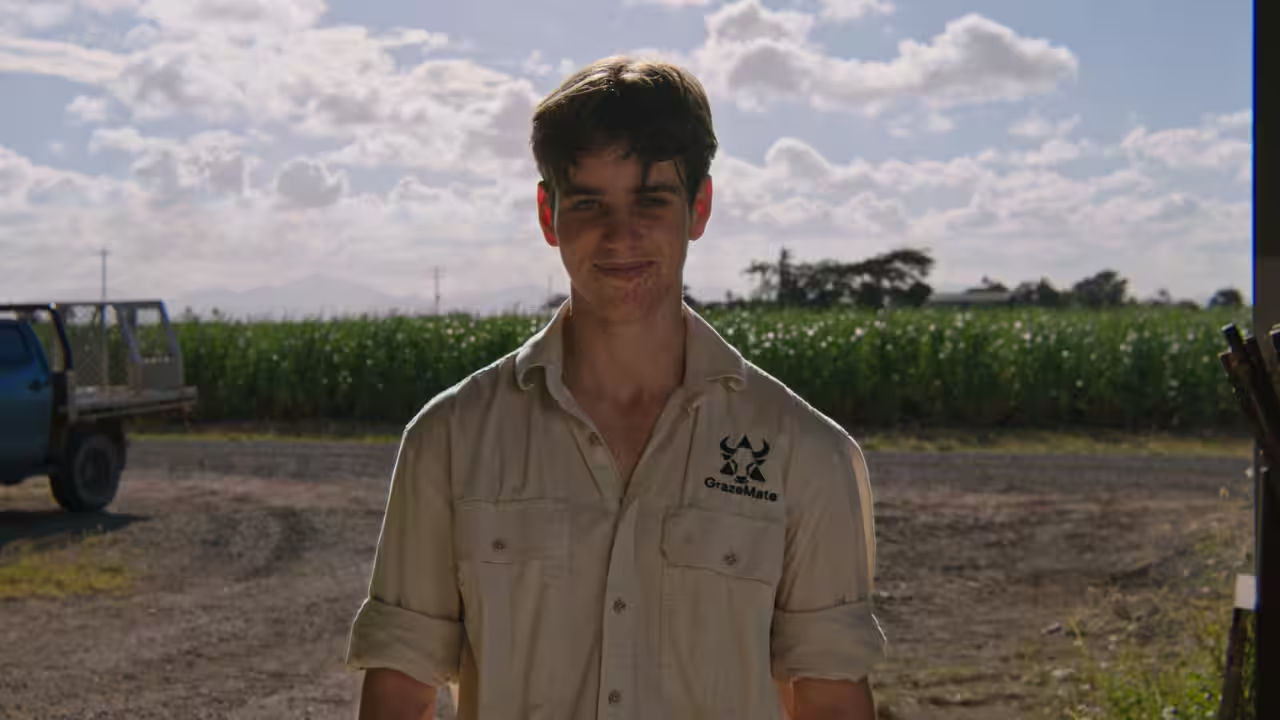
A 19-year-old Australian farmer’s son has developed an autonomous drone system to move cattle, with his startup, GrazeMate, raising $1.2 million in pre-seed funding to support its expansion into California. Founded by Sam Rogers, the company uses drones that farmers can operate through a mobile app to guide herds between paddocks without manually piloting the aircraft. According to Forbes Australia, GrazeMate has commitments to muster 1.7 million acres across Queensland and New South Wales. The system also collects information on pasture availability, estimated herd weight and farm infrastructure, including water troughs.How does the Australian farmer’s son’s drone system move cattleRogers described the system as a way for farmers to select a paddock through an app and dispatch a drone to move a herd. He explained, “GrazeMate lets a farmer open an app, select a paddock, and send a drone out to move the herd.” The system is designed to notify the farmer when the cattle have passed through the gate, reducing the need to organise people, motorbikes or helicopters for mustering operations.The technology is designed to operate without farmers having to pilot the drones themselves. Rogers told Forbes Australia that the system responds to the movement of the herd and makes decisions in real time. He said, “Instead of piloting, the farmer simply sets the task and the system executes it, making decisions in real time based on how the herd moves, then reporting back everything it sees.”How does GrazeMate’s drone system collect farm and cattle dataGrazeMate’s system is designed to collect information about farm conditions alongside moving livestock. The drones can report on available pasture, provide estimates of herd weight and assess critical infrastructure, including water troughs. This information is intended to help farmers understand the condition of their land and livestock while carrying out routine management tasks.Rogers said the technology enables farmers to gather information while the drones are mustering cattle. The company’s approach combines livestock movement with data collection, allowing farmers to assess the paddock and the herd as part of the same operation. The system is intended to reduce the need for farmers to manage separate processes for moving cattle and checking farm conditions.How did GrazeMate raise $1.2 million to expand into CaliforniaGrazeMate has secured commitments for a $1.2 million pre-seed funding round led by Y Combinator, with Australia’s NextGen Ventures and Antler also participating. The funding comes as the company prepares to expand beyond its existing operations in Queensland and New South Wales into California.GrazeMate had commitments to muster 1.7 million acres of land across Queensland and New South Wales. The company’s expansion into California marks its move into the United States market. The funding round supports the startup’s development as it seeks to bring its autonomous livestock-mustering technology to additional farming operations.How did the GrazeMate founder develop his engineering and AI skillsRogers formalised GrazeMate as a company in 2025 and moved from working as a farmer to leading the business as its chief executive. He is also a mechatronics engineering student at the University of Sydney. NextGen Ventures discovered Rogers through its network of campus investors in 2025 before participating in the funding round.NextGen Ventures partner Jerry X’Lingson told Forbes Australia that Rogers had taught himself to code in Chinese while working with alternative drones because he could not initially afford the highest-specification models he later went on to build with. X’Lingson also described Rogers’s earlier engineering and artificial intelligence projects, including building a robotic arm at the age of 14 and training an AI model to detect electronic waste.Climbing in the Everest region inspired cattle-mustering technologyRogers’s experience recovering from serious injuries also contributed to his decision to build the company. He suffered a spinal tumour and a broken back, underwent three spinal surgeries and later travelled to Nepal to climb in the Everest region. X’Lingson described the experience by saying, “At 16, [founder Sam Rogers] faced a life-threatening spinal injury. After three spinal surgeries, he climbed Everest.”Rogers told Forbes Australia that observing how Sherpas moved yaks in the Himalayas influenced his thinking about livestock management. He recalled how the herders would climb a hill and ring a bell, allowing the sound to travel through the valley and signal the herd to move. He said, “We’ve been working on how to replicate that kind of natural signalling on a much larger scale ever since.”AI advances and drone technology helping expand cattle musteringRogers attributed GrazeMate’s development to improvements in drone battery life, advances in artificial intelligence and changes in regulations governing autonomous systems. He told Forbes Australia that defence investment had driven improvements in drone batteries over the previous decade, while advances in AI had made edge computing more powerful and affordable.He also identified regulatory changes as a factor in the development of autonomous drone operations. Rogers said these developments were occurring as ranchers faced labour shortages, rising costs and increasing demand. GrazeMate’s system is designed to apply autonomous technology to livestock management, combining drone-based mustering with the collection of information about herds, pasture and farm infrastructure.With its $1.2 million pre-seed funding round and expansion plans for California, GrazeMate is developing its autonomous cattle-mustering system beyond its initial operations in QueenslandYou use AI every day. Now get your AI Quotient. Take the AIQ test.
Topics in this story
Gathered from external sources. Rights to this text belong to whoever originally published it.