Exclusive: Nobel laureate freed by Trump urges hard line in new Belarus talks
Ales Bialiatski, the Belarusian human rights activist and Nobel Peace Prize laureate freed by President Trump, is grateful for the U.S. intervention that saved his life and hundreds of other political prisoners. But he is also urging the administration to demand greater concessions from the country’s dictator Alexander Lukashenko in exchange for U.S. sanctions relief,…
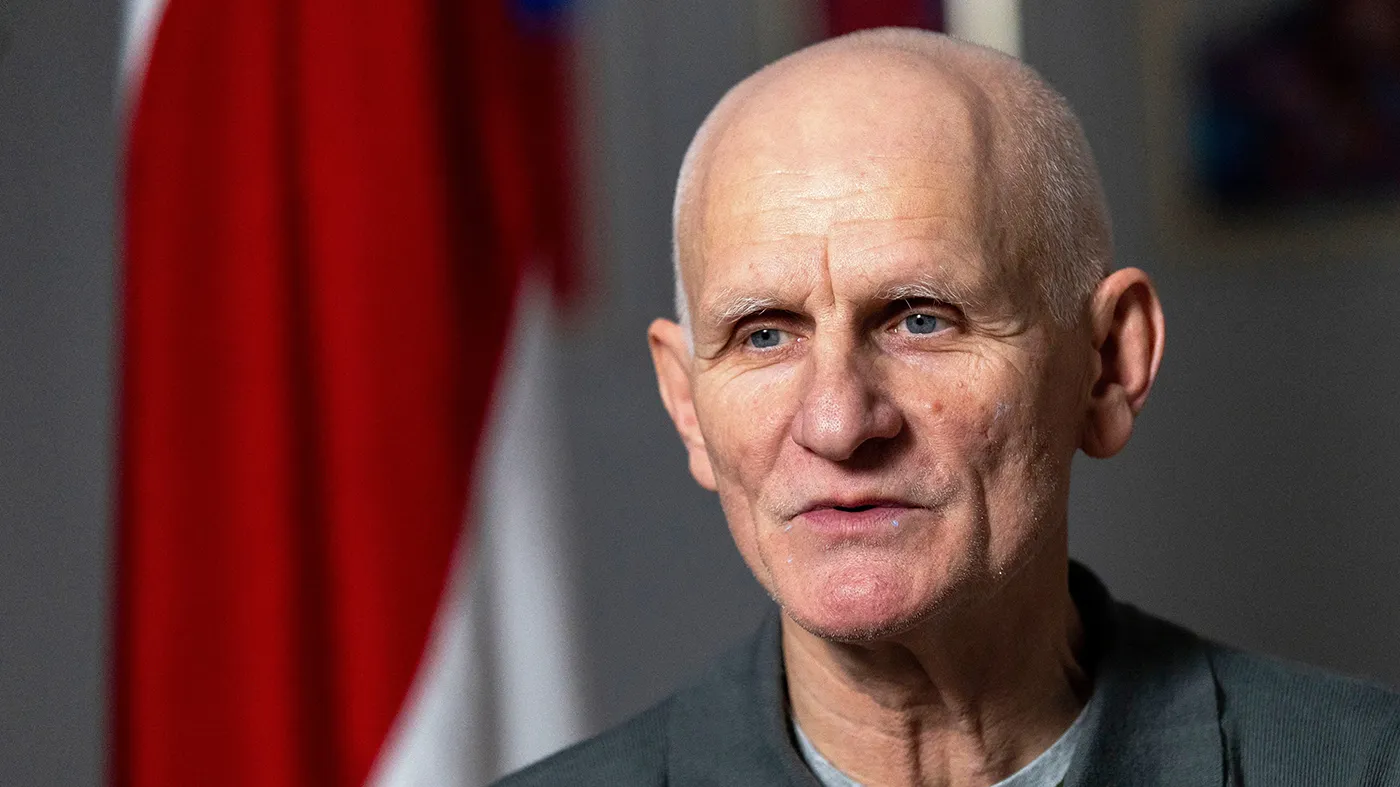
Ales Bialiatski, the Belarusian human rights activist and Nobel Peace Prize laureate freed by President Trump, is grateful for the U.S. intervention that saved his life and hundreds of other political prisoners.
But he is also urging the administration to demand greater concessions from the country’s dictator Alexander Lukashenko in exchange for U.S. sanctions relief, ahead of an expected trip to Minsk this month by Trump’s special envoy to Belarus, John Coale.
Belarusian human rights activists and the diaspora are waiting with “excitement and trepidation,” Bialiatski, 63, said in an interview with The Hill on Thursday.
Bialiatski, founder of the celebrated human rights organization Viasna, was in Washington, D.C., to accept the Democracy Service Medal from the National Endowment for Democracy (NED) — the private foundation created and funded by Congress to promote democracy abroad. Trump has tried to defund the NED.
While Coale’s diplomacy has succeeded in securing the release of hundreds of political prisoners from Belarus in exchange for U.S. sanctions relief and apparent access to a GLP-1 diet drug , the regime has replaced those freed with more political prisoners.
Lukashenko, in power for more than three decades, has intensified crackdowns on those who support Ukraine in the face of Russia’s full-scale war. Those arrested include independent journalists, academics and people targeted for their sexual and gender orientation. About 900 people are described as political prisoners.
Any further U.S. sanctions relief should only take place in exchange for the release of all political prisoners and ending unjust detainments, Bialiatski said.
“It’s important to stop the repressions. If the repressions continue, the carousel of prisoners out, and then others in, will continue, and the situation will remain grave,” Bialiatski, speaking through a translator, told The Hill.
He urged greater U.S. and European coordination to pressure Lukashenko and support Ukraine to combat the deepening alliance between what he described as the leading authoritarian bad actors Russia, Iran, China and North Korea.
“I don’t think Lukashenko and his attitudes can be changed through dialogue and conversation, this is a person who only understands strength,” he added.
“Transatlantic cooperation in every way — economic, political, military, even in terms of values — is important to preserve.”
Bialiatski also reflected on how Lukashenko used the prison system to support Russian President Vladimir Putin’s war, saying he was forced to make and package ammunition bound for Russia’s military.
It’s been nine months since Bialiatski and 122 other political prisoners were freed in a deal negotiated by Coale. Bialiatski was a high-profile prisoner, having been awarded the Nobel Peace Prize In 2022 while he was in jail.
That notoriety may have spared him from torture, but it did not offer relief from the general harsh conditions of the Belarusian prison system. Prisoners are routinely denied medical treatment, given meager and tainted food rations, forced to do hard labor and face solitary confinement, according to human rights monitors.
“Hundreds of political prisoners are in the same situation as me — if you survive OK, if you don’t survive, it’s your problem, that’s the attitude,” he said, describing the mentality of the prison system. He said he’s still addressing medical issues since his release.
Bialiatski is grateful for the attention Trump is putting on Belarus, but the president’s strategy has shifted. In 2020, Trump imposed a harsh sanctions regime against Lukashenko in response to his brutal crackdown against the political opposition, in the wake of his election defeat.
Today, Trump is practicing strategic engagement.
The administration is trying to engage Belarus as a way to end the war between Russia and Ukraine and has lifted sanctions to secure the release of a few Americans and other political prisoners. Coale told Voice of America’s Russian language service he hopes to free up to 200 more political prisoners during his next meeting with Lukashenko.
America has almost 300 sanctions against Belarus, including on Lukashenko, government officials, businesspeople and state-owned companies, according to an analysis by the Congressional Research Service. Other penalties include suspension of normal trade relations with Minsk, export controls on dual-use goods and technology that could be used for the military, air travel restrictions and visa restrictions.
Coale, who has described his meetings with Lukashenko as long, vodka-fueled affairs, has helped facilitate eased sanctions on Belavia, Belarus’s national airline, aircraft that are part of Lukashenko’s presidential fleet, and companies exporting fertilizer.
In addition to the prisoner releases, Lukashenko also joined Trump’s Board of Peace — an organization nominally set up to settle global conflicts but that is struggling to push forward reconstruction of the war-ravaged Gaza Strip.
Bialiatski described his own country as “scorched land,” with no civil society, no trade unions, and no independent media. Between 300,000 and 600,000 Belarusians have fled the country since 2020.
“People just have to survive because the repressions and crackdown are still ongoing,” he said.
Bialiatski is now based in Oslo, Norway, where he founded the Ales Bialiatski Foundation for human rights. He described the current era as a “dramatic moment for the region, for the world,” and he urged unity among pro-democratic forces globally.
One of the first grants he received for his organization Viasna in the 1980s came from the NED, underscoring the enduring ties between the U.S. and democratic activists abroad.
Asked if he has a message for the American people, given the NED’s support for his human rights work, he cited the Enlightenment-era philosopher Immanuel Kant, that democracies do not war with each other.
“This is the interest of every person, no matter where they are, no matter what continent they live on, democracy, I believe, as a Nobel Peace laureate, is a foundation of stability and peace,” he said.
“Democracy is the way to achieve peace.”
Topics in this story
Gathered from external sources. Rights to this text belong to whoever originally published it.