In 2007–08, five states narrowed rural intersection approaches with rumble strips; across eight sites, crashes fell 32% and fatal or injury crashes fell 34%
A Federal Highway Administration study shows that installing rumble strips at rural intersections led to a 32% reduction in crashes and a 34% decrease in fatal or injury accidents in five states from 2007 to 2008. Explore how this cost-effective solution enhances road safety.
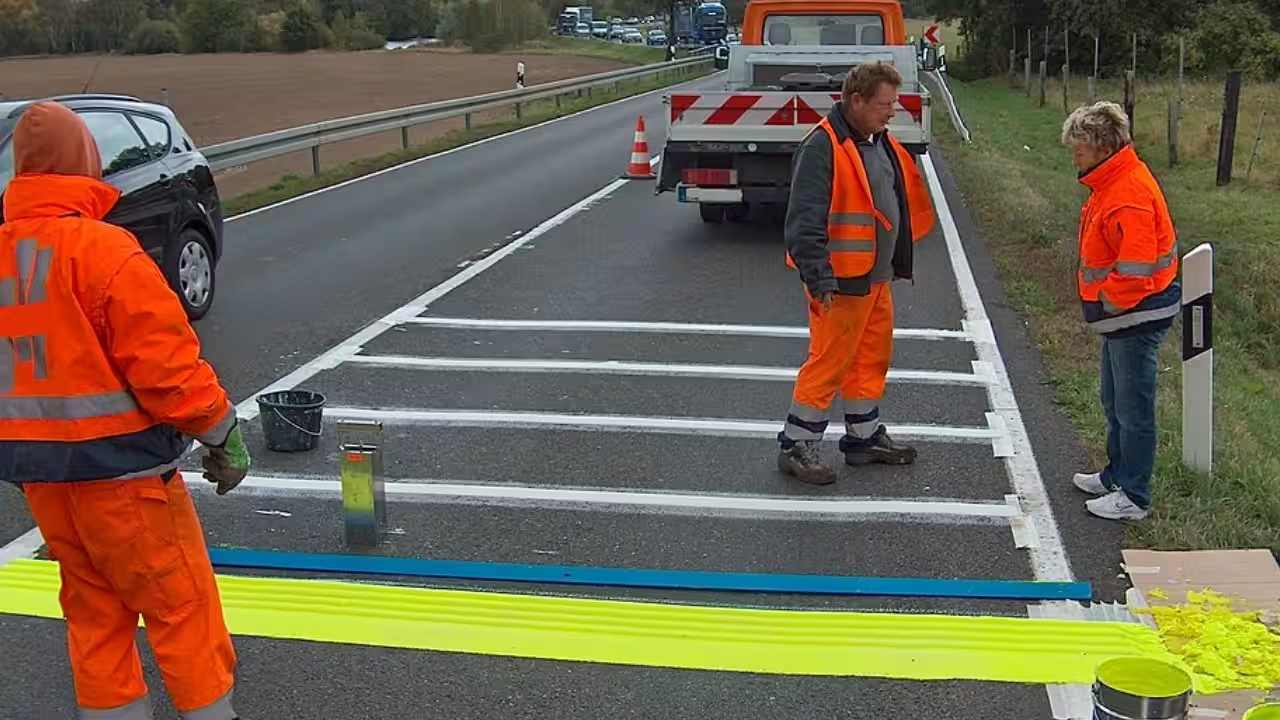
Intersections of rural roads can cause safety hazards for drivers, especially if they drive at high speed and have very little time to notice intersections or a stop sign. For drivers on highways that have a long distance between intersections, there is a higher risk of accidents because they are less likely to see vehicles that enter the road from a secondary road. To address this issue, the Federal Highway Administration sought to reduce speeds without requiring reconstruction work.According to a June 2010 Federal Highway Administration technical report, treatment sites in Missouri, Kentucky, Pennsylvania, Florida and Maryland were part of an experiment from 2007 to 2008. As per the evaluation, there was an overall decrease of 32% in the total number of accidents and 34% in the number of accident-causing fatalities after installing the system.Why rural intersections require a different safety approachThe FHWA came up with this treatment due to the risk caused by unsignalized rural intersections. As per the statistics reported in its study, 37% of all the fatal accidents that occurred at intersections across America happened in unsignalized rural intersections. Over 90% of the accidents in such cases took place on two-lane highways, indicating the difficulties drivers face while travelling on narrow highways.In such places, no traffic signal makes motorists slow down on the main road. When drivers encounter vehicles from a side road, differences in speed and reaction time create a crash risk. This can be aggravated, especially where the intersection is not visible, or the driver cannot see any warning sign. Instead of installing a traffic light or building a roundabout, the FHWA considered a treatment that used existing road space more effectively. The purpose of this treatment was to create the illusion of narrowness on the approach, which would prompt drivers to slow down before reaching the intersection.How rumble strips changed the road layoutThe treatment included the application of rumble strips adjacent to the edges of the road as well as within the painted yellow median leading up to the intersection. This reduced the width of the smooth pavement, creating a narrow driving corridor for motorists approaching the intersection. This treatment spanned about 150 feet on both approaches to the intersection. A rumble strip is a specially designed groove or a surface pattern on pavement that creates noise and vibration when a vehicle runs over it. It is normally used to warn drivers who stray near the edges or central line of the road. In this case, however, the presence of rumble strips also helped delineate lane boundaries and slow drivers as they approached the intersection.The implementation of treatment was done in seven two-way stop-controlled intersections and one T intersection. The participating states had chosen sites where speeding, visibility problems at the intersection, or failure to stop at stop signs had been a problem. The construction cost figure varies from place to place. The cost incurred in Pennsylvania was somewhat around $50000 to $ 70,000, whereas the estimated cost in other states participating in the program was somewhere around $10,000 to $30,000.Crash figures showed a reduction after installation The treatment evaluation involved comparison of crash data before and after the treatment. The study used 3 to 5 years of pre-treatment data and at least 2 years of post- implementation data. The evaluation considered the variation in traffic volumes and the anticipated crash frequencies at similar intersections. There was an average reduction of 32% in the total number of crashes and 34% in fatal injury crashes. All eight sites experienced a reduction in crashes on a yearly basis following the treatment; however, there were different extents of improvement. The largest decrease in total crashes occurred at the second site in Pennsylvania, which was 63%. Pennsylvania's first site Had A 49% reduction in fatal and injury crashes.A study published in Accident Analysis & Prevention investigated a central line rumble strip installed on about 210 Miles of two-lane rural roads in 7 US states. The study applied an empirical Bayes before-and-after evaluation to assess any changes in crash frequency involving vehicles crossing to the opposite traffic lane. Though the research addressed a different application of rumble strips, it provided additional information regarding their possible benefit to road safety and improvement.The FHWA report noted several shortcomings, and the reductions at the eight intersections did not reach statistical significance at the 95% confidence level. Researchers explained this by a small number of sites included in the study and the variance in implementation of the treatment. They suggested adding more sites and collecting more data to test the treatment's effects. The findings gave transportation agencies a less costly option compared to reconstructing intersections. Through the use of pavement markings and rumble strips, the project showed how some changes in engineering design could be incorporated into rural road safety programs.You use AI every day. Now get your AI Quotient. Take the AIQ test.
Topics in this story
Gathered from external sources. Rights to this text belong to whoever originally published it.