A 16th-century English longhouse hid serious structural problems behind its walls; the builder restoring it has now turned the centuries-old property into his own family home
US News: Cadman Construction was already undertaking one of its most challenging heritage projects: restoring a Grade II-listed 16th-century longhouse in Suffo.
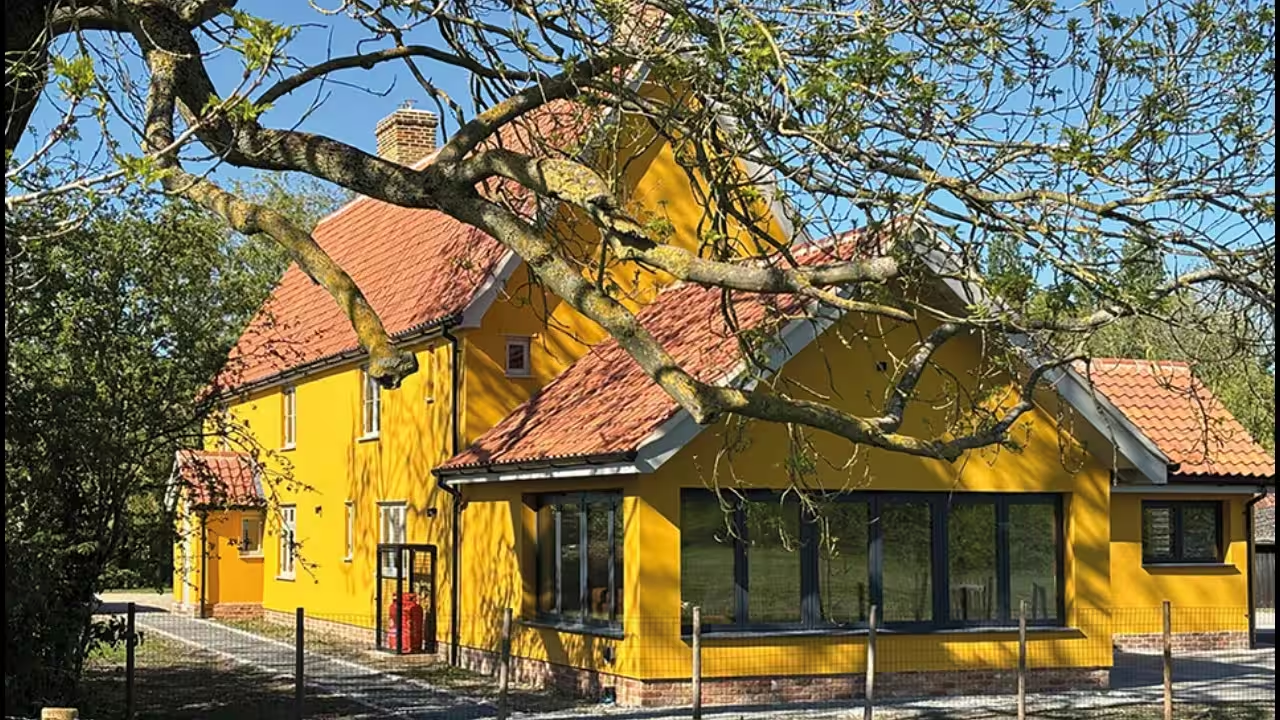
Cadman Construction was already undertaking one of its most challenging heritage projects: restoring a Grade II-listed 16th-century longhouse in Suffolk. But for Stuart Cadman, Managing Director of Cadman Construction the challenge had an additional dimension: the centuries-old property was finally to be his family home. The restoration included repairing much of the original oak frame, but also creating contemporary spaces that met the needs of modern family living. At all stages there was a balancing act between preserving historic fabric and meeting current construction standards, conservation requirements and the practical realities of restoring a building more than 400 years old, states an interview with Cadman published by the Heritage and Traditional Building website. Some of the biggest challenges didn’t emerge until we were actually working on it, mentioned Cadman in the interview. It was mentioned that at the south end of the house, the original oak frame was found to be a mix of oak and softwood. Much of the softwood had rotted beyond the point where it could be safely supported. The south chimney was also identified as a hybrid construction with limited historic significance. According to the interview, the findings meant the project required a new planning application and Listed Building Consent to enable demolition and rebuilding of much of the southern section. Restoration was delayed by approximately six months due to approval processes, the report adds.Piece by piece, holding up a 400-year-old buildingThe restoration team chose a more cautious approach rather than trying to support the whole building at once. The first floor perimeter beam was supported in six-metre lengths by a propping system designed by a structural engineer. Then, each section could be carefully checked before repairs were made. The team followed the same process throughout the rest of the building after successfully completing the first part. The technique reduced risk and left the historic oak frame largely intact while its condition was assessed. For a centuries-old structure, it was imperative to proceed with caution. The project showed that restoring heritage requires as much patience as technical expertise.Where 16th-century character meets modern lifeThe new extensions were built to modern building standards but designed to be visually compatible with the original longhouse. The old and the new were intentionally kept different. Modern windows and construction details help distinguish the additions from the historic structure, but the design as a whole allows the additions to sit comfortably next to the historic structure. No less significant were the traditional materials. For the existing building, the choice fell on William Blyth clay pantiles and locally sourced lime render. Lime render also has a functional role in historic construction. Older buildings breathe and traditional materials allow moisture to regulate itself, rather than being trapped inside the building.Collaboration and craftsmanshipThe restoration needed close cooperation between contractors, conservation specialists, structural engineers and local authorities. This type of collaboration is especially important for listed buildings, where even minor changes can often require a long process of assessment and approval. The experience also highlighted the need for patience when working with historic properties. Specialist craftsmanship remained central to the project, supported by modern techniques to maintain the character of the original structure.Saving the past for another 400 yearsFor Cadman and his family, finishing the restoration is about more than moving into a beautifully renovated home. It means helping to secure the future of a building which has stood for more than four centuries. The original structure and chimneys might date from craftsmen working during the reign of Henry VIII, placing the property within a remarkable stretch of English history. The completed house is a marriage of two very different time periods. The historic fabric is visible and respected, while contemporary additions offer the comfort and performance expected of a modern family property. The project has also boosted Cadman Construction’s confidence in heritage work, giving the company greater insight into the risks, processes and practical challenges involved in listed-building restoration. For this centuries-old Suffolk longhouse the goal was never to restore what had been lost. To keep the story of the building alive, to write another chapter in it that would last for centuries.Images Courtesy: Heritage and Traditional BuildingCatch the latest World News and Live updates. Download the TOI app.
Topics in this story
Gathered from external sources. Rights to this text belong to whoever originally published it.