In 1994, Bill Clinton signed a desert-protection law that impacted nearly 9.2 million acres of California, creating Mojave National Preserve and expanding Joshua Tree and Death Valley
Explore the impact of the California Desert Protection Act of 1994, signed by Bill Clinton, which protected over 9 million acres of California desert landscapes, establishing Mojave National Preserve and expanding Joshua Tree and Death Valley National Parks.
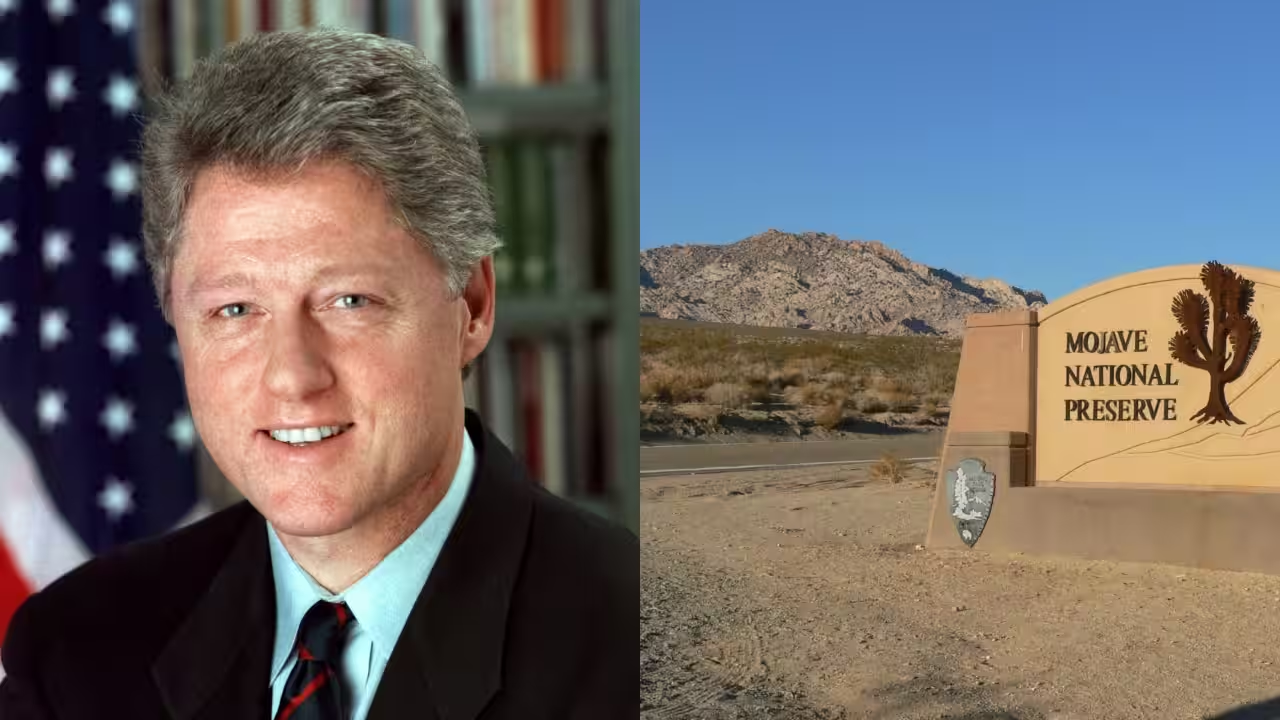
A significant portion of the eastern Mojave had been designated as a national scenic area since 1981, while Death Valley and Joshua Tree had been national monuments since 1933 and 1936, respectively. Large portions of the surrounding terrain were completely outside the National Park System, and those labels provided genuine but limited protection. According to the National Parks Conservation Association, a Barstow organisation called Citizens for Mojave National Park began advocating for something greater as early as 1976. Conservationists worked for decades to achieve this goal.That battle ultimately succeeded when President Bill Clinton signed the California Desert Protection Act on 31 October 1994. The Bureau of Land Management says the law impacts nearly 9.2 million acres of public land from the northern end of Death Valley to the Mexican border. It was sponsored by California’s two senators, Dianne Feinstein and Barbara Boxer.What the law foundThe act did three important things for the national parks. It changed Death Valley National Monument into Death Valley National Park and added over 1.3 million acres. It changed Joshua Tree National Monument into Joshua Tree National Park and added around 234,000 acres. And it established the Mojave National Preserve, some 1.4 million acres, in the previous East Mojave National Scenic Area.According to the Bureau of Land Management, the act established 74 additional wilderness areas in the California desert, totalling 7,661,069 acres across land maintained by the National Park Service, the Bureau of Land Management and the Forest Service. It also gave the state 20,500 acres of federal land to expand Red Rock Canyon State Park.Clinton's signing statement, available through the National Archives, stated that some 7.7 million acres had been declared as wilderness and another 3 million acres added to the National Park System. The Bureau of Land Management later tallied about 9.2 million acres as subject to the law, a figure that reflects the combined wilderness and park expansion rather than a separate count.Parks, preserves and wildernessThe Mojave National Preserve, though it is called a preserve and not a park, is managed under the National Park System laws of the act. The statute also created advisory commissions for Joshua Tree and Death Valley, which provided advice on management plans in the years that followed.Death Valley was changed most of all. The park now totals more than 3.3 million acres with the 1994 expansions, and the National Parks Conservation Association said it became the largest national park unit outside Alaska. Its size implies it can protect entire desert basins and mountain ranges, rather than just small sections. Private generosity filled in some of the gaps. According to the Bureau of Land Management, The Wildlands Conservancy donated more than 560,000 acres to join up scattered "checkerboard" parcels inside the Mojave Preserve and the surrounding wilderness areas.Why the law still mattersAs the bill moved through Congress, the Christian Science Monitor called it the largest public lands law since the Wilderness Act of 1964. Now Joshua Tree, Death Valley and Mojave are connected in a protected chain of desert land spanning Southern California, with wilderness areas around them cushioning wildlife habitat from traffic and development.The National Park Service has a summary of the act that explains the legal foundation for each park, including the findings Congress made concerning safeguarding the Mojave Desert. The practical outcome for visitors is the long-term protection of three quite distinct desert landscapes through national park designation. It was a major land-protection act in California history and continues to shape desert management.You use AI every day. Now get your AI Quotient. Take the AIQ test.
Topics in this story
Gathered from external sources. Rights to this text belong to whoever originally published it.