In India, engineers coated road aggregate with shredded plastic before adding bitumen; an NH-207 test track reported satisfactory performance
Engineers in India have successfully tested a road construction method using shredded waste plastic coated on stone aggregate before adding bitumen, demonstrating satisfactory performance on a 20-kilometre test track on National Highway 207 in Karnataka.
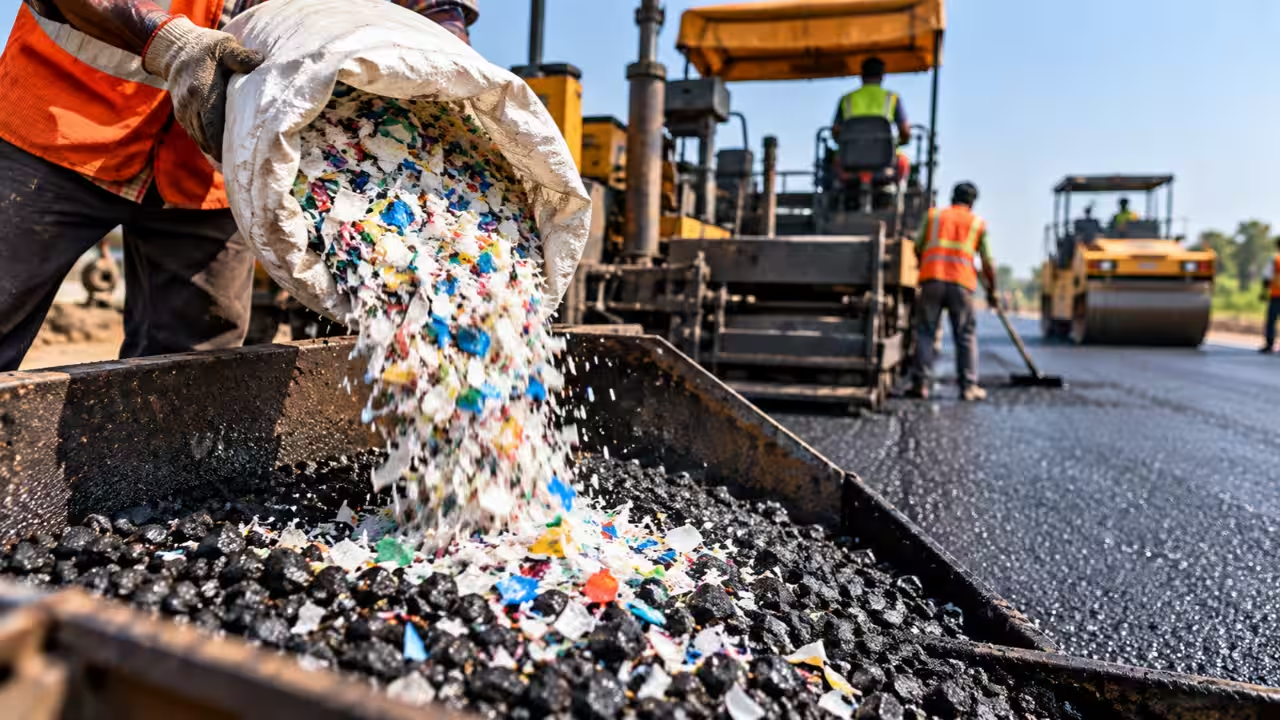
Engineers in India tested a road-building method that uses shredded waste plastic to coat heated stone aggregate before bitumen is added, and one of the major field trials was carried out on National Highway 207 in Karnataka, where a 20-kilometre test section compared several modified bituminous binders, including a waste-plastic formulation. The Ministry of Road Transport and Highways later described the waste-plastic section as showing satisfactory performance.The process tested in India is known as the dry process, in which shredded plastic is added to hot aggregate, where it coats the surface of the stone. Hot bitumen is added to the plastic-coated aggregate after, before the mixture is laid and compacted as pavement.The NH-207 test compared five pavement bindersThe R-85 research project was commissioned by the Ministry of Road Transport and Highways and carried out by the Indian Institute of Technology Madras, with engineers constructing a 20-kilometre test track on NH-207 between Devanahalli and Doddaballapur in Karnataka in 2010. The test section was divided among five types of binder, which were conventional VG-30, SBS-modified binder, crumb-rubber-modified binder, natural-rubber-modified binder and waste-plastic-modified binder.The researchers monitored the sections after construction and collected field-performance data alongside laboratory measurements, and the work examined properties such as pavement roughness, deflection and the behavior of the different mixes under traffic and environmental conditions. The waste-plastic section was therefore a part of a highway test track where different modified binders were placed in actual pavement and monitored over time.Plastic was added before the bitumenProcessed plastic is shredded to a controlled size and introduced to heated aggregate under the method described by India's road authorities, with the plastic softening and forming a coating around the stone before hot bitumen is added. Government guidance specifies controls over the plastic used in the process, since the material has to be cleaned and shredded within specified size limits, and the plastic must have a suitable melting point so it can coat the aggregate during mixing. The guidance also sets temperature controls because excessive heating can cause thermal degradation.The approach was developed around waste plastics that could otherwise require disposal, and was not intended to put every type of plastic into asphalt. India's technical guidance makes the distinction between plastics that can be used in the dry process and materials that are unsuitable.Field tests preceded national guidelinesThe NH-207 work was completed before India formally issued its first national guidelines for using waste plastic in hot bituminous wearing courses, and the Indian Roads Congress published IRC SP:98:2013 after laboratory and field studies conducted in India. The Ministry of Road Transport and Highways encouraged the use of waste plastic on national highways within 50 kilometres of qualifying urban areas and required pilot stretches to assess performance.A 2019 government statement said that waste plastic had already been used in the wearing course of about 50 kilometres of national highway stretches and that projects of at least 10 kilometres were to be taken up as pilots for performance assessment. The government's approach therefore moved from field trials toward specifications and wider deployment, and the NH-207 project was one part of that evidence base. Its importance was not that one test track immediately changed India's road policy, but that engineers had actual highway-performance data to evaluate alongside laboratory studies before plastic-modified pavement became part of national road guidance.You use AI every day. Now get your AI Quotient. Take the AIQ test.
Topics in this story
Gathered from external sources. Rights to this text belong to whoever originally published it.