In 1993, Virginia buried 1.7 million discarded tyres beneath a highway near Williamsburg; a decade later, engineers found the road was still performing well
US News: Discover how Virginia ingeniously transformed 1.7 million discarded tyres into a durable highway embankment near Williamsburg. This groundbreaking project not only resolved a serious waste issue but also proved effective over a decade of monitoring, showcasing a sustainable path for waste tyre disposal.
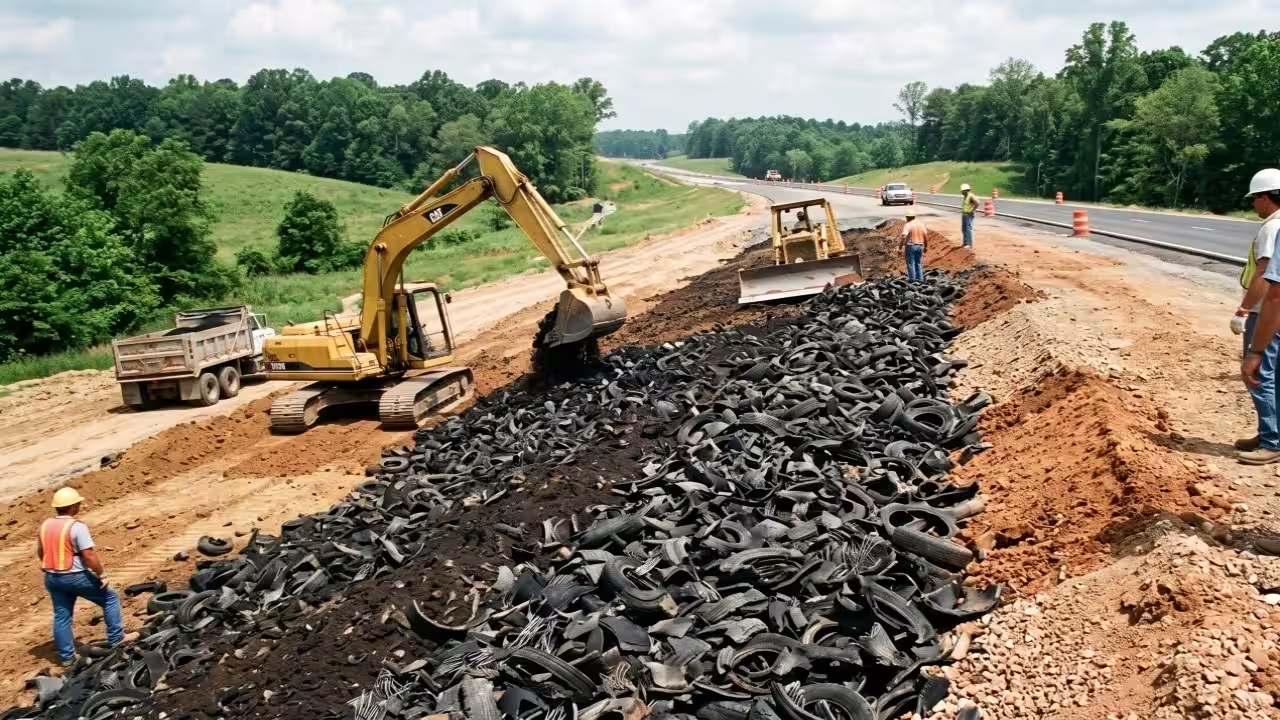
Getting rid of one old tyre is relatively easy, but eliminating millions of them is a different problem altogether. Tyres in stockpiles do not break down; they collect rainwater that becomes a breeding ground for mosquitoes, and large stockpiles of them have a history of catching fire and burning for weeks at a time, producing thick, oily smoke that is hard to put out and worse to breathe. Virginia had exactly that kind of waste-tire backlog when engineers decided to turn part of the problem into a potential construction material.The Virginia Department of Environmental Quality conducted a comprehensive statewide survey that found 1,331 tire piles containing more than 25 million waste tires. Rather than send all that rubber to the landfill, the Virginia Department of Transportation partnered with the state’s environmental regulators and the Virginia Transportation Research Council on an experimental project to determine whether shredded tyres could be used as a construction material for new roads.Turning scrap rubber into road fillAlthough Virginia's attempt was on a far greater scale, the concept itself was not wholly novel. In the summer of 1993, construction workers used shredded tyre material, referred to as "tyre derived aggregate" in engineering circles, to build an embankment for a bridge approach near Williamsburg in York County. In place of the sand, gravel, or crushed stone that typically make up the majority of a highway embankment, workers put in about 1.7 million discarded tyres, chopped into pieces and occasionally combined with dirt to aid drainage and compaction.Aggregate made from tyres has several truly practical engineering qualities. It drains water more easily, which can help minimise damage from frost, and it is significantly lighter than soil, which lessens the strain an embankment places on the land beneath it.Watching, testing and waiting for 10 yearsResearchers monitored the site for the next ten years, measuring how the embankment settled and whether it continued to perform structurally. They also sampled groundwater from wells around the embankment to check whether metals or other substances from the shredded rubber were entering the water.But maybe more importantly, scientists watched the environment around them intently. At various times the groundwater was sampled from wells located above and below the embankment. Special attention was paid to the possible seepage of metals or other substances that might leach from the rubber to the water table. This was the most important feature to the sceptics of the idea.The verdict after ten yearsBy 2004, the Virginia Transportation Research Council had a full decade of data, and the conclusions were more encouraging than worrisome. The final report, Field Study of a Shredded-tire Embankment in Virginia, was published in 2004 after a 10-year monitoring period and found that the shredded-tire embankment performed satisfactorily based on environmental and engineering assessments.Based on those results, the researchers proposed that shredded tyre embankments be investigated as a viable, environmentally friendly method of disposing of waste tyres elsewhere in the state. The Williamsburg project was a huge success, leading to a much larger cleanup effort. According to the Virginia Department of Environmental Quality, the state has now assisted in the removal or beneficial reuse of around 22.9 million discarded tyres from the heaps identified in that first 1993 assessment, with just a small percentage of the original stockpiles remaining today.What began as a very desperate approach to an increasing waste problem turned out to show something more beneficial than a one-off remedy. Over a decade, data collection tested and monitored the idea: a material many people would associate with scrapyard fires proved capable of supporting a highway embankment for years.Catch the latest World News and Live updates. Download the TOI app.
Topics in this story
Gathered from external sources. Rights to this text belong to whoever originally published it.