As homes spread across Los Angeles’ forested hills, black bears enter backyards, swimming pools and chicken coops, forcing residents to adapt to closer encounters
Los Angeles is known for its freeways and film sets, but its northern foothills are also home to black bears.
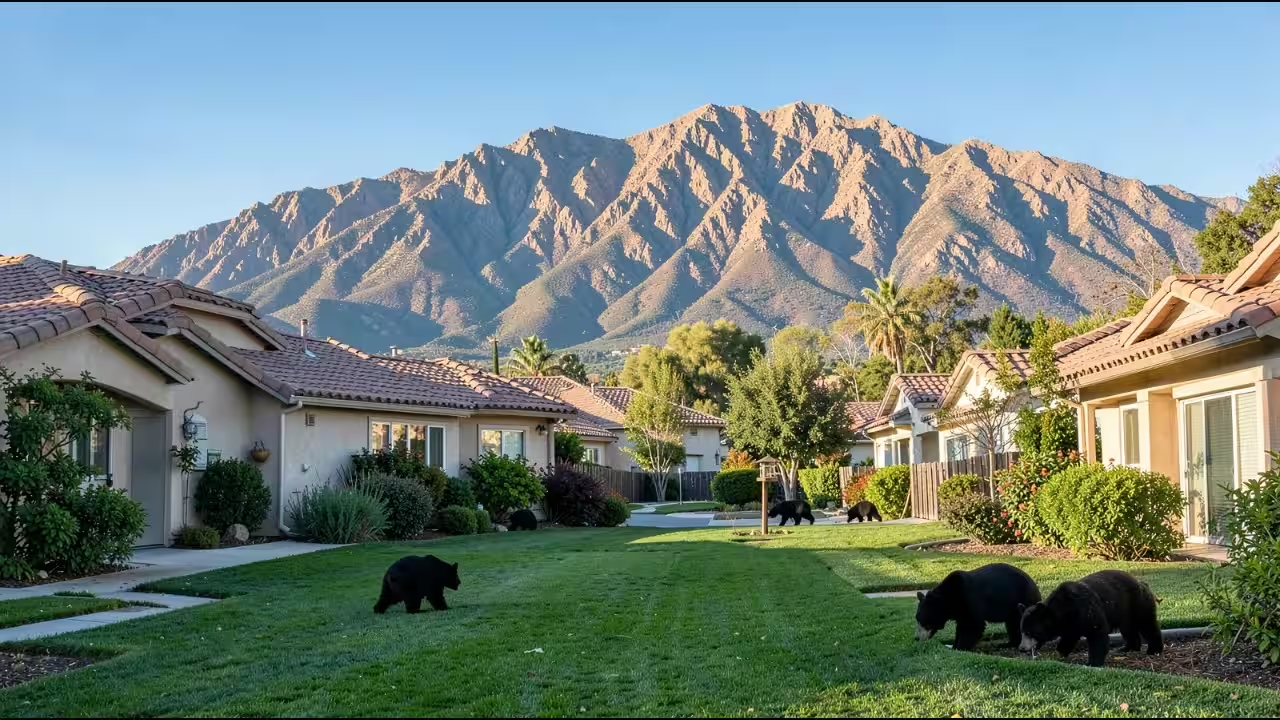
Los Angeles is known for its freeways and film sets, but its northern foothills are also home to black bears. As communities expand along the edges of the San Gabriel Mountains, bears are increasingly appearing in backyards, swimming pools, fruit trees and chicken coops. Residents and wildlife experts are learning how to share these spaces while reducing the risk of conflict. In a September 2026 report for The Guardian titled “Bear-y good neighbors: humans and animals are learning to live together in an expanding LA”, Visser examined how encounters are changing life in foothill communities. Wilson Sherman, a doctoral student at the University of California, Los Angeles, who studies human-wildlife interactions, said black bears are adaptable omnivores capable of eating many of the same foods as people. California has an estimated 49,000 to 71,000 black bears, according to the California Department of Fish and Wildlife. The department's 2020–2024 average was 59,851 bears, and it describes the statewide population as stable over the past decade.Black bears in Los Angeles: why bears enter backyards, swimming pools and chicken coopsBlack bears have long lived in California, but expanding communities have brought more homes into contact with their habitat. Sherman told The Guardian that human-bear interactions have increased since the 1990s as communities have grown. The California Department of Fish and Wildlife’s guidance on black bears confirms that the species lives in natural, rural and residential areas. The department also notes that most wild animals naturally avoid or fear people, and that black bear encounters resulting in human injury are rare in California. Food is a major reason bears enter residential areas. Sherman identified pet food left outdoors, koi ponds, fruit trees carrying large quantities of fruit and swimming pools as features that can attract bears. Human food is not necessarily more appealing to bears than natural food, but it can provide calories more efficiently. As Sherman explained, a half-eaten pizza in a rubbish bin can offer an easier source of energy than finding equivalent calories in acorns and ants.The availability of food around people may also affect bear reproduction. The Guardian reported that bears living or foraging near people tend to reproduce more frequently, likely because human food is more calorie-dense and easier to obtain than many natural food sources. The California Department of Fish and Wildlife warns that bears can become habituated to human food and may grow too bold around people. For people moving into foothill neighbourhoods, the encounters can come as a surprise. Residents may expect suburban surroundings without realising that their gardens and streets overlap with wildlife habitat. Sherman said people he had spoken to generally became accustomed to the bears over time. The California Department of Fish and Wildlife nevertheless advises residents to keep their distance from bears.Bear sightings in 2026: hyperphagia, wildfires and climate pressuresBear encounters tend to rise in late summer and early autumn, when black bears enter a period known as hyperphagia. During this phase, they eat heavily to build fat reserves before winter. Alex Heeran, a research scientist at the California Department of Fish and Wildlife who studies the human dimensions of wildlife encounters, told The Guardian that September is often a particularly active month for reports. The timing also coincides with outdoor activities such as Labour Day picnics and camping trips. Wildlife officials receive reports of bears damaging fences, entering sheds and making a mess while searching for food. Heeran said, “a lot of the conflict can be prevented.” The California Department of Fish and Wildlife separately advises residents to secure food and rubbish that could attract bears.Climate pressures may add to the challenge. The Guardian reported that warmer summers can change the availability of natural food and prompt bears to expand their ranges. It also linked the 2025 Eaton and Palisades fires to a shortage of natural food sources that encouraged bears near Los Angeles to search for food in neighbourhoods. Local authorities have also highlighted the role of rubbish. The City of Sierra Madre’s wildlife guidance urges residents to use bear-resistant bins and secure their lids. Its rules prohibit leaving refuse, pet food or other food sources where they are likely to feed wildlife, with violations subject to fines.Living with bears in Los Angeles: bear-resistant bins, fruit trees and Monrovia’s BlondieSome residents have adapted to regular bear visits. Brian Gordon and his partner moved to Monrovia four years before The Guardian report, living in the last house before the Angeles National Forest begins. A family of bears wandered through their garden around the time they bought the property. The couple now regularly see bears using their swimming pool and document the encounters on their Instagram account, PoolBearLife. They said they keep rubbish bins clean, remove potential food sources and give the animals space. Their experience has changed their understanding of the bears: rather than treating every visit as an attack, they see the animals passing through a garden that borders the forest. They also acknowledge that precautions are necessary, including when a bear finds food or drink stored in a garage.Not every encounter ends peacefully. Earlier in 2026, a mother bear known as Blondie was euthanised after officials determined that she had swiped at residents on 2 occasions, causing minor injuries. Her 2 cubs were placed in captivity, where they are being raised with the hope that they can eventually return to the wild. Monrovia residents were angered by the decision. Mayor Becky Shevlin told the Los Angeles Times that the city had not been part of the decision and said officials were devastated, particularly because Blondie had young cubs. Sherman said social media footage of bears can build empathy for wildlife, but warned against portraying them as harmless characters. He said black bears are “by nature not particularly aggressive unless they are put in a dangerous or threatening situation, but they can cause damage.” The California Department of Fish and Wildlife warns that bears habituated to human food may become too bold around people.The California Department of Fish and Wildlife advises residents to secure rubbish, recycling and compost in bear-resistant containers; pick ripe fruit and collect fallen fruit; clean outdoor grills after use; keep pets secure; and place livestock in protected pens at night. It also recommends electric fencing around chicken coops and warns people not to feed bears. Feeding big-game mammals, including bears, is prohibited under California regulations. The California Department of Fish and Wildlife advises people to keep their distance, let the bear know they are there, make themselves look bigger, make noise and back away slowly. People should avoid running or making eye contact and keep children and pets close. The department also advises carrying bear spray. People should allow the bear to leave the area. If a black bear makes contact, the department advises fighting back and then calling 911.You use AI every day. Now get your AI Quotient. Take the AIQ test.
Topics in this story
Gathered from external sources. Rights to this text belong to whoever originally published it.