In 2026, Nigerian entrepreneur Smart Israel won $100,000 to expand solar-powered farms that grow food without soil
Smart Israel, a Nigerian entrepreneur, has won $100,000 in the 2026 Global Citizen Waislitz Prize to expand an initiative that allows communities to grow
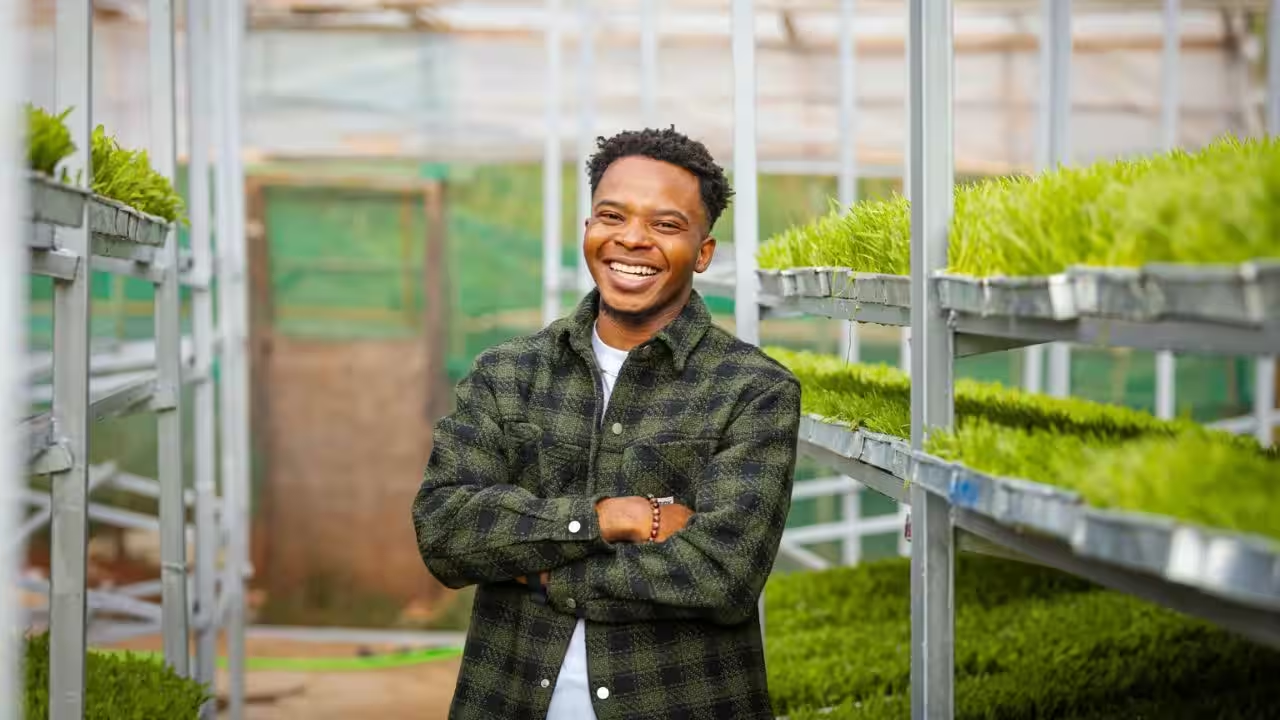
Smart Israel, a Nigerian entrepreneur, has won $100,000 in the 2026 Global Citizen Waislitz Prize to expand an initiative that allows communities to grow food without soil. His company Smartel Agri Tech uses solar-powered hydroponic systems and AI to help farmers grow fresh vegetables in places affected by climate change, displacement and limited access to farmland. The award recognises an approach that combines technology with local food needs, while supporting communities facing hunger and malnutrition. The funding is expected to help Smartel reach thousands more households and strengthen its community-based farming model.Smart Israel is expanding solar-powered farms without soilAccording to Global Citizen’s announcement of the 2026 Waislitz Award recipients, Israel founded Smartel after witnessing how resource-related conflict, displacement and climate change contributed to hunger in Nigeria’s Middle Belt.The experience shaped his focus on making food production possible in places where conventional farming faces serious limitations. Instead of depending on fertile land, Smartel uses hydroponics, a method of growing plants without soil by supplying nutrients through water.Its farming systems are powered by solar energy and supported by artificial intelligence, allowing crops to be cultivated in environments where traditional agricultural methods may be difficult to sustain.Smartel has deployed more than 3,000 systems, aiding thousands of farmers and families in accessing nutritious food, Global Citizen reported. The award will fund the company's next phase of growth, with a goal of reaching 5,000 more households through affordable climate-smart food production.Why does soil-free farming matter in climate-affected communitiesThe scale of the challenge is particularly significant in Nigeria, where food insecurity and environmental pressures have made agricultural production increasingly difficult in vulnerable regions.Borno, Adamawa and Yobe are among the worst affected states. According to the UN SDG Action Campaign’s November 2025 profile of Smartel, 33 million Nigerians are experiencing acute food insecurity. The organisation also noted that desertification had degraded 43% of the country's land, placing additional pressure on agricultural resources.Smartel's approach is designed to address some of these constraints. Its modular Farm-in-a-Box systems can be installed in locations where conventional farming is impractical, including refugee settlements, rooftops, schools and arid areas.The Rockefeller Foundation's profile of Smart Israel explains that the systems allow communities to grow vegetables throughout the year without relying on fertile soil. Families are trained to operate the installations and produce food for their own consumption or local markets.How does Farm-in-a-Box conserve water and resourcesWater conservation is one of the main benefits of Smartel’s agriculture model. The company’s hydroponic technology uses far less water than traditional farming, which is particularly relevant in areas where water supplies are limited.Smartel’s systems can reduce water consumption by as much as 90% compared to traditional farming, according to the UN SDG Action Campaign. This reduction allows communities to produce fresh food while placing less pressure on already scarce water resources.Smartel’s official website also stresses the environmental advantages of its farming technology. By reducing the need to convert additional land for cultivation, its systems can support land conservation and help limit the environmental impact associated with conventional agricultural expansion.The company employs solar energy and agricultural monitoring technology to enhance the efficiency of its operations. The Rockefeller Foundation describes Smartel's model as integrating renewable energy, Internet-connected devices and community ownership to strengthen local food systems.Community hubs are creating opportunities for farmers and young peopleSmartel’s work goes beyond installing agricultural equipment. The community hydroponic hubs are intended to provide food production facilities and hands-on training and entrepreneurship opportunities.The UN SDG Action Campaign says the hubs are local centres where women and young people get hands-on training in climate-smart agriculture. Participants can learn how to construct, operate and manage hydroponic systems, creating opportunities to develop agricultural skills and livelihoods.The initiative has also spread to communities outside Nigeria. According to the UN SDG Action Campaign, Smartel had reached more than 150,000 people across Nigeria and Rwanda and trained over 15,000 young people in building and operating hydroponic farms.These activities have helped establish a model in which local communities participate directly in food production rather than depending entirely on outside assistance.The Rockefeller Foundation says Farm-in-a-Box can reduce reliance on food aid by enabling families in fragile environments to grow their own nutritious food. Its approach also supports greater independence by allowing communities to produce vegetables for household consumption and local markets.What will the $100,000 Global Citizen award supportThe Global Citizen Waislitz Awards recognise individuals developing solutions to extreme poverty and creating lasting change in their communities.According to Global Citizen, the awards distributed a total of $300,000 among three recipients, with each winner receiving $100,000. Smart Israel received the Grand Prize, while Diana Yousef of Change:WATER Labs won the Disruptor Award and Oghenekevwe William Emadago of Girlified received the People's Choice Award.The programme evaluates applicants on 5 criteria, including proof of impact, innovation, scalability and adaptability. Its purpose is to help promising initiatives extend their work to more communities.For Smartel, the funding is expected to support the expansion of its community hydroponic hub model and provide affordable climate-smart food production to another 5,000 households.The award builds on Smartel's previous international recognition. The Rockefeller Foundation notes that Israel received the 2025 United Nations SDG Action Award for Creativity, alongside other honours recognising his contribution to climate-resilient agriculture.You use AI every day. Now get your AI Quotient. Take the AIQ test.
Topics in this story
Gathered from external sources. Rights to this text belong to whoever originally published it.