Jersey shepherds say GPS technology making lives 'much easier'
Brothers Josh and Ben Voak are using a GPS technology featured on the TV show Clarkson's Farm.
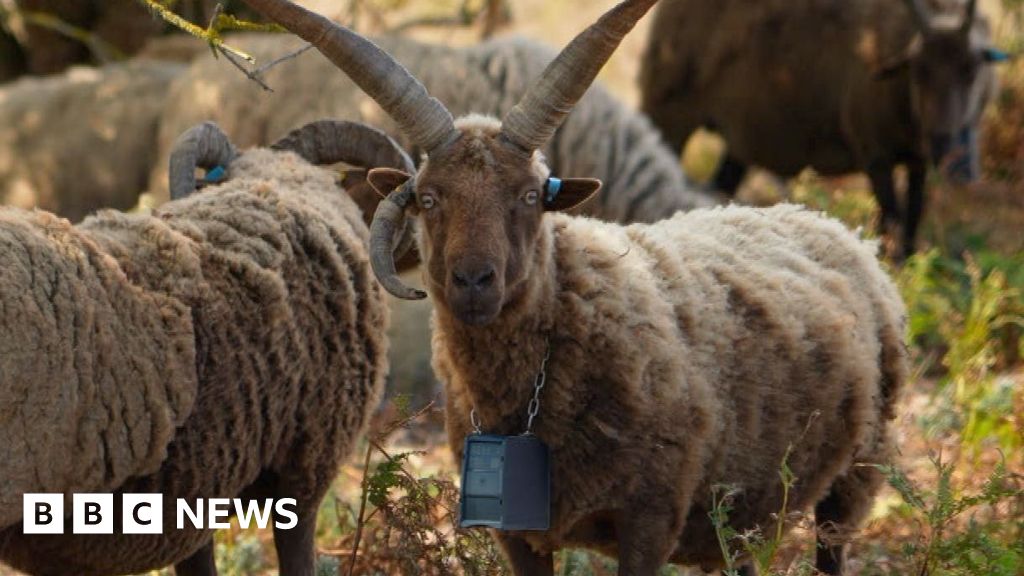
GPS collars are changing the way animals grazing on Jersey's cliffsides are managed, local shepherds have said.
Conservation initiative The Grazing Project has pioneered use of the collars on large flocks of sheep, with its efforts so successful it is now training four grazing cows to use the collars too.
In 2025, the technology was featured on Clarkson's Farm, Jeremy Clarkson's fly-on-the-wall documentary about his Cotswolds farm Diddly Squat, where it was used to contain his herd of goats.
Jersey brothers and shepherds Josh and Ben Voak, who work with the project, said it had saved them hours of manual labour and opened up new areas for flocks to graze.
The collars use GPS technology to keep livestock within an invisible boundary drawn using a smartphone app.
If the animals reach the edge of the boundary the collar delivers an audio warning and then delivers mild electric shocks.
The technology was created in Norway and has been tested extensively across the UK. The project uses about 150 collars as part of its management of 600 sheep in Jersey.
Josh said: "We got our first 70 collars about three years ago now, since then we've been getting more and more because it makes our job so much easier.
"It means we can graze more challenging areas, so steep cliffs, areas with heavy bracken or gorse... it means we can also track the sheep as well, so every day when we go looking and counting the sheep we've got them already on the app and we can find them very easily."
"We used to lay electric fencing before the GPS collars came in," he added.
"That means lugging fence poles, wire, batteries up and down the cliff. It could take hours.
"But now with the GPS collars all we have to do is upload the site on to the app, put sheep in and then we're done."
Ben said The Grazing Project was "quite pioneering" in the sheer number of collars it uses.
He said: "We certainly speak to a lot of people about it and they're very interested.
"For a lot of farmers who do struggle with sheep who love to escape, it can be a really useful tool.
"We speak to Nofence a lot about the design of the collar itself and how to improve that because if we ever come across an issue they're really good at taking in that feedback, learning it and sending us maybe a new type of chain or a new type of strap that can increase how usable it is."
Ben said training cows to wear the collars had opened up the possibility of using sheep and cows together to rewild new parts of Jersey.
He said: "They're currently being trained at the farm as we speak and the plan is to put them on certain wetland sites or up on the north coast, not letting them on the cliffs.
"We're in a trial period seeing how the cows and the sheep work together, if we can put the collars with cows and sheep on the same site, so it's quite an exciting time for us because we're just testing those possibilities."
Follow BBC Jersey on X and Facebook . Send your story ideas to channel.islands@bbc.co.uk .
Electric collars help cows learn grazing boundaries
GPS collars create 'virtual fence' for cows
Are 'tech dense' farms the future of farming?
Topics in this story
Gathered from external sources. Rights to this text belong to whoever originally published it.