In 2025, Wyoming’s Supreme Court rejected a landowner’s bid for a private road across his neighbour’s property; he wanted to reach a riverside meadow below a 60-foot drop
In its 2025 ruling, Wyoming's Supreme Court upheld a decision denying a landowner access to a riverside meadow by rejecting his request for a private road through a neighbor's property. The court clarified legal standards for access rights and easements in land disputes.
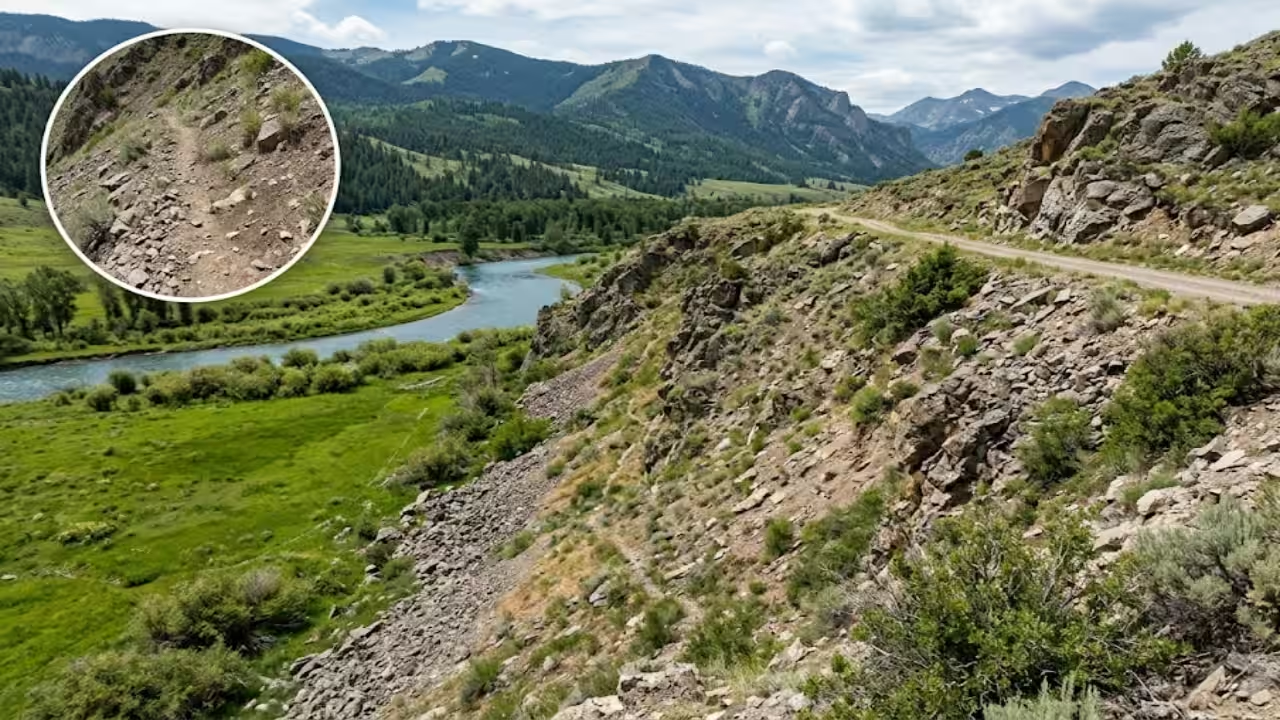
Roads, easements, and the goodwill of neighbours are the main sources of access in most places. Until someone wants to build, farm, or just walk to a beloved location, the gaps in that arrangement usually go unnoticed. When a dispute arises, courts must determine whether the need is real or merely a question of preference.Wyoming’s top court answered that question in 2025. On May 23, the Wyoming Supreme Court ruled against Samuel Tilden, who wanted a private road across his neighbour Linda Jackson’s land to reach a level meadow beside the South Fork of the Shoshone River, below a hillside with a 60-foot drop, or about 18 metres. The judges upheld two earlier Park County district court rulings. They said his land was not landlocked because a county road already ran through it, and that a steep slope on his own property was not the kind of problem the statute is meant to remedy.The land and the dropTilden bought the property in 1996 and sold 23 acres, roughly 9 hectares, to Jackson and her late husband in 2010, keeping the area around it. He lived on a portion of what he retained until 2021, when he sold his house and the acreage to the west and south of Jackson’s property. He kept a final lot of 2.64 acres to the north. A county road ran straight through it on the steep hillside. Below it lay the river meadow, and the only way down was a very steep game trail that no car or ATV could use.Tilden testified that he retained the land so he could reach a favourite fishing spot. Before he divided up the property, he and his family had walked across what became Jackson’s land via a two-track road to the lower terrain to fish, skate on the ice, ride horses or walk the dogs. After the 2021 sale, he rented a cabin from Jackson and put a corral on the meadow, relocated six horses there and still used the same road to feed them.But January 2022 changed everything. Tilden planned to build a new cottage on the lower ground, so he moved out of the cabin he had been renting from Jackson. He offered to buy Jackson’s 23 acres, but she declined and told him she didn’t want him crossing her land anymore. He sued in June 2022, seeking the implied easement or a private road under Wyoming law.Why the private road failedWyoming’s constitution bars the taking of private land for private use without the owner’s consent, with one exception for private ways of necessity. A state law turns that exception into a process, but the applicant has to show the road is truly needed. In practice that means proving the land is landlocked, with no legally enforceable route to a public road, or that the existing route is so inconvenient that the difference amounts to necessity.Tilden could not pass the test. He admitted that the county road passed across his land and that he had a legal interest in the same, and he did not contend that the road in itself was very inconvenient. The actual grievance was that a natural barrier on his own property separated him from the lower level. That, the court said, was not the sort of necessity the law contemplates. The statute is meant to prevent landlocking, it stated, not to make a property easier to use or more valuable to sell.The easement claimAn implied easement can arise when one owner splits a property and, before the split, used a route across one part to serve the other. Three things must be shown. The land was once under common ownership and was later divided, the earlier use was apparent, obvious and continuous, and the route is necessary and beneficial to the land that relied on it.The trial judge looked at aerial images taken shortly after the separation and found no obvious trail from the county road over Jackson’s land to the meadow. The photos showed only a short loop around the well pump. A neighbour testified that he had never seen a way to the meadow, only a short track round the pump, and Jackson said she had assumed the track was for the well. The Supreme Court noted that it was more than ten years after the division of the property that Tilden first thought of building a cottage and corral below the drop. He also had not proved that he could not build on the 2.64 acres or continue using the game trail for fishing and other family activities.What landowners can take from itThe decision is a reminder that access rights are best settled on paper at the moment land is divided. Anyone who sells part of a property while keeping another should work out how they will reach what remains and secure an easement in the sale documents, rather than relying on years of informal use. Without a written right, a neighbour’s goodwill can end, as it did here.For owners whose land really has no legal way out, Wyoming does offer a remedy. The constitutional exception for private ways of necessity and the state’s private road law have been explained by the Wyoming Supreme Court in earlier cases, including a 2007 ruling that traces the law back to 1895 and says damages are measured by comparing a property’s value before and after the road. That ruling notes that the original statute was amended in 2000, and the current procedure is set out in Wyoming Statute § 24-9-101. The constitutional wording it quotes also requires just compensation for any such taking.The other side of the coin is the Tilden case. A cliff, a game trail and a pleasant memory of fishing were not enough to compel a neighbour to give up a piece of her land. The court made it plain that the law protects those whose property would otherwise be useless and that seeking a better route to part of one’s own land is something else. Owners who want to develop in hard-to-reach corners of their property should check their access before they buy and ask for it in writing before they sell.You use AI every day. Now get your AI Quotient. Take the AIQ test.
Topics in this story
Gathered from external sources. Rights to this text belong to whoever originally published it.