UK budget offers £100 energy relief as Iran war threatens growth and raises costs
British finance minister John Healey on Wednesday announced a £100 one-off energy payment for 20 million lower- and middle-income households, retained the
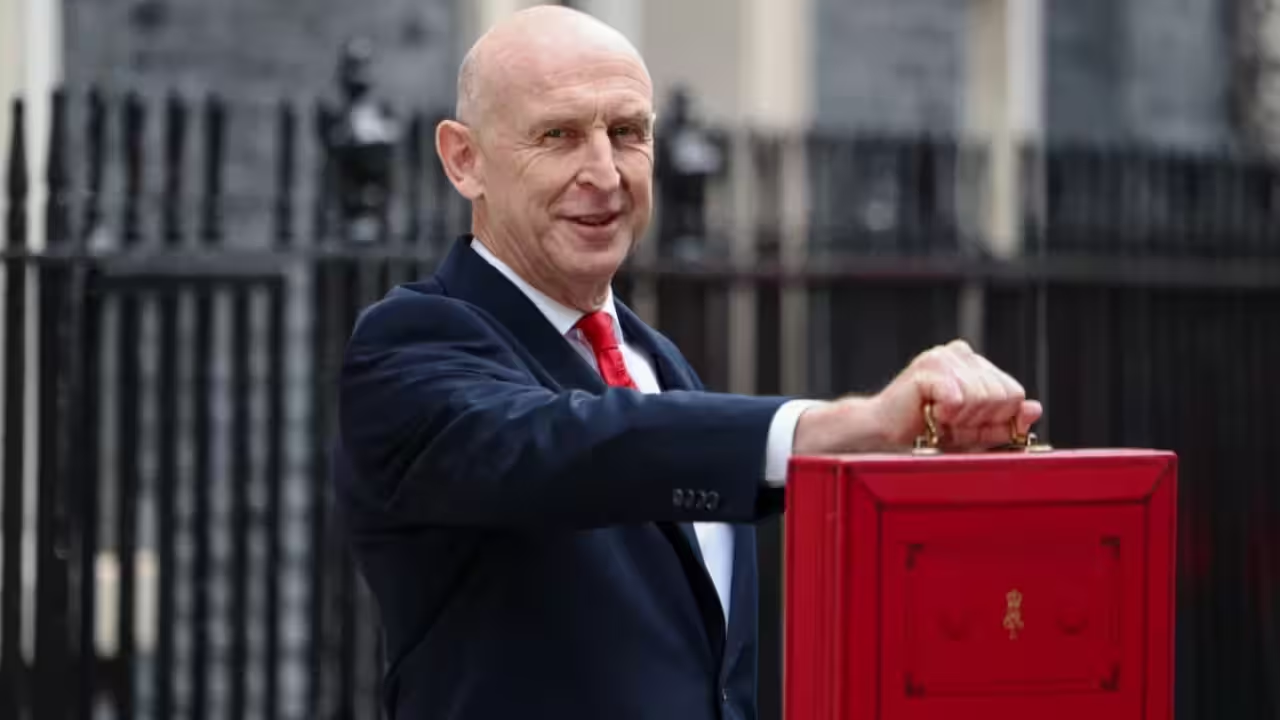
British finance minister John Healey on Wednesday announced a £100 one-off energy payment for 20 million lower- and middle-income households, retained the £20,000 annual tax-free cash ISA limit and raised taxes on savings and property income in his maiden budget. The measures aim to ease the impact of the Iran war on household finances while encouraging investment and managing the country's rising debt.Healey said the government had to respond to the economic fallout of the conflict, which has pushed up energy prices and weakened growth prospects. “My choice in the budget today is to give families and businesses some breathing space now,” he told parliament.The budget also extends a cut in the sales tax on electricity bills and abolishes a charge on gas bills. The measures come as disruptions to global oil and gas supplies, including bottlenecks in the Strait of Hormuz, threaten to raise household energy bills over the winter.Cash ISA limit stays at £20,000Healey reversed plans to reduce the annual tax-free limit for cash Individual Savings Accounts (ISAs) from £20,000 to £12,000 for people under 65 from next year.The earlier proposal, introduced by former finance minister Rachel Reeves, aimed to encourage more people to invest in stocks and shares and support Britain's stock market. The decision to retain the existing limit is expected to benefit banks and building societies, which use cash deposits to support lending, including mortgages.The government will explore ways to encourage first-time investors to buy stocks and shares through a proposed new 'Starter' ISA. However, some experts have criticised the plan for potentially adding complexity to investment products.The government also announced a two-percentage-point increase in the tax rates on savings and property income from April 2027. Tax on savings income will rise to 24%, 44% or 49% for basic-, higher- and additional-rate taxpayers, respectively.The changes are expected to raise £590 million in 2031-32, with the government estimating that around half of the additional revenue will come from the wealthiest 10% of households.Banks to fund energy supportBanks will face a higher surcharge on their profits to help fund the energy support package. The rate will double to 6% for 15 months from January.“Amid global economic storms, I am looking to our banks to help fund breathing space for British families,” Healey said.The budget also includes tax cuts for businesses in the retail, hospitality and leisure sectors, including pubs and clubs. These will be funded by higher levies on gaming machines.Healey announced additional funding to tackle homelessness and pledged £10 billion more in economic and military support for Ukraine.“Today we send a clear message to Moscow: Britain will stand with Ukraine for as long as it takes,” he said.Growth forecast cut as Iran war weighs on economyThe UK's economy is forecast to grow by 1.2% in 2026, according to the independent Office for Budget Responsibility (OBR). However, growth in 2027 is now expected to be 1%, down from the earlier forecast of 1.6%, reflecting the economic impact of the Iran war.Inflation, which had been expected to fall towards the Bank of England's 2% target, has instead risen to 3.5% and is forecast to climb further over the next year or two. Higher inflation could prompt the central bank to raise interest rates, increasing borrowing costs for households, businesses and the government.Economists said the budget was unlikely to reverse Britain's prolonged period of weak growth and pressure on living standards.“None of what was announced today is likely to shift the dial on what is set to be a truly terrible decade for living standards,” said Ruth Curtice, chief executive of the Resolution Foundation.Defence spending and public debtHealey confirmed that the government has a target date of 2030 to raise defence spending to 3% of gross domestic product (GDP), in line with the commitment made by NATO members. Defence spending currently stands at 2.7% of GDP.The chancellor said he would explain how the government plans to meet the target when it publishes its three-year spending plans next year. The commitment is particularly significant for Healey, who resigned as defence secretary earlier this year over concerns about funding.Meanwhile, public debt remains a major constraint on government finances. The UK's debt has exceeded £3 trillion for the first time, equivalent to more than $4 trillion, while debt servicing accounts for around 8% of government spending.Healey said the OBR forecasts showed that the government would spend an additional £14 billion on debt interest this year.You use AI every day. Now get your AI Quotient. Take the AIQ test.
Topics in this story
Gathered from external sources. Rights to this text belong to whoever originally published it.