Cafes, shops shut over 'violation of norms': Iran's hijab crackdown returns as women defy veiling rules
Middle East News: Iran's long-running debate over mandatory hijab has resurfaced as hardliners push for stricter enforcement, even as the country grapples with the fall.
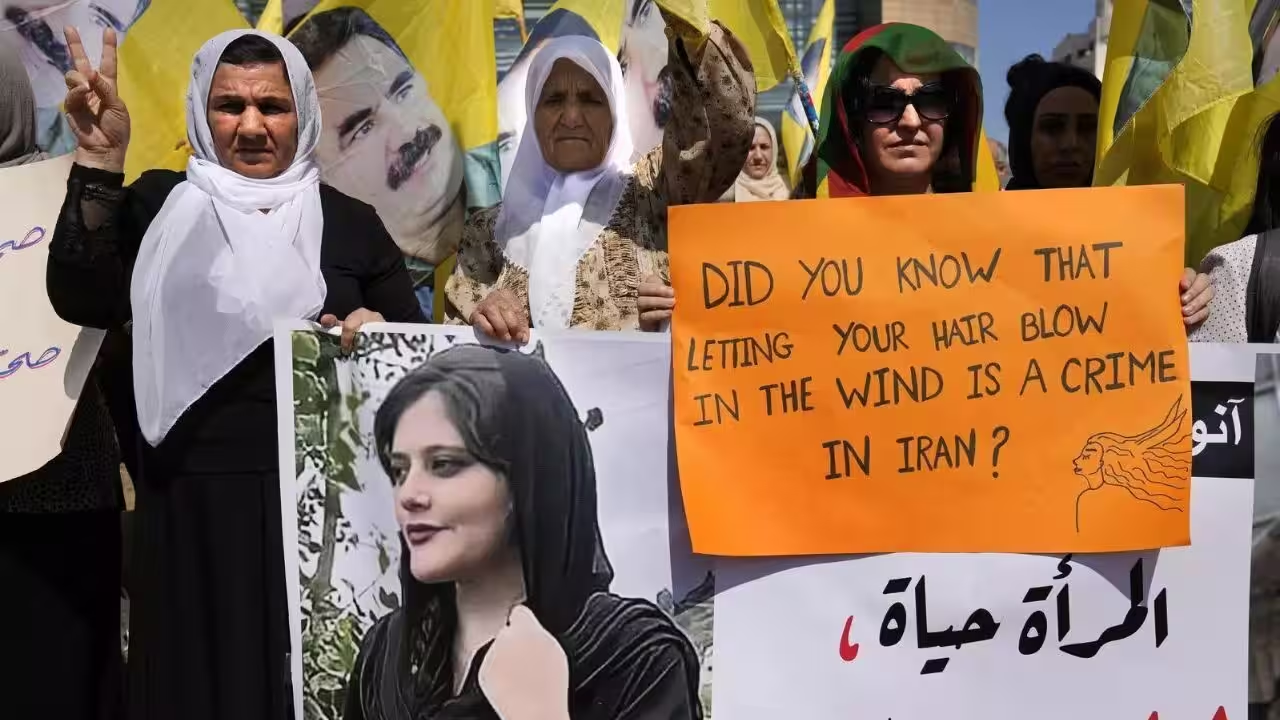
Iran's long-running debate over mandatory hijab has resurfaced as hardliners push for stricter enforcement, even as the country grapples with the fallout of its conflict with the US.During the height of the conflict, women without headscarves were seen at pro-government gatherings and in state media, suggesting that authorities were reluctant to enforce the rules amid more pressing concerns.In recent weeks, however, conservative clerics and politicians have intensified calls for a crackdown on âpublic nudityâ. State media have reported the closure of cafes, restaurants and shops accused of failing to enforce mandatory dress rules.Businesses face action over hijab rulesOn July 19, at least seven cafes and restaurants in Tehran were shut down for allegedly failing to enforce the mandatory hijab, according to human rights group HRANA. The group has also documented social media accounts being blocked over alleged violations of public dress codes, according to CNN.Authorities have used terms including âviolation of normsâ, âviolation of modestyâ and âfailure to observe Islamic decencyâ in such cases. In one case, HRANA said a boutique was closed âdue to unveilingâ.The Tehran Prosecutor's Office has also warned of serious action against alleged âindecencyâ at cafes, restaurants and shops selling clothing considered inappropriate.In South Khorasan province, 10 cafes were closed over alleged violations of âsocial norms and mandatory hijab rulesâ, the Mehr news agency reported, citing the province's chief prosecutor.State media have meanwhile carried repeated calls from religious leaders for women to observe the hijab, describing it as part of Iran's cultural identity.Women continue to defy rulesThe renewed push comes nearly four years after the death of Mahsa Amini in police custody sparked the nationwide âWoman Life Freedomâ protest movement. Amini had been detained over allegations that she was improperly dressed. The protests were violently suppressed, but widespread defiance of compulsory hijab rules has continued, particularly among young women.There have been several high-profile cases. In June, Iranian singer Parastoo Ahmadi and eight members of her band and production team were sentenced in Qom to 74 lashes and banned from leaving the country for two years. Ahmadi had appeared with uncovered hair and bare shoulders during a livestreamed performance in 2024.Women have also increasingly appeared without headscarves in public and on social media. Videos showing groups of women riding motorcycles without hijabs have circulated online, including footage from Tehran, Shiraz and Isfahan.One Instagram post by a group of women in Shiraz said, âWeâre the motorcycle girls of Shiraz! Shiraz girls, letâs go!â Another post showed around 20 female motorcyclists in Isfahan and described it as âthe biggest female motorcycle event in Isfahan.âPezeshkian questions crackdownIranian President Masoud Pezeshkian has questioned whether stricter laws can change people's behaviour, suggesting that authorities should focus on cultural engagement instead.Referring to an interview with a conservative cleric, Pezeshkian said, âThe cleric mentioned hijab⦠Well, there are neighborhoods, there are mosques, go and work on it there! Can you really change peopleâs behavior through laws?âHe also referred to disagreements with his daughter over the issue, asking, âDoes it mean I should force her?!â âChanging behavior is a cultural matter; itâs about belief. You canât create belief in people through force,â he added.Former MP Gholamali Jafarzadeh Imanabadi has similarly argued that officials should focus on inflation and people's livelihoods rather than the hijab.Hardliners demand tougher actionHardliners, however, have stepped up pressure on the government to enforce the rules. Kayhan editor Hossein Shariatmadari has described enforcement as both a legal obligation and a religious duty.According to CNN, a member of Iran's parliament, Mohammad-Taqi Naqdali, said, âWe see what the state of nudity and public vice is like in our midstâ¦Israel and America cannot destroy us, but this decay that has plagued our religious culture and is spreading nudity in a disastrous and widespread manner in society will.âIran's Islamic Penal Code criminalises appearing in public without âIslamic hijabâ, although it does not precisely define the term. A tougher law approved in 2024 proposed expanded penalties and surveillance, but its implementation was halted following intervention by the Supreme National Security Council.For now, authorities appear cautious about launching a full-scale street crackdown. A Tehran woman in her 60s told CNN that women were openly wearing clothes such as crop tops and shorts and that headscarves had become rare.âI donât think they can make these girls wear headscarves again. But then again, thatâs also what we thought when the revolution happened. We never thought they would be able to force us to wear them, but in the end, they did,â she added.Catch the latest World News and Live updates. Download the TOI app.
Topics in this story
Gathered from external sources. Rights to this text belong to whoever originally published it.