10 years of Juvenile Justice Act: Has the law helped children reform or pushed more towards adult trials?
NEW DELHI: Should a child accused of a crime be punished like an adult, or given an opportunity to reform?
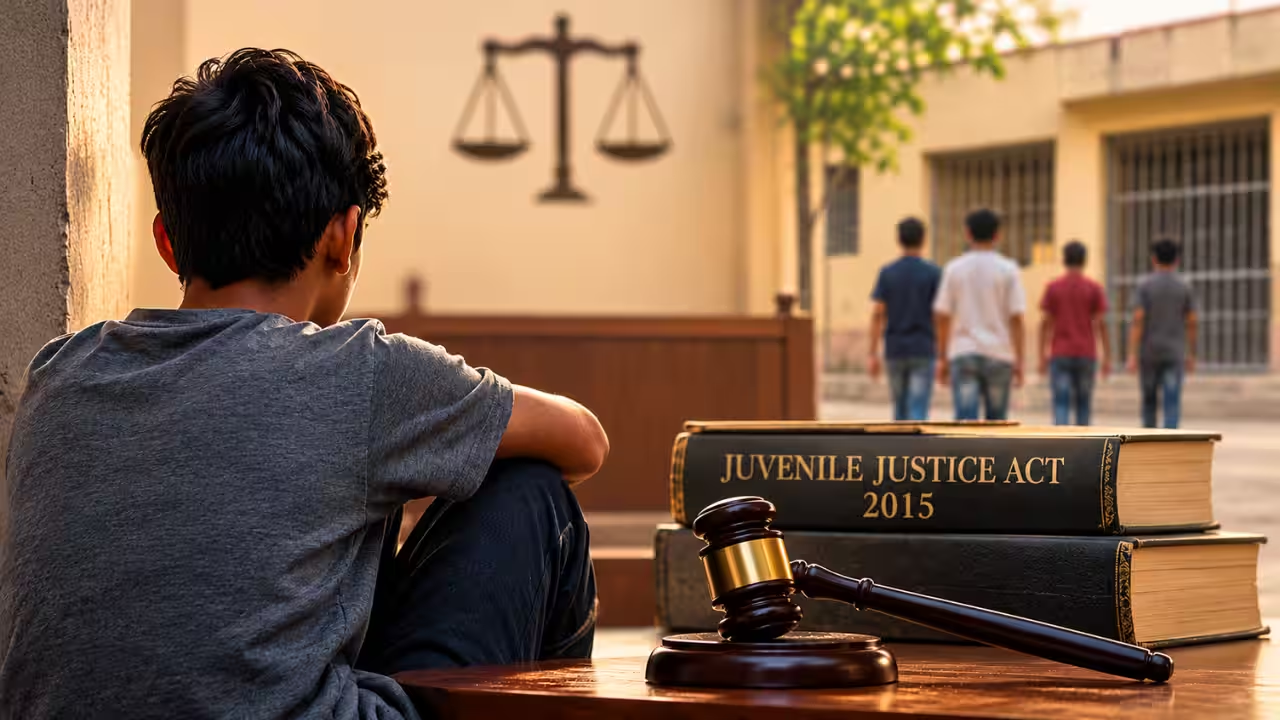
NEW DELHI: Should a child accused of a crime be punished like an adult, or given an opportunity to reform? India's Juvenile Justice (Care and Protection of Children) Act, 2015, is built around the principle that children in conflict with the law deserve a chance to change and reintegrate into society. Yet, it makes an exception for those aged 16–18 accused of heinous offences, allowing them to be considered for trial as adults.A decade after the law came into force, however, questions remain about how effectively it has delivered on its promise. Are children receiving the care, education and rehabilitation they are entitled to? Are juvenile homes equipped to help them rebuild their lives? And how well do the safeguards work when a child faces the prospect of an adult trial?Here is what the law provides, how the system is meant to function and where implementation continues to fall short.Key changes under the 2015 ActThe 2015 Act brought significant changes to India's juvenile justice framework, most notably by classifying offences into three categories: petty, serious and heinous. Section 2(33) defines heinous offences as those carrying a minimum punishment of seven years or more.“The Juvenile Justice (Care and Protection of Children) Act, 2015 introduced several significant changes to the juvenile justice framework. It classified offences into three categories, which are petty, serious and heinous offences, with heinous offences defined under Section 2(33) as offences carrying a minimum punishment of seven years or more,” said senior advocate Vivek Narayan Sharma.Another major change was the introduction of a preliminary assessment under Section 15. It allows the Juvenile Justice Board (JJB) to examine whether children aged 16–18 accused of heinous offences should continue to be dealt with under the juvenile justice system or have their cases transferred to the Children's Court for trial as adults."The Act also brought adoption within its statutory framework and gave the Central Adoption Resource Authority (CARA) statutory status under Section 68. It strengthened non-institutional care through provisions for foster care, sponsorship and aftercare for young persons leaving childcare institutions under Section 46," Sharma said.Section 41 made registration compulsory for all Child Care Institutions (CCIs). The 2021 amendment further strengthened administrative oversight by expanding the District Magistrate's supervisory role over Child Welfare Committees (CWCs) and childcare institutions.“The 2021 Amendment introduced a separate category of serious offences carrying a maximum punishment of more than seven years but having no minimum sentence, and expanded the District Magistrate's oversight over Child Welfare Committees and Child Care Institutions,” Sharma said.The 16–18 adult trial provisionDoes being 16 or 17 automatically mean a child accused of murder or another heinous offence can be tried as an adult? No. Section 15 requires the JJB to assess the child's mental and physical capacity, ability to understand the consequences of the alleged offence and the circumstances in which it was committed.“The Juvenile Justice Act, 2015 introduced Section 15, which provides for a preliminary assessment of children aged 16–18 years accused of committing heinous offences to determine whether their cases should be retained by the Juvenile Justice Board or transferred to the Children's Court for trial as an adult,” Sharma said.The provision followed concerns that adults could exploit juveniles. Sharma represented Shilpa Arora Sharma in Shilpa Arora Sharma v Union of India.In Barun Chandra Thakur v Master Bholu (July 13, 2022), the Supreme Court said the delicate assessment requires expert help from psychologists or psycho-social workers where needed.In Shilpa Mittal v State (NCT of Delhi) (2020), the Supreme Court classified offences with a maximum sentence above seven years but no minimum as serious, not heinous. On July 21, 2026, in X v State of Bihar, it held murder under IPC Section 302/BNS Section 103(1) to be heinous because life imprisonment is its implied minimum.The preliminary assessment does not establish guilt. It only decides whether the case should remain before the JJB or go to the Children's Court.From apprehension to the JJB's decisionThe Act lays down safeguards from the moment a child comes into contact with the police.Under Section 10, the Special Juvenile Police Unit or a designated Child Welfare Police Officer must produce the child before the JJB within 24 hours of apprehension, excluding the time required for the journey. A child cannot be kept in a police lock-up or jail, handcuffed or subjected to intimidation. The child's parents or guardians must also be informed.Section 12 makes bail the general rule, even in cases involving non-bailable offences. Bail can be denied only if the child's release is likely to expose them to danger, bring them into contact with known criminals or defeat the ends of justice. The JJB must record its reasons for refusing bail.The child is also entitled to legal representation and free legal aid under Section 13. Parents or guardians and the probation officer must be informed, while the child must be made aware of the allegations. The law prohibits forcing a child to confess or sign a statement.Section 14 requires the JJB to conduct a child-friendly inquiry, hear the child and consider the social investigation report. The inquiry should ordinarily be completed within four months, with a possible extension of two months for recorded reasons.If the child is found to have committed the offence, Section 18 provides for rehabilitative measures such as counselling, community service, probation or placement in a special home.These safeguards are underpinned by the principles laid down in Section 3, which include the presumption of innocence, dignity and participation, the best interests of the child, privacy and confidentiality, non-discrimination, institutionalisation as a last resort, and rehabilitation and social reintegration.“The principles include presumption of innocence, right to dignity and participation, best interests of the child, privacy and confidentiality, non-discrimination and non-stigmatisation, institutionalisation as a measure of last resort, and rehabilitation and social reintegration,” Sharma said.JJBs and CWCs: Are the institutions functioning effectively?The juvenile justice system relies heavily on two statutory bodies. JJBs deal with children alleged to have committed offences, while CWCs are responsible for children in need of care and protection, including those who have been abandoned, abused or neglected.However, shortages of personnel and delays in filling vacancies have affected their functioning.In Sampurna Behura v Union of India (2018), the Supreme Court directed that vacancies in these bodies be filled within three months. The Delhi High Court subsequently set April 15, 2024, as the deadline for filling vacancies in CWCs and JJBs.The scale of the problem is reflected in the India Justice Report 2025. It found that 55% of cases before 362 JJBs were pending as of October 31, 2023. Around one in four boards lacked a full bench, while 30% of the responding boards lacked an attached legal services clinic.The report also highlighted the absence of a centralised public database to track the performance of these bodies, making it difficult to assess their functioning and identify gaps in service delivery.Juvenile homes: Is rehabilitation happening on the ground?The purpose of a juvenile home goes beyond keeping a child in custody. It is supposed to provide a safe environment, education, counselling and other support services that can help children return to society and rebuild their lives.But conditions in many institutions raise questions about whether this objective is being achieved.According to the India Justice Report, only 810 of the 1,992 mandated inspections were conducted across 166 homes in 14 states and one Union Territory. The report also found that 292 districts had just 40 homes exclusively for girls, alongside concerns about overcrowding and inadequate access to schooling.These shortcomings undermine the rehabilitative purpose of the law. A child placed in an institution should have access to education, healthcare, counselling and opportunities to develop skills, rather than simply being confined.The Act also provides for aftercare under Section 46, recognising that rehabilitation cannot end when a young person leaves an institution. Financial and other forms of assistance are intended to help them adjust to life outside and become independent.However, gaps in inspections, monitoring and institutional capacity make it difficult to establish how consistently these provisions are being implemented.Where does the system fall short, and what can be done?The Act provides several channels for addressing complaints about inadequate care or violations of children's rights. These include the CWC, District Child Protection Unit, District Magistrate and the State or National Commission for Protection of Child Rights. A writ petition can also be filed before the high court.Yet, the existence of legal safeguards does not necessarily translate into effective protection on the ground.Police, JJBs, CWCs and District Child Protection Units often operate in silos, weakening coordination and accountability. Vacancies, prolonged inquiries, limited access to legal aid and inadequate inspections further affect the system's ability to deliver timely and effective rehabilitation.The Juvenile Justice Act rests on an important premise: a child who commits an offence should not automatically be defined by that act for the rest of their life. Even where the law permits an adult trial, it requires an assessment and safeguards that recognise the child's age and capacity.Ten years on, the real measure of the Act's success will not simply be how many cases it processes or how many institutions it establishes. It will be whether children receive a fair hearing, meaningful rehabilitation, education and a genuine opportunity to rebuild their lives.
Topics in this story
Gathered from external sources. Rights to this text belong to whoever originally published it.