Israel just voted in a critical election. But the ultimate outcome will take time to become clear
Israel’s elections produced no clear winner Tuesday night, exit polls showed, with neither Prime Minister Benjamin Netanyahu nor his main rival Gadi Eisenkot within reach of the 61 seats needed for a governing majority in the 120-seat parliament, the Knesset.
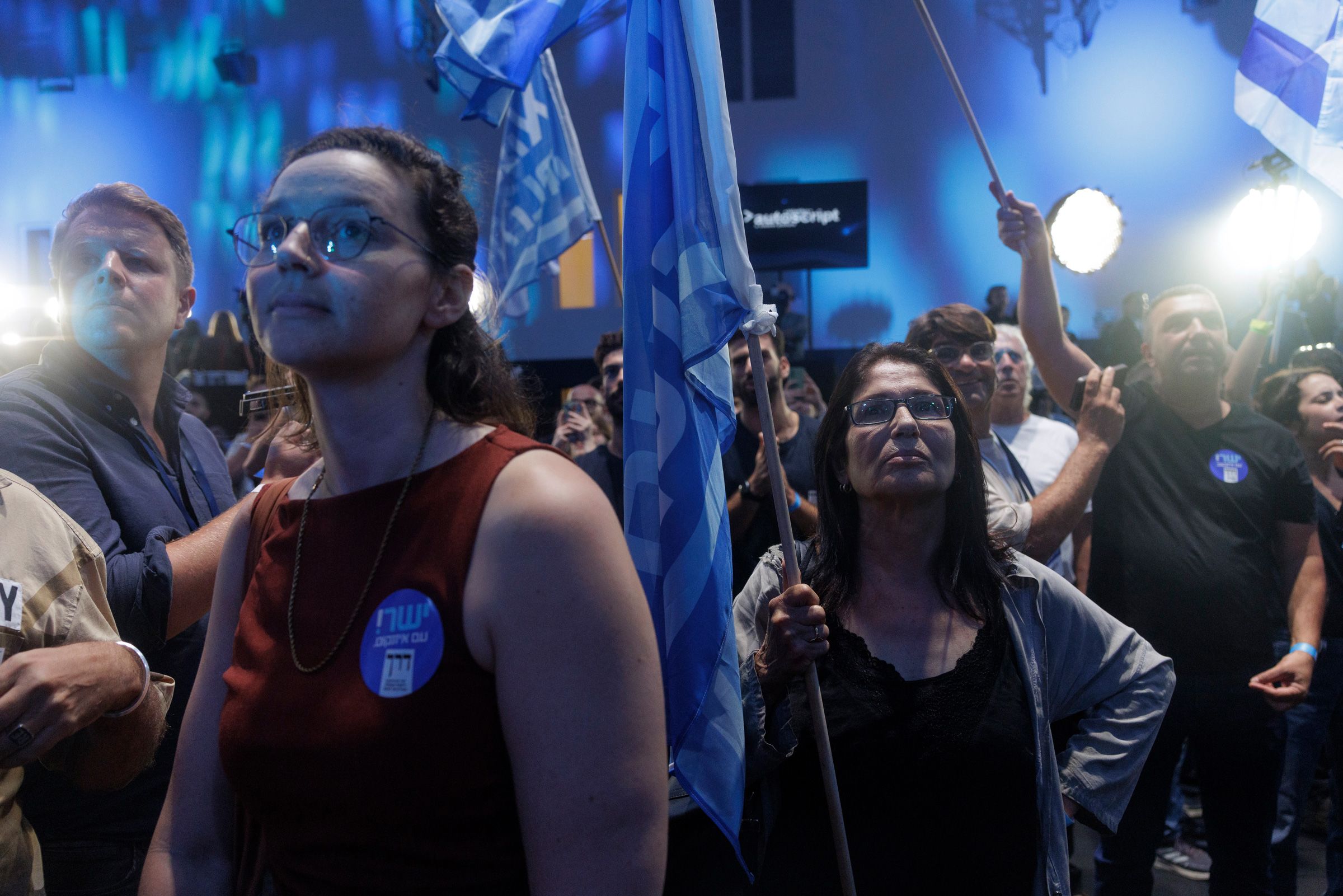
Israel’s elections produced no clear winner Tuesday night, exit polls showed, with neither Prime Minister Benjamin Netanyahu nor his main rival Gadi Eisenkot within reach of the 61 seats needed for a governing majority in the 120-seat parliament, the Knesset. With more than 50 percent of of the vote counted, Channel 12 and Ynet projected Netanyahu’s bloc taking 55 seats, a drop from the 68-seat coalition he led in the outgoing Knesset. His Likud party is still set to be the largest single party. But Israeli politics is all about building coalitions – not being the biggest party – and Netanyahu’s path to staying in power is now unclear. The opposition also has a complicated route to government. Parties opposed to Netanyahu have a clear majority, on course for 65 seats, according to the latest Ynet and Channel 12 projections. But they are fractured and divided between right, left and center, and between Jewish and Arab parties. Eisenkot’s Yashar party is the largest in the opposition, projected to win 21 seats, but his path to power runs through cooperation with the Arab parties, currently projected to win 16 seats, a scenario not all the party leaders in the opposition are willing to accept. The picture may shift as the actual votes are tallied overnight. The final count is expected to take a few days. No quick victory declarations As exit polls showed Netanyahu and Eisenkot falling short of a majority, both leaders addressed supporters, trying to claim the night and shape a narrative of victory. Netanyahu, speaking at the Likud headquarters in Jerusalem, thanked voters for what he called a renewed vote of confidence. But he stopped short of declaring outright victory. “Two things became clear tonight: Likud is the largest party in Israel. There is no dispute about that,” he said. “And the second thing is that the right-wing bloc has a clear, decisive majority among the Zionist and Jewish public.” “We must establish a strong national right-wing government,” Netanyahu continued. “Israel must not be endangered with a government that relies on anti-Zionist Arab parties that oppose our very existence, that see Hamas as a charity organization, that calls our soldiers war criminals.” Eisenkot also did not declare victory as he spoke at his election headquarters in Tel Aviv. But he did say that Israel voted against Netanyahu. “We have made history! The public has voted for change. The coalition of failure has lost the people’s trust,” he said. “The Israeli public has voted against Netanyahu continuing to serve as prime minister of Israel.” Eisenkot, who was once Israel’s top general and lost a son fighting in Gaza, said that “a worthy leader would accept the people’s vote of no confidence and announce his retirement from political life today.” Surge for Arab parties adds complexity The elections saw the highest overall voter turnout since 1999 – at least 77.7%. The surge was especially notable among the country’s Arab population, which has traditionally voted at lower rates than Jewish Israelis. The Arab parties said turnout exceeded 75% and they are projected to have their strongest showing in history. Palestinian citizens of Israel – roughly 20 percent of Israel’s population – were driven by an urgent desire to topple Netanyahu’s right-wing coalition, which is largely dominated by hardline ministers Bezalel Smotrich and Itamar Ben-Gvir. Ben-Gvir’s tenure as national security minister has included a dramatic rise in crime and murder rates in Arab communities. “We have proven that we are a political force that cannot be ignored, and that it is impossible to build a future here without our voice”, said Yousef Jabareen, chairman of the Joint List, calling it a “historic day.” Mansour Abbas, chairman of the Raam list, told i24news that the “record-breaking electoral achievement is all due to Ben-Gvir and Smotrich and the entire government that neglected the Israeli Arab community.” The Arab turnout may have blocked Netanyahu from a majority, but it also complicates Eisenkot’s attempts to replace him. Eisenkot has set conditions for any partner to join his government, including recognizing Israel as a Jewish state and recognizing Hamas as a terrorist organization that must be dismantled, terms most Arab lawmakers are unlikely to accept. Moreover, two of his opposition allies – Avigdor Liberman and Naftali Bennett – have ruled out forming a government with the Arab parties altogether. That makes Eisenkot’s path to victory unclear. What happens next? Exit polls are merely projections, and the picture may shift as actual votes are counted and finalized, which usually takes a matter of days. Once results are certified, the electoral process moves to Israel’s President Isaac Herzog. In a series of meetings in Jerusalem, Herzog will open a round of consultations in which each elected party recommends its choice for prime minister. Based on these recommendations, the president then tasks one candidate to try and form a government. That is not necessarily the leader of the largest party, but rather whoever he thinks is most likely to assemble a 61-seat majority based on his own discretion. Winning is not only about votes and seats, but also about building – and maintaining – a viable coalition. Herzog’s first decision will be does he ask Netanyahu or Eisenkot to form a government. Netanyahu has the largest party, but with the Arab parties’ support, Eisenkot is likely to have more recommendations. After being assigned the mandate, one of the two will begin weeks of political bargaining over cabinet posts, budget priorities and policy commitments. The assigned candidate has a 28-day deadline – and likely a 14-day extension – to form a government. If he fails, the president passes the mandate to another candidate for another four weeks. If that fails as well, the Knesset gets a short window to put forward another candidate. If it cannot, the country automatically goes to another round of elections. With neither side holding a clear majority, deadlock appears to be a plausible outcome. Herzog may try to steer Netanyahu and Eisenkot to form a unity government between the two largest parties, but it’s unclear that such an arrangement is even possible. Netanyahu has a long history of burning politicians with whom he has reached similar agreements, and Eisenkot has ruled out sitting with Netanyahu.
Topics in this story
Gathered from external sources. Rights to this text belong to whoever originally published it.