Film shares 'rich tapestry' of lives of Bristol's Windrush children
The stories of seven people whose parents are from the Windrush generation are told in a new film.
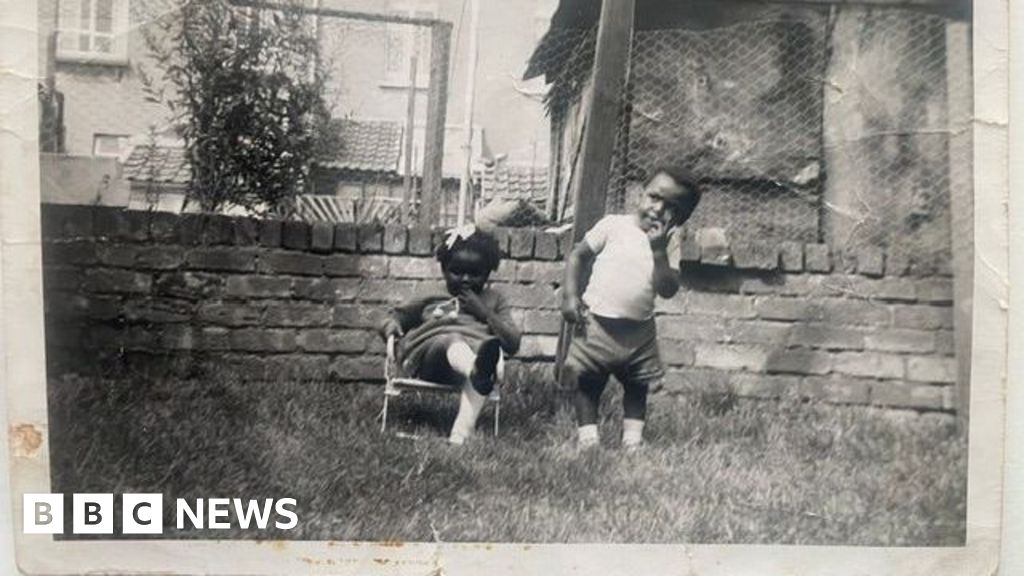
The untold stories of children born from the Windrush generation have become the centrepiece of a documentary.
First Born Second: Voices of the Children of the Windrush Era focuses on seven Bristol voices on what it meant to grow up black and British in the 1970s and 1980s.
Film co-producer and project curator Roger Griffith MBE said he wanted to champion those pioneering parents, while sharing how their children grew up in the "rich tapestry" of a Bristolian, British, black experience while overcoming "racism, institutional discrimination and a clash of cultures".
Broadcaster Sherrie Eugene-Hart shares her story and said she hoped people were left with a sense of pride, hope and achievement.
Headlines: A royal visit and 'shin-kicking'
Pensioner arrested on suspicion of woman's murder
'Bullying and anxiety' making children skip school
The Windrush generation was invited to come from the Caribbean to the UK to help rebuild post-war Britain.
Several hundred people who migrated were Jamaican, but others arrived from islands including Trinidad, St Lucia, Grenada and Barbados - many of whom travelled on the HMT Empire Windrush.
The boat has since became a symbol of a wider mass-migration movement.
"There was a lot of joy growing up - when any celebration happened everybody was invited," Eugene-Hart said.
"We didn't really see the negative side of life until we grew up, so while we were young and impressionable and naive, that's how our parents wanted it to be - they were protective."
Eugene-Hart said her parents did not always want to share their unhappy stories of being chased by Teddy Boys - a 1950s mostly white British youth subculture, some of whose members became perpetrators of racial violence - and of being refused jobs.
"I think it's very hurtful for everybody," she said.
Griffith said his generation had a very Bristolian, British, black experience, which he called "a rich tapestry" of "triumph, tragedy and joy".
"Our parents were pioneers, but we were pioneers in a different way because we had to grow up in those two cultures - being black and British," he said.
"I'm really overwhelmed," he said, adding the film was "something I've been thinking about for a while in my own research".
Director Michelle Pascal said the "untold" stories people had shared with them revealed a much bigger picture of their "resilience, belonging and change".
She said: "Many of the people that we approached to film have had brilliant careers. These are people that I've looked up to.
"The thing that connected us a lot was the household - the Caribbean front room that you couldn't go into.
"There are items that we all shared - the glass fish that were in all the Caribbean homes. They popped up in the film."
Griffith said watching Pascal's directorial "talent flourish and seeing her bringing it to the screen was just moving".
Eugene-Hart and Beverly Douglas, who was also in the film, have recreated their version of the Caribbean home in a separate exhibition called Dominican Front Room, which can be visited at the Undershed before going into the screening.
First Born Second: Voices of the Children of the Windrush Era premieres at the Watershed in Bristol on 29 October.
Follow BBC Bristol on Facebook , X and Instagram . Send your story ideas to us on email or via WhatsApp on 0800 313 4630 .
Award-winner hails Windrush generation as heroes
Nostalgic 'Windrush front room' sets up inside pub
Topics in this story
Gathered from external sources. Rights to this text belong to whoever originally published it.