In 1947, U.S. tea experts tasted imported brews under a 1897 law that set quality standards; the federal tea-tasting system lasted until its repeal in 1996
Explore the unique tradition of U.S. tea tasting, its regulatory history, and the fascinating role of federal experts in ensuring the quality of imported tea from 1947 to 1996.
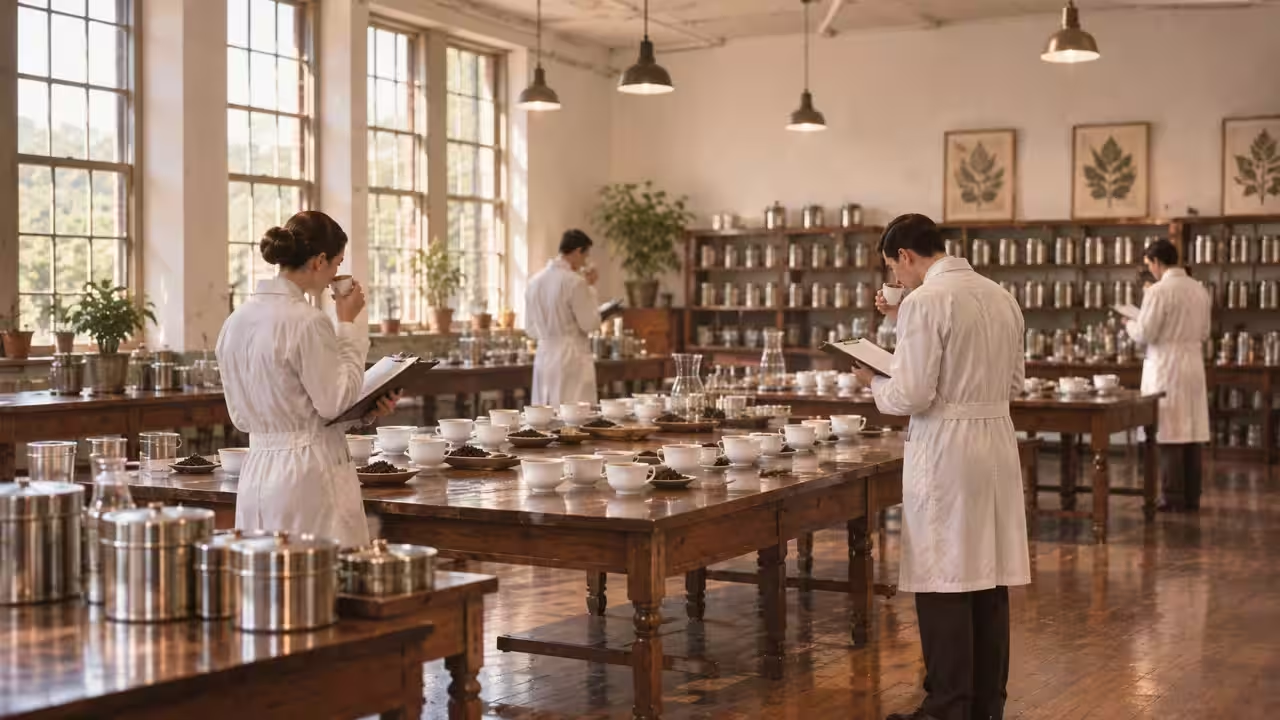
For 99 years, the US had a peculiar tradition: trained tea tasters were in charge of testing imported tea and ensuring it met federal quality standards. Though tasting may sound like a run-of-the-mill exercise, it was in fact part of a regular system, created to ensure that the consumer was getting good quality tea that wasn't adulterated or improperly brewed.A law that brought tea tasting into federal regulationAccording to the U.S. Food and Drug Administration, the system dates back to the Tea Importation Act of 1897. Around this time, there was much discussion about the quality and purity of imported tea, especially with respect to adulteration by artificial colouring and foreign substances. To regulate this, Congress enacted a law to establish standards for imported tea and to create a system where the government could designate inspectors to inspect all shipments of imported tea to determine if they conform to the prescribed standards.It was a unique system partly because it depended on human ability to make judgment rather than simply on lab testing. Expert inspectors observed the appearance, aroma, colour, and flavour of the tea after it had been brewed. Using their experience, they could tell the difference between acceptable tea and a beverage that would be rejected by the government. The legislation created a set of guidelines to ensure a consistent approach to imported tea.How federal experts judged imported teaTesting was not just a matter of looking at a cup of tea. Federal examiners compared samples from imported shipments with reference teas that met the minimum standard. The tea standards for different varieties of blended, green, and oolong tea were set by the federal Board of Tea Examiners, which met annually. When they were applied to new shipments, some new criteria were considered, such as the appearance, colour, and flavour of the tea. Defects were looked for, such as stale quality, musty smell, and unnatural colour.If a shipment failed the tests, it could be rejected and returned to the exporting country, or disposed of. The process required familiarity with the nuances of various qualities, since the definition of a well-brewed cup varied by variety and country. Experienced tasters relied on trained olfactory and gustatory senses to pick up subtle differences that might be overlooked on a quick visual inspection. The year 1947 was a notable moment in this history.In 1998, The Washington Post wrote a retrospective piece on the tea industry that recalled how, in 1947, chemist Bob Dick became only the third federal tea examiner. His appointment reflected the specialised nature of the job, which required a detailed understanding of tea quality and consistent examinations. The following year, the Federal Register published the scoring guide issued by the Board of Tea Examiners for the season from 1 May 1948. This was based on Formosa Oolong, China Oolong, Japan Green, and China Gunpowder, showing that the authorities treated varieties separately instead of requiring one global flavour standard for all imported tea.Why the unusual government programme eventually ended However, over the years, the system raised more and more questions about whether there was still any need for a separate federal tea quality program. As part of a wider food safety scheme of the US government, the FDA was empowered to oversee imported food of all kinds, and it also covered tea. By the 1990s, critics suggested the existence of the Board and the separate rules was an expensive and unnecessary layer of bureaucracy. It also struggled for funding and, in the 1996 budget of the FDA, did not include any funding for the Board of Tea Experts, although the industry had helped fund it in the past.Congress eventually passed the Federal Tea Tasters Repeal Act of 1996, signed into law by President Bill Clinton on April 9, 1996. This legislation put an end to the Tea Importation Act of 1897 and the Board of Tea Experts and, in doing so, put an end to the federal system of annual tea quality standards and mandatory taste- testing inspection. The law’s repeal of the federal standards didn't let imported teas off the hook. The FDA still has oversight authority over imports under the Federal Food, Drug, and Cosmetic Act and can now inspect for contamination and consumer safety.You use AI every day. Now get your AI Quotient. Take the AIQ test.
Topics in this story
Gathered from external sources. Rights to this text belong to whoever originally published it.