Before J&K blast, how a plan to bury explosives in Faridabad village was buried
Faridabad police planned to bury 358kg ammonium nitrate but it was moved to Srinagar; it later exploded at Nowgam police station during forensics, killing 9.
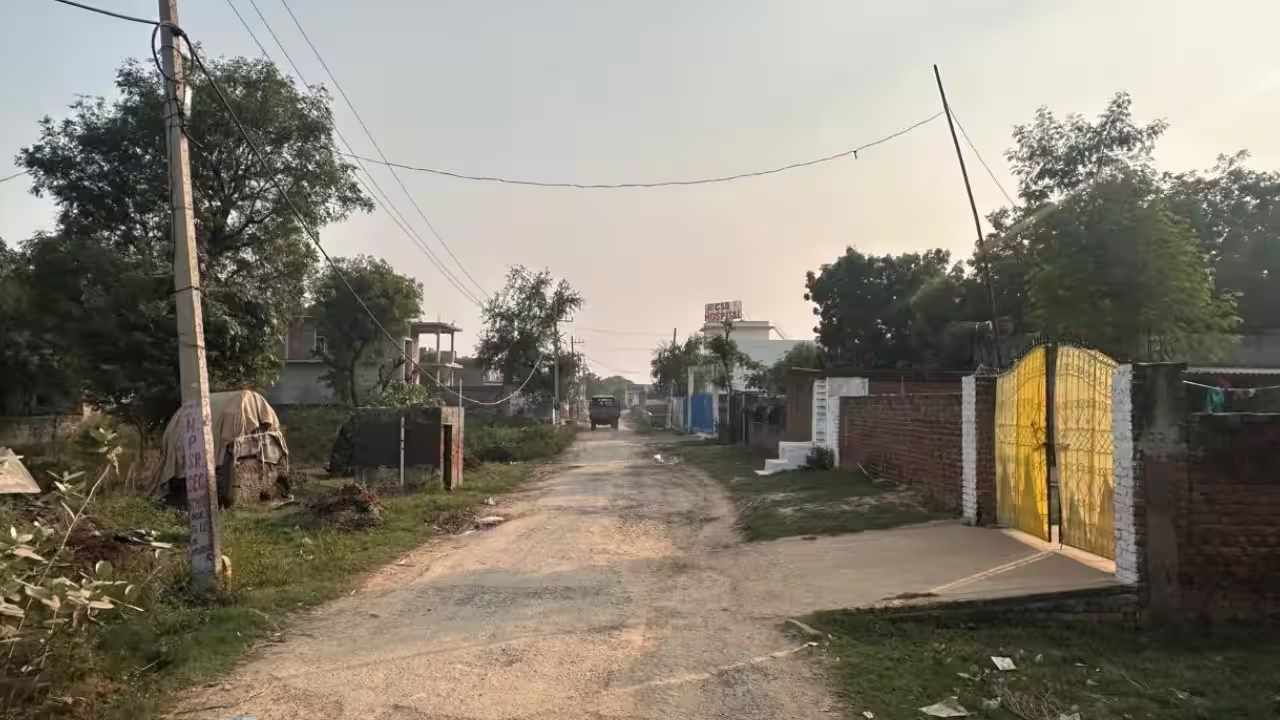
GURGAON: On November 14 last year, an explosion at Nowgam police station in Srinagar killed nine people.These were the same explosives that had been found at hideouts used by Al-Falah University doctors and taken from Haryana to Jammu & Kashmir for the investigation into the white coat terror module that was involved in the suicide bombing near Red Fort metro station in Delhi on November 10.In the 48 hours of discussions preceding the decision to move the explosives, senior Haryana Police officers had advised against doing so, sources involved in the Delhi blast module probe told TOI.Faridabad police had also zeroed in on a site near Jasana village to bury the 358kg of ammonium nitrate.According to sources, officials cautioned that moving such a huge quantity of sensitive material nearly 1,000km could be dangerous.But J&K Police personnel, according to the sources, insisted that the explosives needed to be taken to Nowgam, where the first FIR in the terror module case had been registered.The sources said J&K Police personnel said the explosives were ‘case property’ in the FIR registered at Nowgam police station and had to remain in their custody.“The J&K team cited legal procedures and rejected the disposal of explosives here in Jasana. We withheld our vehicles rather than put our personnel at risk,” a senior Haryana police officer said.The 358kg consignment, which was seized from a room rented by prime accused Muzammil Ahmad Ganaie, was eventually loaded onto a Tata 407 and taken to Nowgam, escorted by three police vehicles. The explosives reached J&K on November 10 last year.Around 11.20pm on November 14, the seized material exploded at the police station when a forensic science laboratory (FSL) team was collecting samples for examination.Nine persons, a state investigation agency officer, three FSL personnel, two crime-scene photographers, two revenue officials on magisterial duty and a tailor assisting the team, were killed. 32 people were injured.J&K Police chief Nalin Prabhat had described the incident as “accidental”. “As part of the prescribed procedure, samples had to be forwarded for forensic and chemical examination.Given the volume, the FSL team had been carrying out the process for two days. The material was unstable and sensitive, but was being handled with utmost caution. Unfortunately, an accidental explosion took place,” he had said.Haryana cops credited their J&K counterparts for exposing the network.“They deserve credit for acting on the posters and pursuing the leads. Had they not done so, the network may not have been exposed in time,” a senior officer said.OP Singh, the Haryana DGP at the time of the incident, said the inquiry must establish what actually happened. “Nine persons lost their lives at Nowgam. We owe them a careful answer. An inquiry committee is examining the incident. We should wait for its findings,” he added.He also called for a national protocol regarding handling of explosives. “Large recoveries of explosives are risky to move and store.The narcotics law has a tested answer, draw samples, videograph the rest, have a magistrate certify it, and destroy the bulk safely near the place of seizure. Explosives need the same provision. It would protect both the evidence and the people who handle it.”The probe into the terror module had begun a month before this blast, on October 19, when J&K Police found Jaish-e-Mohammad (JeM) posters threatening cops and security personnel in Nowgam. An FIR under relevant sections was registered at Nowgam police station.The probe led police to professionals and students suspected of links with JeM and Ansar Ghazwat-ul-Hind, and to Al-Falah University, where Ganaie taught and worked. On October 30, a J&K Police team came to Faridabad with a search warrant and arrested Muzammil from the university campus. He was taken to J&K on transit remand.Faridabad police initially helped the J&K team with Muzammil’s interrogation, sources told TOI.Its role widened when the team returned in connection with Shaheen Shaheed, another doctor at Al-Falah. On November 8 last year, she was asked about a Swift car linked to the case, but denied knowing anything about it.However, a search of her hostel room led cops to the keys. The car, parked on the university campus, yielded an assault rifle, a pistol, magazines and 83 cartridges.The explosives were not recovered from the university campus itself, but from two rented rooms nearby. On November 9, police found 358kg of explosive material in 12 suitcases in a Dhauj room rented by Muzammil, around 1km from Al-Falah.Timers, batteries, detonators, cutters, masks, wigs, wires and other IED-making components were also seized. The next day, a house owned by a local cleric in Fatehpur Taga yielded another 2.6 tonnes of ammonium nitrate stored in sacks.The combined haul was about 2,900kg, one of the biggest such recoveries.The Al-Falah link drew greater scrutiny after the November 10 Red Fort blast. Umar un Nabi, another Al-Falah doctor, was identified as the bomber in the car that blew up.“The same day that Muzammil was arrested at the university on Oct 30, Umar left the campus. Had we known about him, the Delhi blast could have been averted,” a Haryana Police officer said.You Can Also Check: Gold Rate in Gurgaon | Silver Rate in Gurgaon | Bank Holidays in Gurgaon | Public Holidays in Gurgaon | Gurgaon AQI | Weather in Gurgaon | Petrol Price in Gurgaon | Diesel Price in Gurgaon | CNG Price in Gurgaon | LPG Price in GurgaonStay updated with the latest Gurgaon news. Download the TOI App.
Topics in this story
Gathered from external sources. Rights to this text belong to whoever originally published it.