Trump should meet Kim Jong Un and make a deal to end the Korean War
If lasting peace is to be achieved, then North Korea must be seen as a legitimate partner in diplomacy and not simply a threat.
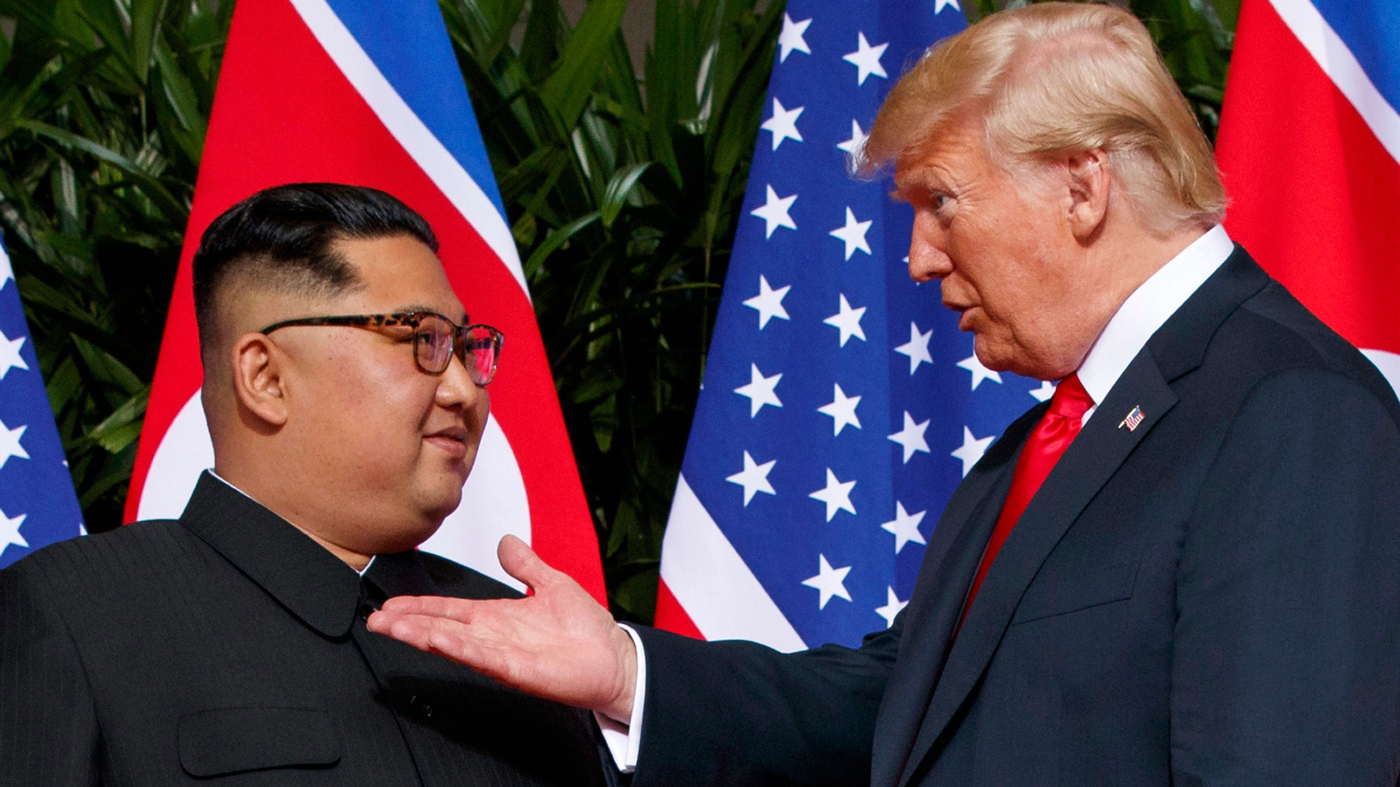
Recently, President Trump made an effort to reduce long-planned joint military exercises in South Korea. Trump also restated a long-standing desire to open another summit with North Korean Leader Kim Jong Un.
Although the reduction decision was lambasted by critics as “risky” and the attempt to hold a summit was called “ dangerous ” or just a “ distraction exercise ,” perhaps a better question to ask is why so many in the U.S. are intent on continuing a war that began in Korea 76 years ago?
As the United States seeks to end conflicts in Ukraine and the Middle East, diplomatic efforts in Korea that could help promote peace and deescalate tensions should not be sidelined in favor of a dangerous status quo.
Historically, the United States helped ignite the Korean conflict by dividing Korea into North and South. Prior to 1945, the Korean Peninsula was brutally occupied for four decades by imperial Japan.
During World War II, the U.S. paid a bloody price to end the Japanese Empire. But rather than immediately grant Koreans their long-desired independence, the U.S. and Soviet Union divided the peninsula into two zones of occupation , ostensibly to help Korea safely transition to self-rule. A division meant to be temporary, however, became permanent because of the Korean War.
Thousands of U.S. soldiers remained stationed in South Korea 76 years after the beginning of the Korean War. No peace treaty to formally end the Korean War has ever been signed . The miles of mines and barbed wire at the Demilitarized Zone is a reminder that lasting peace is still far off.
It’s obvious that decades of U.S.-backed militarization, isolation and sanctions have done nothing to curb North Korean hostility or promote peace on the Korean Peninsula. So why are so many criticizing efforts, including those recently promoted by Trump, to further diplomatic engagement with North Korea, especially when such efforts are welcomed by U.S. ally and current South Korean President Lee Jae Myung?
It’s also worth noting that North Korean spokesperson Kim Yo Jong publicly highlighted Kim’s “ great relationship ” with Trump. This is not the kind of language used by someone who has given up on diplomacy with the U.S.
Some might say North Korea’s reluctance to abandon its nuclear arsenal makes peace impossible. Indeed, nuclear proliferation is not a recipe for world harmony. But possession of nuclear missiles has not precluded the U.S., which itself has the second largest nuclear stockpile in the world, from engaging in practical diplomacy with states such as China, Russia, India or Israel. Denuclearization should be seen as a long-term ideal rather than a prerequisite for U.S.-North Korea engagement.
If lasting peace is to be achieved, then North Korea must be seen as a legitimate partner in diplomacy and not simply a threat. Joint military exercises, for example, reinforce North Korea’s status as a perennial antagonist and contribute to an unending Korean War. These annual exercises involve thousands of troops and cost U.S. taxpayers millions of dollars , allegedly increasing military preparedness while in reality amping up tensions and making war more likely.
In a longer-term scenario, planning should also begin for a gradual drawing down of U.S. troop numbers in South Korea. The housing of thousands of U.S. troops on South Korean soil poses a significant financial burden to both the U.S. and South Korean governments. In the eyes of North Korean leaders, it also justifies their aggressive moves to protect against a possible U.S. invasion. Committing to withdrawing U.S. troops would remove such a pretense and help make efforts toward peace and diplomacy possible.
In addition to reconsidering the U.S. military role in Korea, Trump should absolutely push for further high-profile meetings with Kim. While Trump’s earlier attempts to meet with the North Korean leader met with mixed results, the president’s art of the deal was undercut (as is the case now) by critics unwilling to see North Korea as anything but an enemy.
And this diplomacy did have some meaningful results — in 2018, for example, North Korea did not conduct a single major missile test . A new round of talks based on genuine U.S. efforts toward military deescalation in Korea is worth consideration.
The current U.S. administration has shown that it is willing to shake up harmful status quos. This should include the dangerous status quo that keeps the Korean War going 76 years later. After 76 years of the Korean War, it is in everyone’s interest to promote measures toward a lasting peace.
Joseph Seeley is an associate professor of Korean history at the University of Virginia.
Topics in this story
Gathered from external sources. Rights to this text belong to whoever originally published it.