Canada removed 7,300 cubic metres of toxic sediment from this harbour; fish species returned after disappearing for more than 30 years
Collingwood Harbour in Ontario, Canada, was once so degraded that it was named a Great Lakes area of concern in 1987.
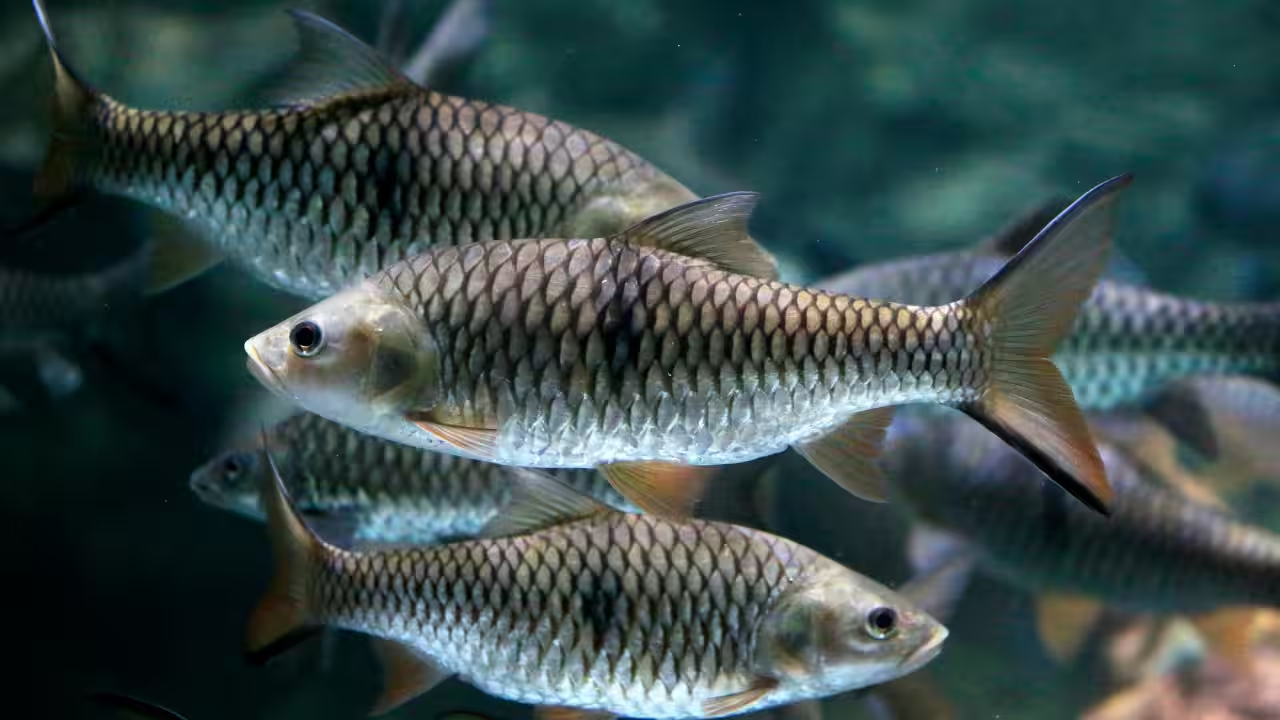
Collingwood Harbour in Ontario, Canada, was once so degraded that it was named a Great Lakes area of concern in 1987. Heavy metals contaminated its sediment, nuisance algae spread through its water, and fish habitat was lost. Restoration followed as 7,300 cubic metres of contaminated sediment were cleaned up, sewage treatment was improved, wetlands were protected, and new spawning beds and shoreline habitat were created. Fish species such as yellow pickerel and northern pike returned after an absence of more than thirty years. Read on to learn what was removed, what was rebuilt, who helped, and why it still matters today.Why Collingwood Harbour became a Great Lakes area of concern in 1987According to the Canada Water Agency, Collingwood Harbour was designated an area of concern in 1987 under the Canada-United States Great Lakes Water Quality Agreement. A long history of industrialisation, urbanisation and agricultural land use along its shores and tributaries had degraded the harbour's environmental quality.Officials identified nine out of fourteen beneficial use impairments. These are measures of how poor water quality affects the environment, human health and the local economy. A tenth beneficial use was flagged as "requiring further assessment," meaning more information was needed to decide whether it was impaired.Cleanup of 7,300 cubic metres of sediment contaminated with heavy metalsOne of the most visible parts of the recovery was the removal of contaminated sediment from the harbour bed. The Canada Water Agency reports that 7,300 cubic metres of sediment holding heavy metals were cleaned up. The metals were copper, lead, zinc and chromium.Contaminated sediment is a long-term problem because the pollutants settle in the bottom of the water body, where they can harm bottom-dwelling organisms and work their way up the food chain.Cleaning up sediment was only part of the work. The Canada Water Agency explains that improvements to the Collingwood municipal sewage treatment plant reduced phosphorus loads by 63 per cent. Annual loads fell from 5,333 kilograms to 1,923 kilograms.Phosphorus feeds algae, so less of it meant fewer nuisance algae blooms in the harbour. That helped make conditions better for the fish and wildlife that depend on it.Wetland protection, fish spawning beds and stream habitat brought yellow pickerel and northern pike backRestoring the harbour also meant rebuilding the places where wildlife live and breed. The Canada Water Agency notes that local policies were changed to protect the 96-hectare Collingwood Wetland Complex. Crews also created more than five kilometres of stream and shoreline habitat, rehabilitated 20 hectares of wetlands, and added fish spawning beds, mostly along Black Ash Creek.The results showed up in the water. Prey fish increased, and species such as yellow pickerel and northern pike returned after an absence of more than thirty years.In 1994, Collingwood Harbour became the first Canadian area of concern to be officially delistedAn area of concern is delisted only when monitoring shows that the targets for every beneficial use impairment have been met and environmental quality has been restored. The Canada Water Agency states that Collingwood Harbour reached that point in 1994, making it the first Canadian area of concern to be delisted.All the beneficial uses are no longer considered impaired. They include restrictions on fish and wildlife consumption, degradation of fish and wildlife populations, bird or animal deformities or reproduction problems, degradation of bottom-dwelling organisms, restrictions on dredging activities, eutrophication or undesirable algae, beach closings, degradation of aesthetics, degradation of phytoplankton and zooplankton populations, and loss of fish and wildlife habitat.Local governments and conservation groups who made the restoration possibleThe Canada Water Agency emphasises that the work took scientific and technical expertise, local knowledge and hard work. It was carried out in partnership with other levels of government, non-government groups, Indigenous communities and members of the public.The partners it names include Canadian National Railway, the Collingwood Naturalist Club, the Environment Network of Collingwood, the Georgian Triangle Anglers Association, Nacan Products Limited, the Nottawasaga Valley Conservation Authority, the Ontario Ministry of Natural Resources and Forestry, the Ontario Ministry of the Environment, Conservation and Parks, and the Town of Collingwood.You use AI every day. Now get your AI Quotient. Take the AIQ test.
Topics in this story
Gathered from external sources. Rights to this text belong to whoever originally published it.