In 2023, San Antonio tested cool pavement at six sites; one coating cut afternoon road temperatures by about 3.6°F, while changes in air temperature remained small and inconclusive
US News: San Antonio spent part of the summer of 2023 testing a simple idea: could changing the surface of a road make it less brutally hot? The city applied 3.
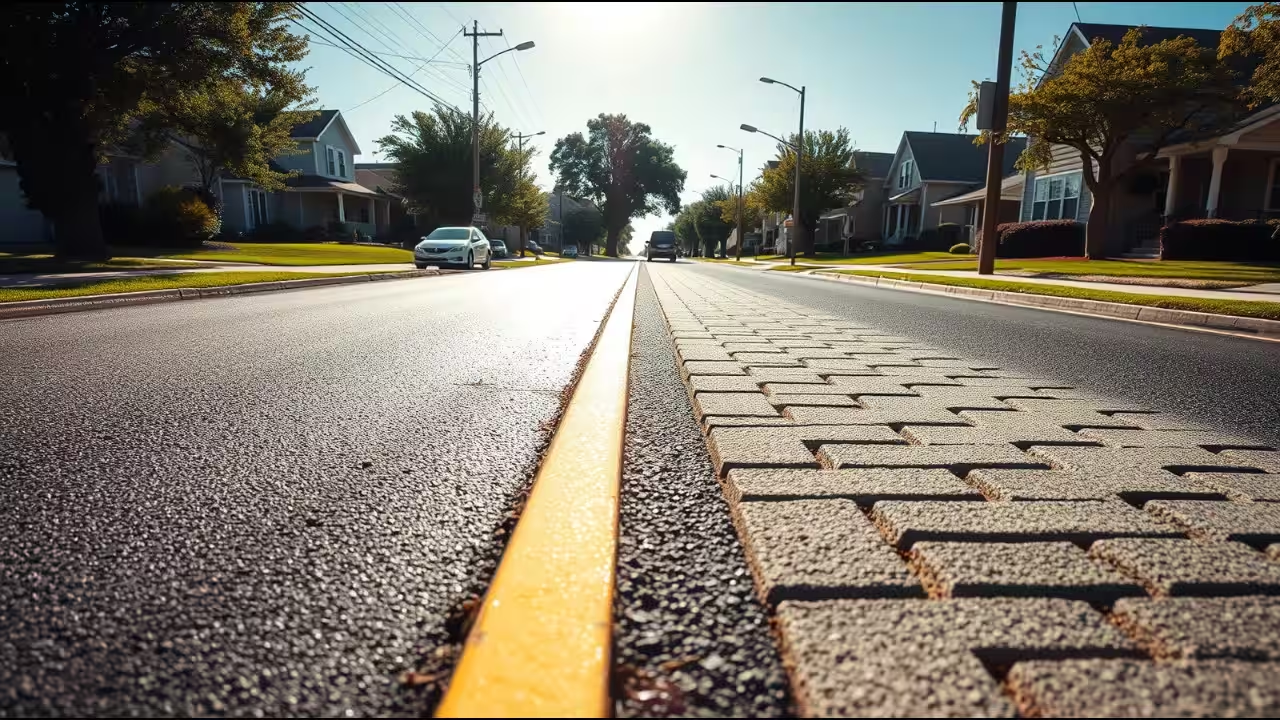
San Antonio spent part of the summer of 2023 testing a simple idea: could changing the surface of a road make it less brutally hot? The city applied 3 different pavement treatments at selected locations and brought in researchers from the University of Texas at San Antonio to measure what happened. The study covered 6 sites, with treated pavement compared with nearby untreated surfaces during several rounds of measurements in June and July. Researchers found that 1 product, SolarPave by SealMaster, consistently produced the strongest surface cooling. In afternoon measurements, the treated pavement was about 3.6°F cooler on average than the untreated comparison surface. That sounds promising, particularly in a city where summer pavement can become intensely hot, but there was an important catch: the cooling at road level did not translate into an equally clear drop in the temperature of the surrounding air. The experiment showed both where cool pavement can help and where its limits begin.How researchers compared 3 pavement treatmentsThe study, Evaluating the Performance of Cool Pavement in San Antonio, Texas, as an Urban Heat Mitigation Measure, was published in the Journal of Applied Meteorology and Climatology. The research was led by Neil Debbage, an associate professor in the Department of Political Science and Geography at UTSA. The team tested 3 products: PlusTi from Pave Tech, Durashield from GAF StreetBond and SolarPave from SealMaster. Each treated area was compared with an untreated control site, giving researchers a way to separate the effect of the coating from normal changes in weather and pavement temperature. Measurements were collected during 3 separate 3-day sessions in June and July 2023. Researchers visited the sites at different times of day, including the morning, around midday, during the afternoon heat and later in the evening. That mattered because pavement can heat and cool dramatically over the course of a single day. A treatment that looks effective in the afternoon may behave differently in the morning or after sunset.SolarPave stood out from the other productsOf the 3 products tested, SolarPave produced the clearest reduction in pavement temperature. During afternoon measurements, its treated surface was about 2°C, or 3.6°F, cooler than the corresponding untreated control. There was another, much larger temperature difference reported by the city. Under some conditions, SolarPave was as much as 18°F cooler than newly laid asphalt. That is a different comparison from the study's treated-versus-control result, however, so the 18°F figure should not be treated as the typical amount of cooling produced by the coating. The basic idea behind these treatments is fairly straightforward. Dark asphalt absorbs a large amount of solar energy and can become considerably hotter than the surrounding air. Reflective pavement treatments are designed to change the surface's interaction with sunlight, reducing the amount of energy that becomes heat.The pavement cooled more than the airThe researchers found a much clearer effect on pavement temperature than on air temperature. In other words, the road itself got cooler, but that did not mean people standing nearby experienced the same size reduction in air temperature. That distinction is important for cities considering cool pavement as a response to extreme heat. Roads are only 1 part of an urban environment. Buildings, sidewalks, vehicles, trees, wind and other surfaces all affect the temperature of the air around them. The San Antonio results are also broadly in line with earlier research from other cities. Cool pavement can produce sizeable reductions at the surface, while changes in ambient air temperature tend to be considerably smaller.What San Antonio learned from the experimentThe pilot did not show that cool pavement is a magic fix for urban heat. It showed something more practical: changing the road surface can make a measurable difference to how hot that pavement becomes, but that benefit does not automatically extend to the entire surrounding environment. For San Antonio, that makes cool pavement one possible tool rather than a replacement for other forms of heat mitigation. The city has also been pursuing measures involving shade, vegetation and other ways of reducing people's exposure to extreme temperatures. Researchers continued monitoring the pavement treatments after the initial 2023 testing, giving them an opportunity to see how the materials perform after longer exposure to sunlight, traffic and the city's intense summer weather. The experiment's clearest takeaway is therefore fairly simple. Cool pavement can cool the pavement. Turning that cooler road into a cooler city is a much harder problem.Catch the latest World News and Live updates. Download the TOI app.
Topics in this story
Gathered from external sources. Rights to this text belong to whoever originally published it.