440 kidsâ deaths in 50 years: How the U.S. failed to stop a household item from killing children
Hundreds of children have been strangled to death on cords from window blinds, shades and curtains. Why didnât the Consumer Product Safety Commission do more sooner?
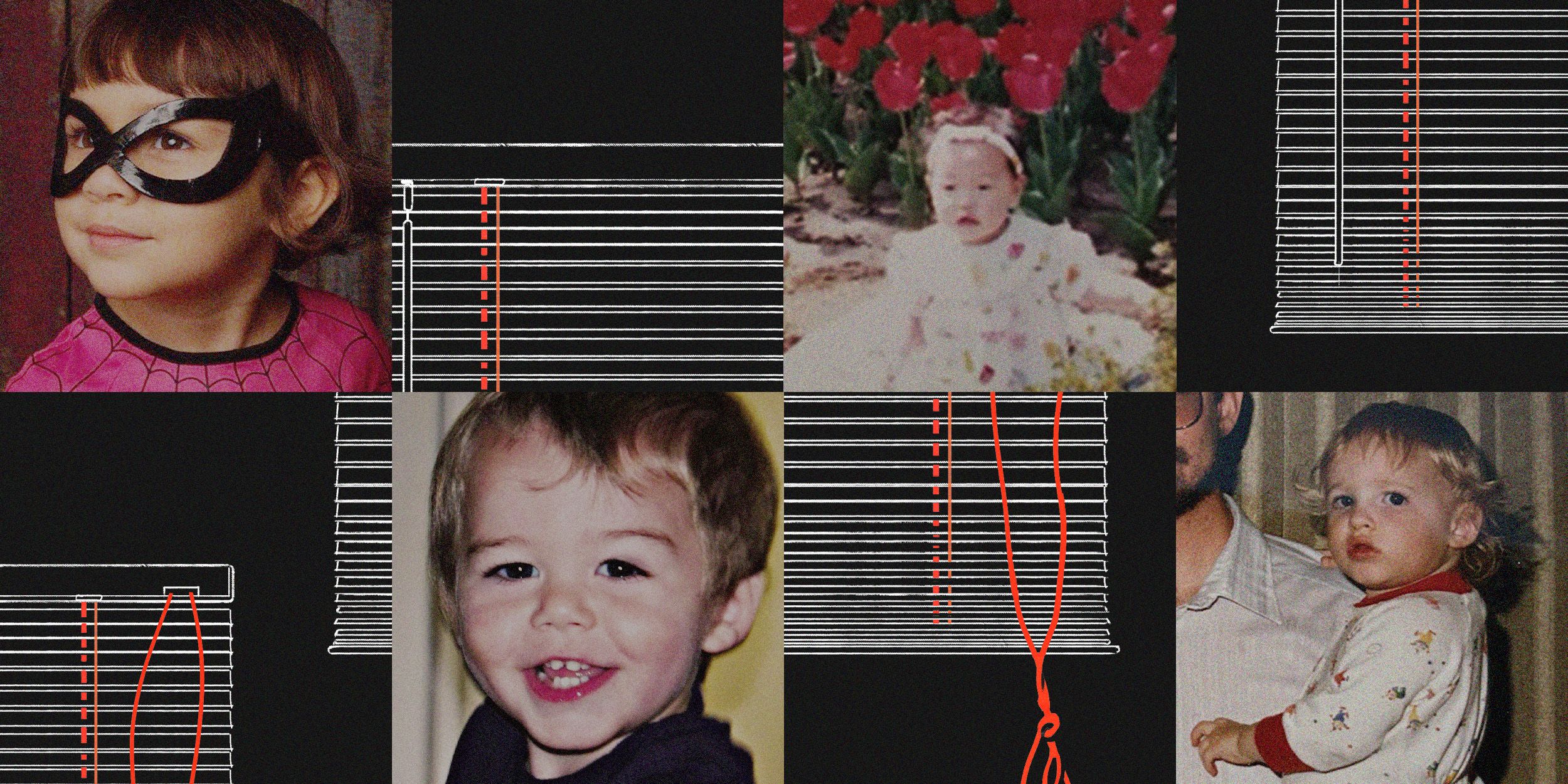
Hundreds of young children have been strangled on cords from window blinds, shades and curtains in the past 50 years. Officials and manufacturers knew about the danger â why didnât they do more sooner?
By Suzy Khimm and Elizabeth Chuck Dec. 20, 2023
Babies put to sleep in their cribs reach out and grab cords dangling from the window blinds above them.
Young children pretend window coverings are superhero capes, or that the beaded operating cords are necklaces.
When cords from blinds, curtains and shades get caught around childrenâs necks, they can cut off airflow, preventing victims from calling for help.
Children can lose consciousness in as little as 15 seconds.
After two to three minutes, it can be too late to save them.
NBC News found that at least 440 children ages 8 and under have been strangled to death on window covering cords since 1973, based on statistics from the Consumer Product Safety Commission as well as internal federal data obtained through a Freedom of Information Act request.
The CPSC, which is tasked with protecting the public from dangerous products, has known about this hazard for decades. Yet more than 40 years after the agency acknowledged the threat, children are still dying.
This is the story of how safety requirements for a common household item have faced delay after delay â and how window coverings with deadly cords continued to be sold long after their lethality became evident to both manufacturers and federal regulators.
From 1973 to 1980, at least 41 children strangle to death on window covering cords
The Consumer Product Safety Commission identifies window cords as âa particularly insidious hazardâ in a report about accidental strangulations of children under 5.
Operating cords used to raise or tilt the blinds can form a noose that slips over a childâs head.
There are also strands within many window coverings called inner cords that hold the slats together and can pose a strangulation hazard as well.
In addition to cutting off airflow, a cord wrapped around a childâs neck can compress the vagus nerve, which is responsible for maintaining a constant heart rate, and it can also compress sensitive blood vessels that lead to the brain.
Some children who survive escape with minor injuries, such as a cut on their neck. Others are left with permanent brain damage, unable to speak and dependent on feeding tubes.
The CPSC prepares to issue its first public warning about window covering cords in a joint release with the American Window Covering Manufacturers Association, the main industry group at the time.
The group wants to mention caregiversâ role in the deaths and urges the CPSC to specify that they occurred âwhen small children were not being supervised by parents or other responsible adults,â according to notes from a meeting.
A CPSC staff member pushes back in a phone call , pointing out that some of the deaths happened when children were placed in their cribs. âWe do not believe it is reasonable to expect a parent to âwatchâ a child 24 hours a day,â the staffer says.
The warning ultimately includes compromise language: âThese accidents can and have occurred when a child is alone in a room for only a short time.â It also advises parents to keep the cords out of childrenâs reach âby tying or hanging the cord at or near the top of window coverings,â among other options.
The industry group later offers manufacturers labels and tags to affix to products, warning parents of the hazards.
By the end of 1985, an additional 35 children have died, bringing the total deaths to at least 76
July 22, 1989: Reuben Vollmer, 17 months, is strangled by a window cord in his crib⨠â¨
Reuben Vollmer, a quiet and happy toddler, goes down for a nap in his crib on a Saturday afternoon.
When his mother, Shirah Vollmer, checks on him later, she finds the dangling pull cord of the horizontal blinds around his neck.
âIt was shock, and horror,â Vollmer says.
She untangles Reuben and performs CPR, but after heâs rushed to the hospital, he is pronounced dead.
Vollmer says she never thought twice about the blinds, which had already been installed when she moved into the house in Encino, California.
âWe just assumed,â she says, âthat the house was safe.â
The blinds were made by Levolor, a major manufacturer. The Vollmers sue, and while Levolor denies liability or fault, the company agrees as part of a settlement to distribute free safety brochures about cord strangulation risks and to research alternative window covering designs.
Shirah Vollmer speaks publicly about Reubenâs death, hoping to warn other families.
Reubenâs big sister, who is 3 at the time, struggles after her baby brotherâs death. It also takes a toll on the Vollmersâ marriage.
âThe trauma in our familyâs really unspeakable,â Vollmer says. âWeâve all obviously not recovered. It just doesnât end.â
By the fall of 1994, at least 181 children have died
Oct. 4, 1994: New attempts to reduce the risk
The CPSC warns that children are continuing to die from the hazard â about one every month â and announces a âmajor cooperative effortâ with the Window Covering Safety Council , a newly created coalition of U.S. manufacturers, importers and retailers that aims to inform consumers about cord dangers.
The program encourages people to cut looped pull cords into two separate strands and offers free safety tassels to put on the end of each cord.
It also includes a public education campaign and a plan for manufacturers to begin producing operating cords with âa new safer design.â One example is a breakaway tassel, which snaps into two pieces when weight is placed on it to prevent children from getting caught in a loop.
Ann Brown, then-chair of the CPSC, says the effort âepitomizes how government and industry can work together to save lives.â But the agency does not require manufacturers to make the safety changes.
Nov. 27, 1996: The industry sets a standard
As deaths continue, the industry creates its first voluntary safety standard in collaboration with the CPSC.
The standard codifies changes that some manufacturers have already begun to make, including adding safety devices designed to conceal or separate cords.
But the standard doesnât address inner cords, which run through the center of window coverings and can also form a dangerous loop. And it doesnât address the length of the separated operating cords, which can still pose a risk if children wrap them around their necks, or if they are knotted together or become tangled.
The standard is not mandatory, but it is embraced by leading manufacturers and is broadly adopted.
Aug. 18, 1998: Hannah Beller, 16 months, dies after getting entangled in a window blind cord
Elizabeth Raver puts her 16-month-old daughter, Hannah Beller, down for a nap in a playpen at a beach house on North Carolinaâs Outer Banks, where the family is on vacation.
Raver feels confident that she has childproofed the house: She has plugged in outlet covers that she brought with her, and when she places Hannah down to sleep, she makes sure the pull cord of the blinds is out of reach.
But Hannah, who likes to play in her crib after she wakes up, is still able to grab the inner cord of the blinds. When her father, Eric Beller, checks on her, he discovers her hanging from the inner cord. He starts screaming.
âI don't know how she got herself up to do it,â he says. âWe had no idea that this was a danger.â
At the hospital, Hannah is pronounced dead.
Beller and Raver become advocates for window blind safety, sharing Hannahâs story on national television.
âEric and I put ourselves out there in a very public way, despite our grief, to try to prevent more deaths from happening,â Raver says. âWe expected there to be a lot more action.â
Nov. 1, 2000: Millions of window blinds recalled
The CPSC and the Window Covering Safety Council announce a voluntary recall affecting millions of horizontal window blinds after the CPSC receives reports that inner cords have strangled at least 16 children since 1991.
Rather than urging consumers to remove and return the dangerous blinds, the recall offers a repair kit to prevent children from pulling the inner cords loose.
âConsumers who have young children may wish to consider purchasing cordless window coverings,â the recall concludes.
Cordless window coverings lack an operating cord, which makes them safer, but they are generally more expensive and arenât as widely used. Replacing all the window blinds in a home can be costly and isnât always permitted in rental housing, even if families can afford it.
June 12, 2002: Cheyenne Rose Kaiser, 12 months, dies in the bedroom she shares with her twin brother
Linda Kaiser puts her 1-year-old twins, Cheyenne and Seth, in their cribs at the familyâs home in suburban St. Louis. The twins like to babble and laugh with each other before falling asleep.
Later that evening, Kaiser and her husband, along with their 5-year-old daughter, peek into the room to check on the babies, expecting to find them sleeping peacefully.
Instead, Cheyenne is sitting straight up, her chin drooping toward her chest. She has been strangled by the inner cord that runs through the center of the window blind behind her crib.
Kaiser runs over and removes the cord from her daughterâs neck.
âI knew by the feel of her, the temperature of her, that she was gone,â Kaiser says. âI was praying to God for miracles.â
By the end of 2002, at least 273 children have died
Dec. 15, 2009: All Roman shades are recalled
As Roman shades grow in popularity, it becomes apparent that the accordion-like window coverings pose a danger to children.
Since 2006, five children have died and 16 have been nearly strangled to death on Roman shade cords. Under pressure from consumer advocates, the CPSC and the Window Covering Safety Council announce the voluntary recall of all Roman shades and roll-up blinds, instructing consumers to order free repair kits.
The same year, the Window Covering Manufacturers Association revises its voluntary standard to address the hazard posed by Roman shades, limiting their ability to form a dangerous inner cord loop and mandating warning tags that illustrate the hazard.
The change builds on earlier industry efforts to strengthen the voluntary standard for window coverings, including other measures to make inner cords less dangerous. But window coverings are still permitted to have some types of long, free-hanging operating cords â among the features that have proved fatal.
June 15, 2010: An international call for safety changes
The CPSC and officials in Canada and the European Union jointly call on the window covering industry to âeliminate the risk factors causing child deaths and injuriesâ from all corded window coverings. The letter says the countries agree âon the need for immediate action.â
Later that year, manufacturers promise a âcomprehensive revisionâ of the voluntary standard, pledging to work with the countries that signed the letter.
May 23, 2013: Consumer advocates demand stronger action
Consumer advocates grow increasingly frustrated that incremental changes through voluntary standards have not stopped children from dying.
The advocates include Linda Kaiser, who started the nonprofit Parents for Window Blind Safety in her daughter Cheyenneâs memory. Almost 11 years after Cheyenneâs death, the group petitions the CPSC to develop mandatory safety rules for window coverings that would eliminate all accessible cords, citing âthe repeated failure of Industry to adopt an effective voluntary standard over the last 28 years.â
Oct. 17, 2013: Colton Shero, 23 months, is strangled in his family room
Erin Shero is in the kitchen of her Hixson, Tennessee, home preparing a snack for her two young sons, who are watching TV in the family room before their nap.
She calls the boys in for popcorn and strawberry milk. But only her 3-year-old comes.
She goes to check on her youngest, Colton, who is just shy of his second birthday, and finds him near the end of the sectional couch. Unaware that the pull cord of the window blinds is knotted around his neck, Shero initially thinks he is sleeping.
âWhen I got to him, I touched him and his head rolled,â she says. âIt was disbelief, and I kept trying to wake him up.â
Frantic, Shero removes the cord and tries to find a pulse. As she waits for an ambulance, she does CPR on Colton in her front yard. Roofers who are working next door rush over and pray.
Colton is pronounced dead at the hospital. Among the many agonizing tasks Shero faces in the days that follow: canceling Coltonâs second birthday cake, which was going to have characters from his favorite cartoon, âBubble Guppies.â She spends his birthday picking out his coffin.
Shero struggles with guilt, but when she learns that children have been dying on window blind cords for decades, she gets angry.
âTo have your child die of something so preventable â it really taints your view of humanity,â she says.
By the end of 2013, at least 379 children have been strangled to death on window covering cords
Over the industryâs objections, the CPSC agrees to pursue the first mandatory federal rules for window coverings, saying that children may still be âat unreasonable riskâ of strangulation.
Industry-led safety efforts are falling short, CPSC staff members say: While the industry has strengthened its voluntary standard over the years, even the latest version wouldnât have addressed the hazard in 57% of the injuries and deaths that the agency investigated from 1996 through 2012. Since the voluntary standard still allows some long and exposed cords, children are still in danger, the CPSC says.
The industry opposes the move, arguing in a letter to the CPSC that mandatory rulemaking is unnecessary because the voluntary standard is âthe most stringent in the worldâ and has reduced the risk of children dying.
The CPSCâs decision to begin rulemaking launches a lengthy process of analyzing data, compiling research and considering public feedback, while also working with manufacturers to revise their voluntary standard. The back-and-forth continues for years.
In 2014, at least 12 more children are strangled to death on window cords
Another 7 children die in 2015, and 13 more die in 2016, bringing the total deaths to at least 411
Dec. 7, 2016: Presley Eastburn, 4, dies days after getting caught in a window cord
Presley Eastburn is 4 â 4-and-a-half, she likes to point out â and loves to tell jokes.
âShe had this joke about a tomato,â says her mother, Carolyn Eastburn. âIt was a knock-knock joke about a tomato, and it made no sense at all, but she was sure that it was very funny.â
On a Friday evening, Presley is in the TV room at the familyâs home in League City, Texas, watching one of her favorite Disney shows. Eastburn is in her bedroom, talking on the phone with her husband, who is out of town for work.
Eastburn calls Presley to say hello to her dad, and when she doesnât respond, Eastburn goes to check on her. She finds her daughter hanging by the neck from the beaded cord that raises and lowers the Roman shades.
Eastburn screams Presleyâs name and calls 911.
Paramedics rush Presley to the hospital by helicopter. Five days later, doctors confirm that she is brain-dead, and the family makes the excruciating decision to remove life support.
âIt's been seven years and it is still hard to talk about it,â Eastburn says. âWe will forever mourn her.â
Jan. 8, 2018: The industry makes big changes
While the CPSC is still developing its mandatory safety rule, the agency works with the industry to strengthen the voluntary standard .
Under the threat of federal regulation, the industry goes further than it ever has to eliminate hazardous cords. The biggest changes are to stock window coverings bought off the shelf, which make up about 80% of the U.S. market. The standard instructs manufacturers to make stock window coverings cordless, limit operating cords to 8 inches long, or make them inaccessible through a safety device like a rigid cord shroud.
There are also new restrictions for custom window coverings, but they can still have longer, accessible pull cords.
The CPSC praises the standard as a major step forward.
âAs older window coverings are replaced with these cordless products, I expect a significant reduction in strangulations of young children,â Ann Marie Buerkle, then-acting chair of the agency, says after the standard takes effect, pointing to âyears of collaborationâ between the CPSC and industry.
But given how infrequently most people replace their window coverings, the CPSC later estimates that it will take about two decades for the more hazardous, older products to be removed from consumersâ homes.
Under federal law, the CPSC must evaluate whether the new voluntary standard is effective and broadly adopted before instituting mandatory safety requirements. The entire rulemaking process will take another several years.
Dec. 10, 2019: Kyah Berry, 2, suffers a severe brain injury
Itâs a couple of weeks before Christmas and Kyah Berry, an active 2-year-old, is at home in northeast Oklahoma, helping her mom put up holiday decorations. Kyah accidentally breaks a glass ornament.
Her mom, Candice Hale, whisks Kyah into her bedroom and puts up a baby gate to keep her safe while she cleans up the glass shards. When she returns to her daughterâs room about five minutes later, the first thing she notices is the floor: Kyahâs feet are suspended just above it.
Hale looks up to find Kyah hanging limp from the window blindâs pull cord.
In the hospital, Kyah pulls through â barely. She has a severe brain injury as a result of oxygen deprivation. The damage is catastrophic: Kyah, unable to speak or walk, is hospitalized for months. She leaves with a feeding tube.
Kyah gradually makes progress. She smiles when she sees things she likes, such as the color purple, and giggles when her mom tickles her. She can make her motorized wheelchair go in circles and is working on using a specialized walker after recently taking her first two shaky steps since the accident.
Hale calls Kyah âawesomeâ and says how proud she is of her. But life is forever changed.
âA huge piece of my baby girl left us that day,â Hale says. "I wouldn't wish someone having a perfectly beautifully healthy child and it all getting ripped away like that. I wouldn't wish it on anybody.â
Nov. 2, 2022: CPSC approves the first federal safety rules
Nearly 37 years and hundreds of deaths after its first public warning, the CPSC unanimously approves the first mandatory rules to prevent children from strangling in window coverings.
One rule makes the 2018 voluntary standard official for stock window coverings: All products bought off the shelf must be cordless, have inaccessible operating cords or have operating cords limited to 8 inches. It also limits the accessibility of inner cords for both stock and custom window coverings.
A second rule applies only to the operating cords of custom window coverings, restricting their length and accessibility significantly more than the industryâs voluntary standard. The CPSC offers manufacturers more flexibility than it does for stock window coverings because made-to-order window coverings are often used for larger or harder-to-reach spaces, or for customers who are frail or have mobility issues.
âFor decades, manufacturers have known of these deaths and injuries but taken too few steps to address this hazard,â CPSC Chair Alex Hoehn-Saric says in a statement after the vote. âThe rules we adopted will force a change in the industry that will prevent these unnecessary tragedies and protect future generations.â
The CPSC estimates that the rule will raise prices slightly for custom window coverings. Industry leaders say it will have a far more negative impact on the industryâs bottom line, particularly for small manufacturers.
The Window Covering Manufacturers Association files a petition in federal court challenging the CPSCâs mandatory rule for operating cords of custom window coverings.
âThe CPSC did a shoddy job,â the group says in a court document , arguing that the agency used a flawed cost-benefit analysis, failed to consider the safety improvements the industry has made and chose an arbitrary effective date.
The court grants a stay in early 2023 to stop the CPSCâs rule from going into effect while it considers the case. Soon after, the Window Covering Manufacturers Association announces a revision of its voluntary standard that adds more restrictions on cords for custom window coverings, though the standard is still less stringent than the CPSCâs rule.
The industry group does not challenge the CPSCâs other rule focused on stock window coverings, which takes effect on Dec. 28, 2022.
By the end of 2022, at least 440 children have been strangled to death on window cords since 1973
Sept. 12, 2023: Federal court tosses safety rule for custom window coverings
The U.S. Court of Appeals for the D.C. Circuit rules in favor of the window covering industry. The court says the CPSCâs finding that the voluntary standard fell short was âwell supported by evidence,â but agrees with manufacturers that the agency failed to follow proper procedures in creating and justifying its rule for custom window coverings.
The rule is vacated and sent back to the CPSC; the other rule, focused on stock window coverings, remains in place.
The Window Covering Manufacturers Association applauds the decision as a âresounding victoryâ and credits itself for protecting consumers. âThe industryâs voluntary standard has been a success and has significantly decreased incidents and improved product safety,â the group says in a statement .
This December, in response to questions from NBC News, the Window Covering Manufacturers Association says in a statement that deaths related to window coverings âare now extremely rareâ in the U.S. since its members have prioritized safety and worked with the CPSC and consumer advocates.
âWe are saddened by any incident that has taken place involving a window covering product,â the group says, but adds that the industryâs safety standards and technological innovations have addressed the dangers that led to childrenâs deaths.
CPSC Chair Hoehn-Saric, though, calls his agencyâs work âunfinished.â
âToo many children have died or been seriously injured as a result of window blind cords,â he says in a statement to NBC News.
The CPSC plans to propose a new regulation for custom window coverings in 2024.
The CPSC estimates that every year, about 9 children under the age of 5 are still strangled to death on window cords.
Thirty-four years after Shirah Vollmerâs son Reuben was strangled, she is furious that so many more children have been killed the same way.
âWhat's the problem?â Vollmer says. âHow many kids have to die?â
Shortly after NBC News published this investigation, the CPSC released new data on window cord strangulation deaths that occurred from 2009 to 2023. According to the data, at least 16 additional children ages 8 and under were strangled to death on window cords, bringing the total death toll since 1973 to at least 456.
To compile the list of 440 deaths involving window cord strangulations of children 8 years old and younger from 1973 to 2022, NBC News relied on publicly available statistics from the Consumer Product Safety Commission dating back more than four decades as well as internal federal data obtained through a Freedom of Information Act request from the CPSCâs Clearinghouse , which includes information drawn from death certificates, medical examinersâ reports, news articles and local government agencies. Reporters also drew upon police reports, court records, autopsy reports and interviews with family members, attorneys and others to corroborate the individual deaths described in detail above. Illustrations of window covering hazards and safety measures are based on drawings and photos released by the Consumer Product Safety Commission.
Topics in this story
Gathered from external sources. Rights to this text belong to whoever originally published it.