What is lead azide and why did the US Army detonate nearly five tonnes of the ageing explosive in Iowa despite public protests and concerns over possible contamination?
The US Army has detonated nearly five tonnes of ageing lead azide in Iowa, raising questions about the dangers of the highly sensitive explosive and the
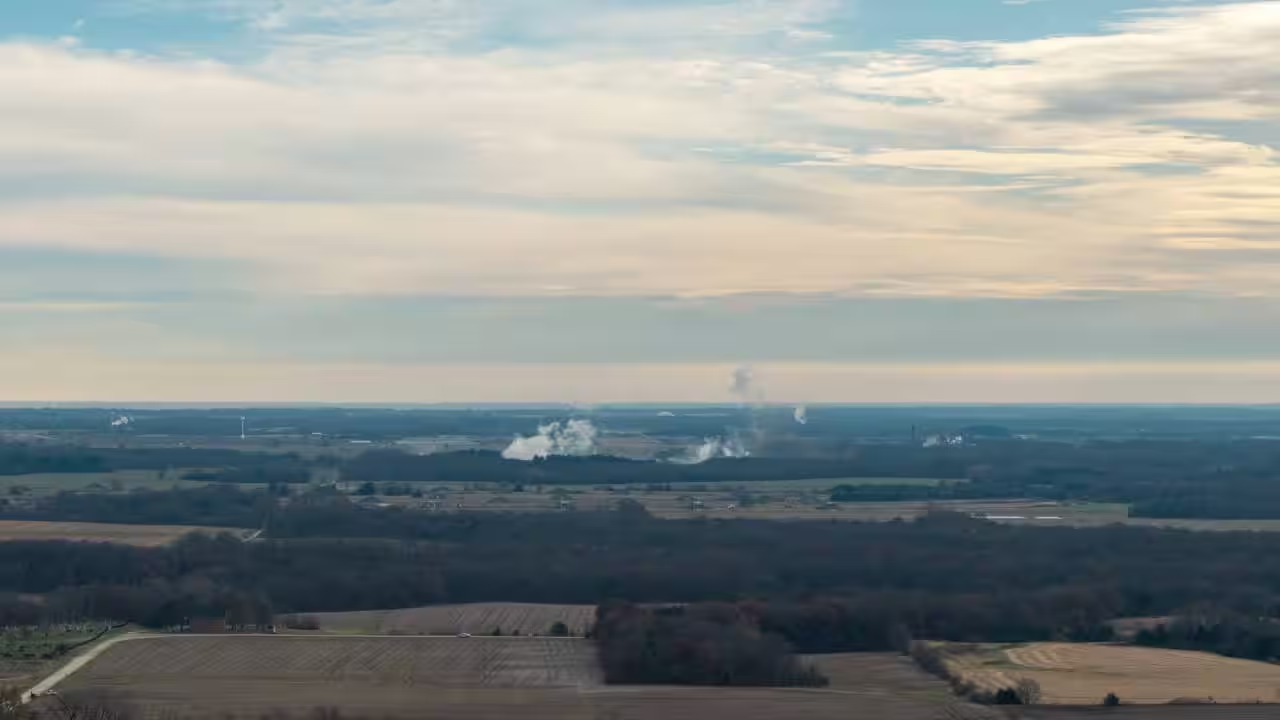
The US Army has detonated nearly five tonnes of ageing lead azide in Iowa, raising questions about the dangers of the highly sensitive explosive and the possible health and environmental effects of the blast. The operation took place near Middletown on Wednesday after months of public concern, legal challenges and repeated delays.The Army described the controlled explosion as a “huge success”, saying it had taken extensive precautions to limit the spread of lead dust. Initial monitoring has shown no elevated lead readings, according to the acting secretary of the Army. However, officials and residents say further testing is needed to determine whether the blast affected nearby homes, farmland and water sources.The stockpile had been stored for around 20 years and was deteriorating through a process known as recrystallisation. Officials feared the material could become increasingly sensitive to friction and movement, creating a risk of accidental detonation.What is lead azide?Lead azide is a highly sensitive chemical compound made up of lead and nitrogen. It typically appears as a white or colourless crystalline powder, or as needle-like crystals.According to the Associated Press, it has been used as an initiating explosive in munitions and detonators. Its purpose is to trigger larger explosives, including TNT.The compound is particularly sensitive to shock, heat, impact and friction. It can also explode when dry, making it hazardous to handle and store.Lead azide can become more unstable as it ages. Changes in temperature and time can cause it to form larger crystals that are more sensitive to disturbance. The Iowa stockpile had been crystallising, prompting concerns that it could detonate without warning.The US military stopped using lead azide in the 1980s because of its hazards.Why is lead azide dangerous to human health?The compound poses two distinct concerns: its explosive properties and the toxic lead it contains.Lead is a heavy metal that can harm the brain, nervous system, kidneys, heart and other organs. Exposure can also cause developmental damage. Children and pregnant women are particularly vulnerable, and no level of lead exposure is considered safe.This is why the Iowa detonation prompted concerns beyond the immediate blast. Officials and researchers are assessing whether lead dust could have spread into the air or settled on nearby land and water sources, potentially affecting residents, crops, cattle and wildlife.However, the possibility of contamination should not be confused with confirmed harm. Initial monitoring after the explosion has been described as promising, but further testing is needed to establish whether any lead was released into the surrounding environment.Why did the US Army detonate nearly five tonnes of lead azide?The stockpile had been stored for around 20 years and had deteriorated through recrystallisation. As the crystals changed, the material became more sensitive to accidental detonation caused by friction or movement.The Army faced a difficult choice: leave the unstable material in storage or carry out a controlled explosion under managed conditions.Plans for the detonation were postponed several times following objections from residents and legal challenges over possible health and environmental consequences. The Army warned locals about potential exposure to toxic lead dust and introduced an optional evacuation zone and a shelter-in-place advisory.On Monday, an appeals court overturned a decision to halt the blast. While acknowledging the concerns, the court concluded that the danger posed by an unplanned explosion was greater.What safety measures did the Army take?The Army said it put several precautions in place to reduce the risk of lead dust spreading beyond the blast zone.These included barriers around the explosion site to help contain the resulting plume and ballistic gels designed to absorb lead dust.The detonation took place shortly after 9am local time on Wednesday. Smoke was seen rising into the sky following the explosion.Adam Telle, acting secretary of the US Army, described the operation as a “HUGE success” in a social media post. He said the Army was closely monitoring the Environmental Protection Agency's network of sensors and that no readings had so far been recorded above 0.0.President Donald Trump also said reports showed the mitigation measures had “far exceeded expectations”.What are residents and officials saying after the explosion?Middletown Mayor Rodney Johnson told the BBC he felt “relieved” after the detonation. He watched the blast from his workplace at a manufacturing plant around eight miles away, while also monitoring a camera at his home, about a mile from the site.“We did not feel anything. We did not see anything,” Johnson said.Resident Sandy Mabeus, who lives around eight miles from the blast area, said her family shut the windows and garage, brought their outdoor cat inside and watched three live streams of the explosion.“We did not feel or hear a thing here,” she told the BBC. She added that the uncertainty in the lead-up to the operation had been difficult for people in the area and hoped the results would allow residents to move on.Farmer David Vandenberg, who lives around 20 miles from the site, said the Army Corps of Engineers had taken samples from his yard and pond on Tuesday. He heard a rumble at around 9am on Wednesday but did not see or smell anything.Vandenberg said he expected officials to return for further sampling and was encouraged that the blast appeared to have been contained. He told the BBC he thought the effects would be minimal.Iowa's incoming governor-elect, Rob Sand, however, said more testing was needed. He called for “immediate transparency” about the planning process, which he described as chaotic and unclear. He also said residents affected by the operation should receive full assistance without delay.Cameron Hamilton, administrator of the Federal Emergency Management Agency, said additional resources and testing would be available in the days and weeks after the explosion.Are there still concerns about lead contamination in Iowa?Yes. Although initial monitoring has been reassuring, officials and researchers are still assessing whether the detonation released lead dust or left contamination in surrounding areas.Further sampling is expected to help establish whether the blast had any impact on nearby residents, soil, water, crops, livestock or wildlife.For people living near Middletown, the explosion may be over, but the environmental questions surrounding the ageing lead azide stockpile have not yet been fully answered.You use AI every day. Now get your AI Quotient. Take the AIQ test.
Topics in this story
Gathered from external sources. Rights to this text belong to whoever originally published it.