RFK Jr. faces widespread rebuke over his anti-Arab remarks
Health Secretary Robert F. Kennedy Jr. faced widespread rebuke Tuesday over anti-Arab comments that the Council on American-Islamic Relations cast as “a textbook display of unvarnished racism and bigotry.”
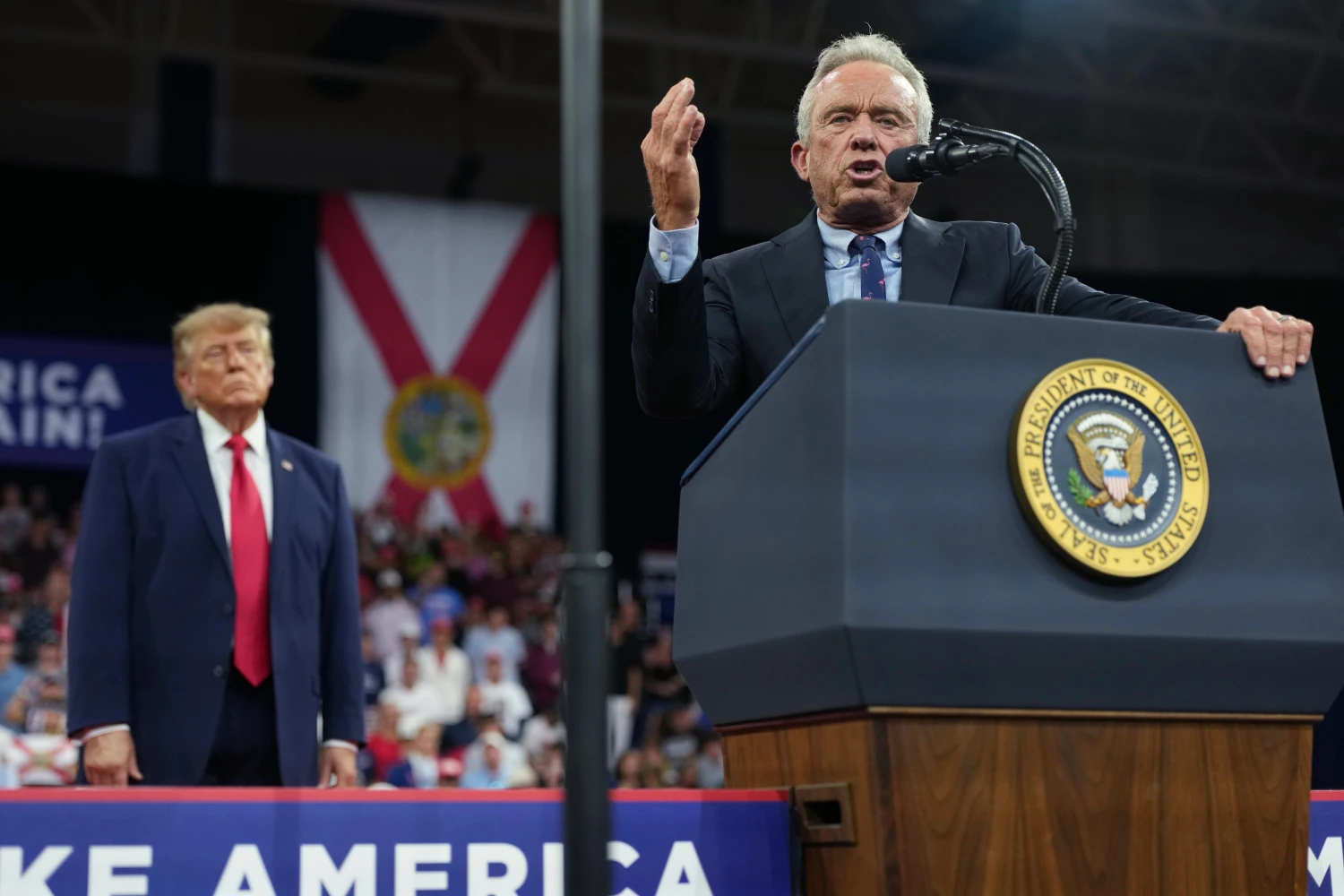
Health Secretary Robert F. Kennedy Jr. faced widespread rebuke from civil rights groups, health care advocates and Democrats on Tuesday over anti-Arab comments that the Council on American-Islamic Relations cast as “a textbook display of unvarnished racism and bigotry.” In his remarks Monday at a campaign event in Michigan where Republican Mike Rogers is running for the U.S. Senate against Democrat Abdul El-Sayed, Kennedy falsely claimed that Arabs had not won major international awards and “don’t produce” science and literature. “There’s 500 million Arabs in the world, and yet they don’t produce science, they don’t win the Nobel Prize, they don’t win the Fields prize, they don’t win the Wolf Prize, they don’t produce literature,” he said. Arabs have won all those prizes. Peter Hotez, who is a professor at the Baylor College of Medicine and specializes in vaccine development and tropical medicine, said his late colleague, Nobel Prize winner Ahmed Zewail, who was Arab and died in 2016, “would disagree” with Kennedy’s comments. The Department of Health and Human Services did not immediately respond to a request for comment. U.S. rights advocates have raised concerns over escalating rhetoric against Muslims, Arabs, immigrants and ethnic minorities by President Donald Trump and his allies during the ongoing midterm election campaign. “Robert F. Kennedy Jr.’s vile anti-Arab rant is a textbook display of unvarnished racism and bigotry,” the Council on American-Islamic Relations, which documents hate against Muslims and Arabs in the U.S., said Tuesday. “His sweeping erasure of Arab contributions to humanity is not only maliciously false, but it also fans the flames of anti-Arab and anti-Muslim hate at a time when communities are already vulnerable to bigoted attacks from other public officials nationwide.” Kennedy said the rise of the Muslim Brotherhood, one of the Arab world’s oldest and most influential Islamist groups founded almost a century ago, had “created stagnant societies.” Republicans have claimed, without evidence, that El-Sayed has ties to the Muslim Brotherhood even as the Democrat has publicly disavowed the group and denied any connection to it. El-Sayed, a medical doctor and former public health official who would be the first Muslim U.S. senator if elected, has faced a host of anti-Muslim attacks during the campaign. Over the weekend, Trump invoked the Sept. 11, 2001, attacks when speaking about El-Sayed, whom he has also repeatedly and falsely called a “jihadist.” A spokesperson for El-Sayed’s campaign on Tuesday accused Kennedy of making racially charged comments in an attempt to influence voters. “It’s rich to have an anti-scientist come to Michigan to lecture a doctor with two doctoral degrees who has spent his entire career working on public health,” said Cole Wozniak, the spokesperson. Senator Chris Murphy, D-Conn., also criticized Kennedy’s comments. “I really think everyone needs to pay attention to this coordinated campaign to delegitimize Muslim Americans — not just as citizens but as humans,” he said in a post on X. The U.S. health care advocacy organization and nonprofit Protect Our Care cast Kennedy’s comments as a “wildly racist tirade.” Kennedy, who has pushed his anti-vaccine views in his role as the top health official, was also in Michigan on Monday to promote funding for Detroit’s health department and touted agreements with hospitals to offer healthier food.
Topics in this story
Gathered from external sources. Rights to this text belong to whoever originally published it.