‘Faster, heavier and more painful’: Iran warns US as sanctions squeeze economy
Middle East News: Iran is stepping up efforts to tackle mounting economic problems caused by US sanctions and an oil blockade, while Parliament Speaker Mohammad Baqer Q.
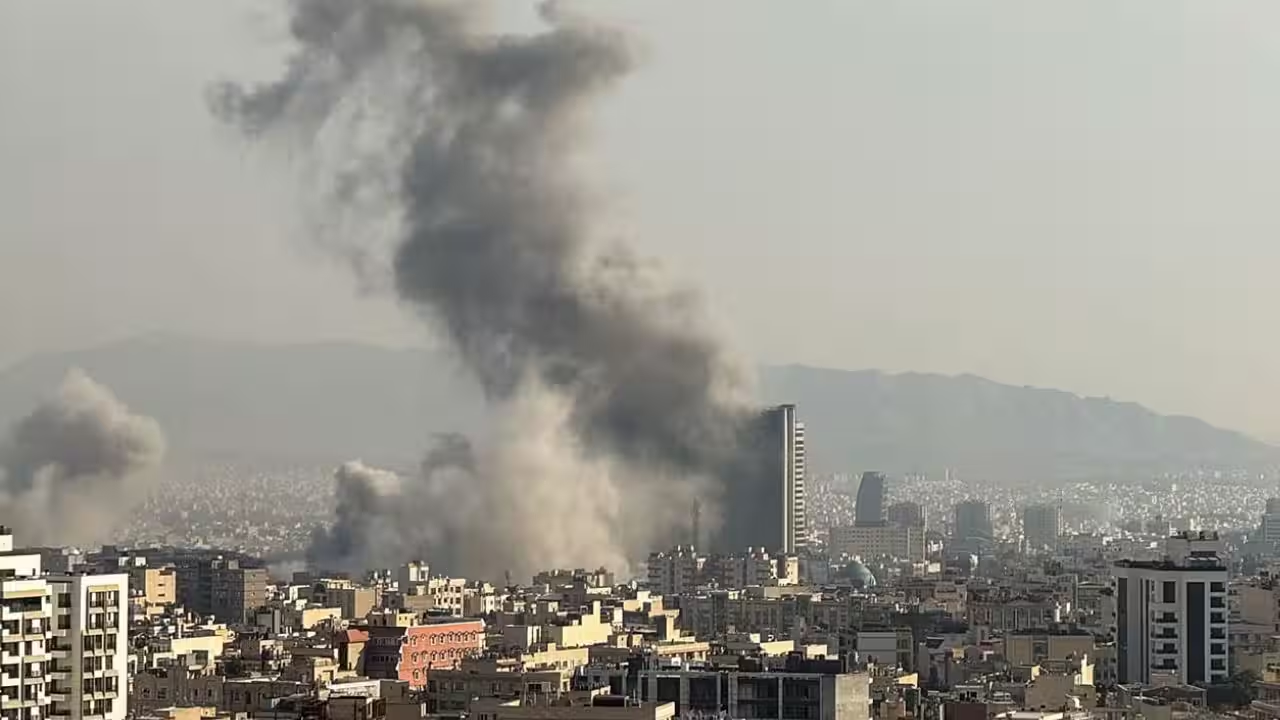
Iran is stepping up efforts to tackle mounting economic problems caused by US sanctions and an oil blockade, while Parliament Speaker Mohammad Baqer Qalibaf has warned that any further attacks will trigger a “faster, heavier and more painful” response.The warning came after US Central Command said it struck three Iranian vessels on Saturday, following the Islamic Revolutionary Guard Corps' launch of ballistic missiles at two US Navy ships.The latest escalation comes six months after US and Israeli strikes against Iran. A preliminary ceasefire reached in June has unravelled, while diplomatic efforts to revive negotiations have made little progress.Following the latest strikes, Qalibaf said the United States needed to understand that the rules of the conflict had changed “before it is too late”."From now on, any attack against Iran’s interests and security will receive a faster, heavier and more painful response,” he said in a speech published on his Telegram channel.Iran has demonstrated that it retains the ability to target US interests in neighbouring countries and disrupt oil shipments through the Strait of Hormuz, a critical waterway through which roughly a fifth of global oil supplies flowed before the conflict.Iran opens economic frontWhile military tensions remain high, Iranian officials say the country's economic challenges have become an equally urgent front.Qalibaf said Iran's main battle alongside the military conflict was now focused on production and people's livelihoods. He pointed to currency volatility, inflation, unemployment and market management as major challenges.He said Iranians could tolerate hardship but not mismanagement or inaction, calling for swift government measures.Iranian Economy Minister Ali Madanizadeh said Tehran would respond to US economic pressure through domestic reforms and rejected the idea that sanctions would force Iran to change its policies.“They speak of economic pressure and isolation, of breaking off financial ties and they think that by pressuring the economy of a country they can change the decisions of its people,” Madanizadeh said.“I have to clarify one point: the responsibility of reforming Iran’s economy is with its government and people, not with the U.S. Treasury."Separately, Economy Ministry deputy Morteza Zamanian said the ministry's “Economic War Headquarters” was intensifying efforts to address problems linked to the war, according to semi-official Tasnim news agency.Oil exports remain under pressureIran is the third-largest producer in OPEC and had been exporting about 90% of its crude through the Kharg Island oil terminal before the war.Those flows have been disrupted since the United States began blocking Iranian oil exports in mid-April.US Central Command said on Sunday that, as of September 6, it had redirected 92 commercial vessels, disabled three and boarded two as part of efforts to enforce the blockade.Iranian Oil Minister Mohsen Paknejad said Kharg Island had been hit around 550 times in previous months but remained operational.The comments came after US President Donald Trump on August 31 posted an AI-generated video depicting Kharg Island being "blown to smithereens". Iranian authorities have warned of a strong response if the island is attacked.US says oil still moving through HormuzIran's blockade of the Strait of Hormuz has also raised concerns over global energy supplies and fuel prices.US Energy Secretary Chris Wright said oil was continuing to pass through the strategic waterway, despite the disruption."Our transits through the Strait are averaging over 9 million barrels a day now, and with the access pipelines that go around the Strait, we're probably two thirds or more of pre-conflict flows. So Iranians are still causing trouble, but the United States Navy is winning that battle," he told CNN.The US military said its Saturday strikes on three Iranian vessels followed ballistic missile launches by the IRGC against two US Navy ships.The IRGC subsequently threatened intensified attacks against US military vessels and later claimed it had targeted the three tankers as well as three US-linked vessels elsewhere.Tasnim reported that four US missiles had struck a tanker near Kharg's anchorage, citing local sources who said there were no casualties and that the crew was being evacuated.Central Command said no American personnel were harmed.Tasnim also reported on Sunday that the IRGC had shot down a US surveillance balloon over Erbil in northern Iraq, describing the incident as part of a broader effort to eliminate US aerial surveillance and early-warning systems in the region.The latest exchanges underscore the widening pressure on Iran, with military confrontation and economic disruption continuing in parallel despite attempts to revive a diplomatic process.Catch the latest World News and Live updates. Download the TOI app.
Topics in this story
Gathered from external sources. Rights to this text belong to whoever originally published it.