Disarm Hezbollah, but don’t let it cash in on Lebanon’s reconstruction
While Washington is right to make disarmament a prerequisite, it is wrong to make it the only one.
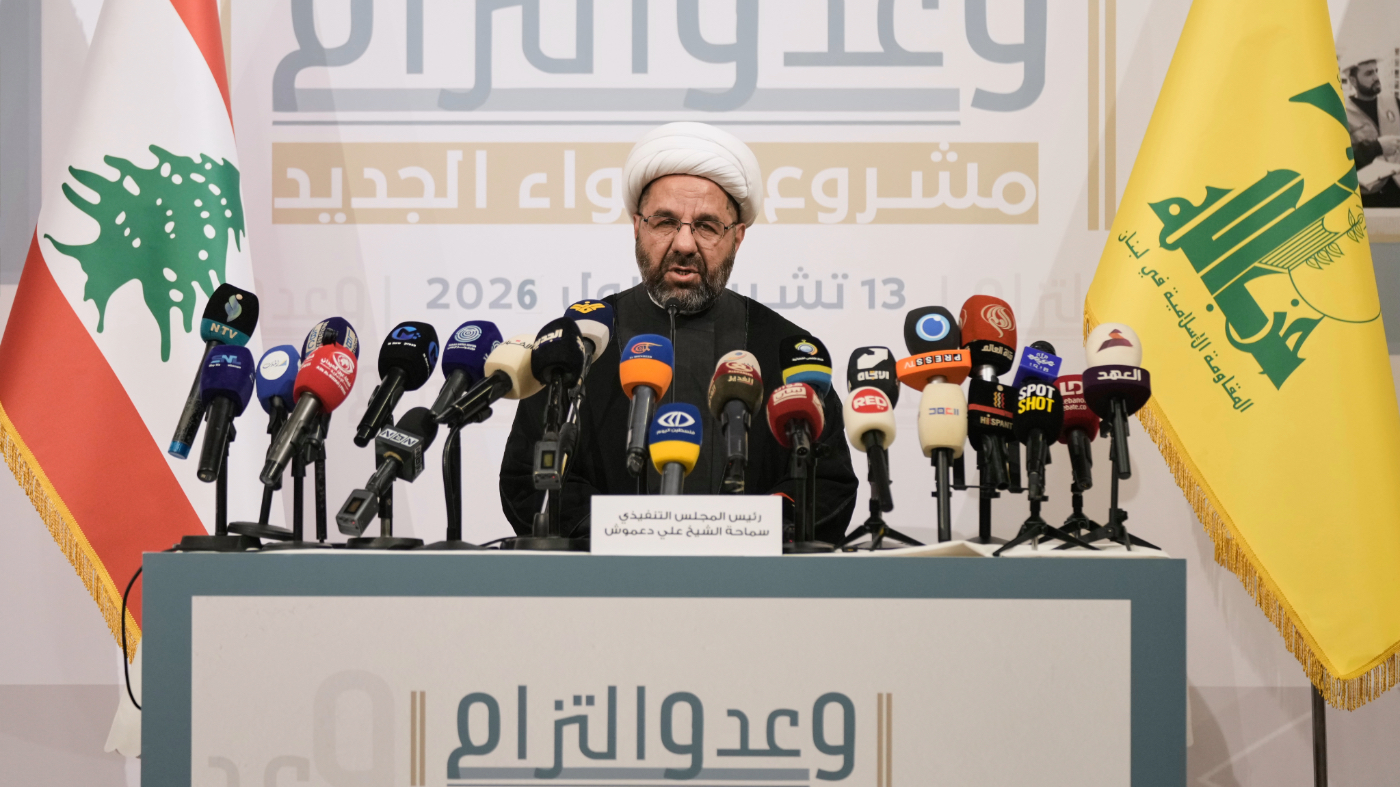
Last month, the State Department set out the terms on which Lebanon can expect help rebuilding after two wars with Israel. “Billions of dollars can be injected into Lebanon,” said spokesperson Tommy Pigott, “but only after Hezbollah’s disarmament.”
While Washington is right to make disarmament a prerequisite, it is wrong to make it the only one.
Lebanon needs the money. Prime Minister Nawaf Salam has told parliament that losses from Israel’s wars since 2023 could exceed $27 billion, and the World Bank expects the economy to shrink 6.4 percent this year. Visiting the bombed-out city of Nabatiyeh on Oct. 2, Salam conceded that rebuilding the south is beyond the state’s means.
But recovery relies on three settlements: First, Hezbollah’s weapons; second, who absorbs the roughly $70 billion in losses from the 2019 banking collapse; and third, who controls the reconstruction money. American terms only address the first of the three. The other two will determine whether aid rebuilds the Lebanese state or sustains the patronage networks that hollowed it out.
Seven years after the crash, Lebanon still has no functioning credit system. The gap law , which would divide the losses among the state, the central bank, commercial banks and depositors, has stalled in a parliament that extended its own term to 2028. The International Monetary Fund has made the law — along with a 2027 budget and medium-term fiscal plan — a condition for any new program.
Creative stopgaps like the Salim Khalil mechanism , which routes legitimate dollar transactions through regulated institutions and has held the Lebanese pound to near 89,500 to the dollar since 2023, buy time. They do not substitute for reform.
Without working banks, reconstruction runs on cash. Families in the South of Lebanon will rebuild with grants and not mortgages or insurance payouts — and whoever hands these out collects the political credit.
After the 2024 war, Hezbollah’s construction arm, Jihad al-Binaa, paid an estimated $400 million to affected families, more than the World Bank’s $250 million emergency loan . Since August 2025, the state has channeled about $132 million through the Council for South Lebanon, a body exempt from prior audit and closely tied to Parliament Speaker Nabih Berri’s Amal movement, Hezbollah’s ally.
Lebanon has been here before. After the civil war, the state borrowed heavily to rebuild, while former warlords, amnestied and back in government, divided contracts and public jobs among their followers. Lebanese banks financed the state’s debt with depositors’ money and, by early 2020, held $12.7 billion of the roughly $30 billion in outstanding Eurobonds. When dollar inflows dried up in March 2020, the state defaulted on its debt, turning the banks’ losses into the depositors’ losses — which the gap law must now address.
A deal that trades Hezbollah’s heavy weapons for Gulf money, while leaving the banks unresolved and the cash economy intact, would repeat that mistake. Hezbollah might lose its arsenal but keep its financial networks, including the unlicensed lender al-Qard al-Hassan that is vital to its community and influence.
The disarmament track is itself fragile. Under the June 26 U.S.-brokered framework , the Lebanese army has to clear weapons from “pilot zones” while Israel withdraws. Fewer than 10 percent of residents had returned to Zawtar al-Gharbiyeh, the first zone, by August. Israel is threatening a new campaign over reports that Hezbollah is rearming, and United Nations peacekeepers begin withdrawing after Dec. 31. If reconstruction waits until full disarmament, the South may suffer for years, and Hezbollah will fill the vacuum.
As the World Bank’s largest shareholder and the Lebanese army’s main donor , the U.S. has the leverage to do better. Congress, which funds that army and oversees the U.S. vote at the World Bank, can write that leverage into appropriations. Three changes would help.
First, add financial benchmarks to the security benchmarks. Large-scale reconstruction funds should be contingent on the passage of an International Monetary Fund-approved gap law, as well as on verified disarmament. That would put the cost of delay on the parliamentary blocs causing it.
Second, separate emergency recovery from disarmament. Shelter, water networks and hospitals cannot wait for verification teams. If the Lebanese state does not deliver them this winter, Jihad al-Binaa will.
Third, insist that any reconstruction funds flow through accountable state channels — a public damage registry, direct applications from households, electronic tenders and a single verification body for all donors. Salam has made a start here, with 23 public tenders for debris removal, roads and hospital equipment in Nabatiyeh.
Lebanon has its most reform-minded leadership in decades, and Hezbollah is currently debilitated. This creates a real but narrow opening.
Lebanon’s friends in Washington and elsewhere should not make disarmament, however critical, the only demand of a political system still captured by entrenched interests. Otherwise, Lebanon may see calm on its border and some reconstruction, while the losses of 2019 go unresolved and a sprawling cash economy enables Hezbollah’s regeneration. That would be another reconstruction of the old order, financed this time by Gulf grants instead of Eurobonds.
Patricia Karam is a non-resident fellow at the Arab Center Washington DC and a senior advisor at the Middle East Institute. She previously served as vice president of policy at the American Task Force on Lebanon.
Topics in this story
Gathered from external sources. Rights to this text belong to whoever originally published it.