Syrian authorities arrest main suspect in 2013 Baniyas mass killings
Ali Kayali, also known as Mihrac Ural, was apprehended as he tried to cross the border, state media reported.
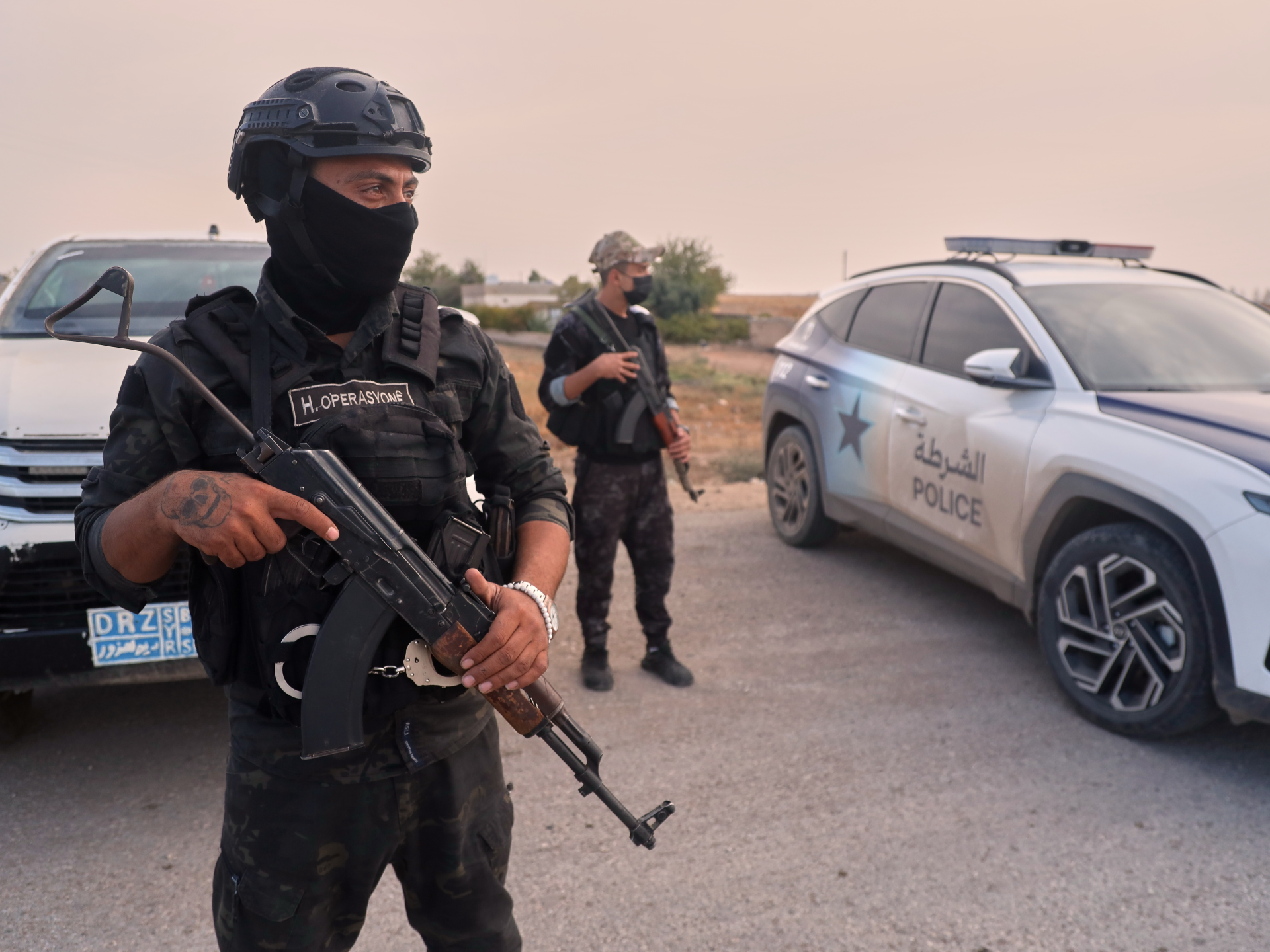
Syrian authorities have arrested a suspect accused of involvement in the mass killing of civilians in the coastal city of Baniyas in 2013, according to state media.
Intelligence officials apprehended Ali Kayali, also known as Mihrac Ural, “while he was attempting to flee across the border”, state news agency SANA reported on Thursday. It did not say which country he was trying to flee to.
Kayali has long been suspected of playing a leading role in the killing of mostly Sunni civilians in the villages of Bayda and Ras al-Nabaa in the Baniyas region of western Syria in 2013.
At the time, he led an armed group loyal to then-President Bashar al-Assad.
At least 264 civilians, including 36 children and 28 women, were killed in the massacre at Bayda, whereas 195 people, including 56 children, were killed in Ras al-Nabaa by Kayali’s militia, according to figures from the Syrian Network for Human Rights (SNHR), quoted by SANA.
Human Rights Watch in 2013 described the killings as “one of the deadliest instances of mass executions in Syria’s increasingly bloody conflict”.
Militias affiliated with Kayali are also accused of committing massacres in the Latakia, Aleppo and Idlib countrysides, leaving hundreds of people dead or wounded.
Turkiye’s state-run Anadolu news agency reported that Kayali is also the main suspect in the 2013 twin bombings in the Turkish border town of Reyhanli, in which at least 52 people were killed.
Named Mihrac Ural at birth in 1956 in Hatay, Turkiye, Kayali fled to Syria in 1982. SANA said he is married to Malak al-Fadel from the country’s Alawite community, a religious minority to which former leader al-Assad belongs.
Earlier this month, Kayali’s deputy Jamal Tarabulsi was arrested by Syrian security forces, as authorities intensify efforts to capture former regime officials and militia commanders accused of crimes against civilians during the country’s civil war.
Syria’s war began with pro-democracy protests in 2011, and quickly morphed into a complex armed conflict that drew in paramilitary forces, armed groups and foreign powers.
In a multiconfessional country, the war took on a sectarian nature, with the killings in Baniyas and Bayda often seen as a starting point of that shift.
It ended with the ousting of al-Assad in 2024 by a rebel group that took power in a lightning offensive.
Topics in this story
Gathered from external sources. Rights to this text belong to whoever originally published it.