Leonardo DiCaprio joins fight with fewer than 1,000 individuals trying to save a critically endangered Chilean frog from a power project involving 72 towers
Actor and environmental activist Leonardo DiCaprio has joined conservationists in raising concerns over a power transmission project in Chile that could
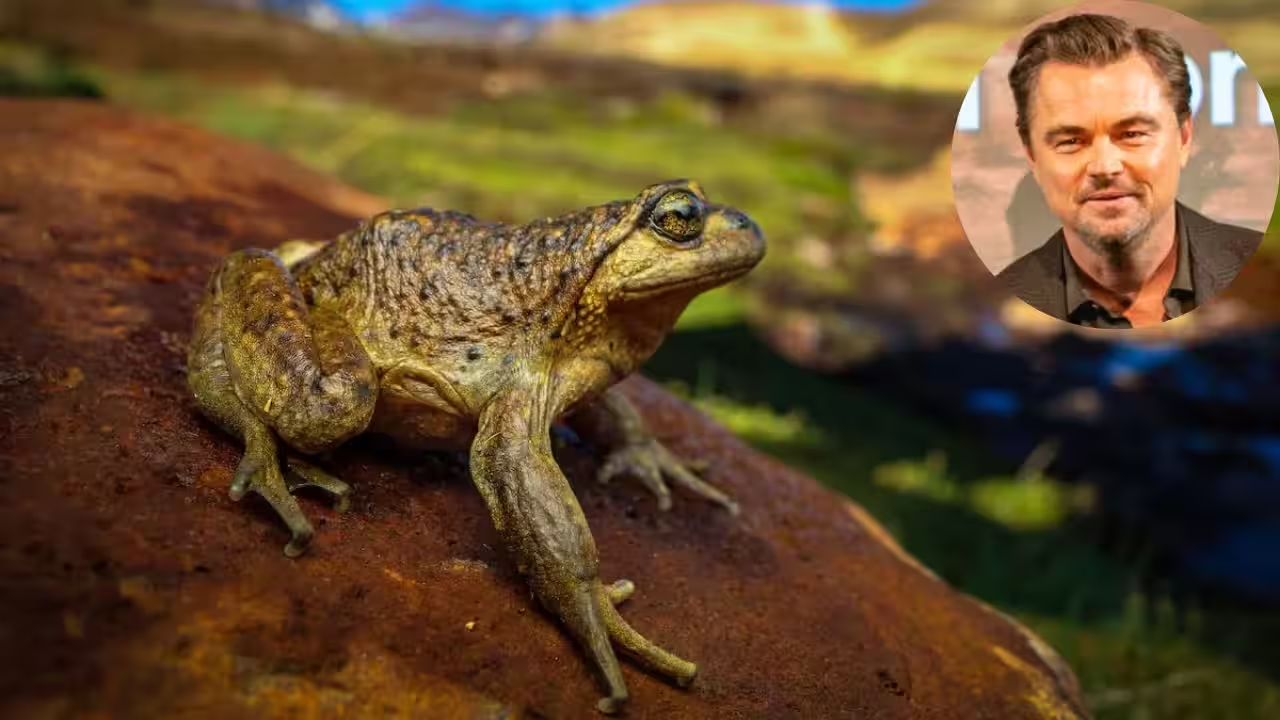
Actor and environmental activist Leonardo DiCaprio has joined conservationists in raising concerns over a power transmission project in Chile that could threaten the survival of a critically endangered frog. Fewer than 1,000 Pehuenche spiny frogs are believed to remain in the wild, with the species confined to a small area of the Andes. The proposed electricity link between Chile and Argentina includes dozens of high-voltage towers planned across the frog’s known habitat. The project got rejected by an environmental commission citing protected natural areas and nature tourism.Leonardo DiCaprio raises alarm over Chilean frog and power projectDiCaprio brought international attention to the issue through an Instagram post in which he shared photographs of the Pehuenche frog and its natural surroundings. According to EL PAÍS, the actor warned that Chile could approve a plan that would destroy the heart of the species' only known habitat.He also tagged the Chilean Herpetological Network, drawing attention to the concerns that conservationists had been raising for years. His intervention came as the project approached an important stage in Chile's environmental approval process.However, DiCaprio clarified that the campaign was not calling for the entire electricity project to be abandoned. Instead, he supported finding an alternative route that would allow the transmission line to be built without putting the frog at greater risk.The Pehuenche frog survives in a restricted mountain habitatThe Pehuenche spiny frog, scientifically known as Alsodes pehuenche, is found in the high Andes along the Chile-Argentina border. Its known habitat includes the Alto Maule region and the Pehuenche Valley in central Chile.According to EL PAÍS, the species lives in small streams and wetlands supplied by melting snow and glaciers. These habitats are located at elevations above 2,000 metres, making the frog particularly dependent on the conditions of its mountain environment.The species was classified as critically endangered in 2018 and has not recovered from that status. Biologist Claudio Azat, director of the One Health Institute and co-chair of the International Union for Conservation of Nature's amphibian specialist group, told EL PAÍS that its population is estimated at around 1,000 individuals.The frog also has some unusual physical characteristics. During the breeding season, males develop patches of gelatinous spines on their chests and fingers. Their forearms become enlarged, helping them hold onto females during mating. This feature has earned the amphibian the nickname Popeye frog.Its limited distribution makes the species especially vulnerable to changes in its surroundings. Unlike animals that can move to other suitable habitats when their environment is disturbed, the Pehuenche frog has very few places where it can survive.The 72-tower transmission plan has raised environmental concernsThe proposed Los Cóndores-Río Diamante project is being developed by Enel Generación Chile. It is designed to connect the electricity systems of Chile and Argentina through a 500-kilovolt transmission line.According to EL PAÍS, the Chilean section of the project includes a 26.6-kilometre overhead transmission line and 72 high-voltage towers. Conservationists have raised concerns because the planned infrastructure would pass directly through the Pehuenche frog's habitat.The development has been under consideration for nearly 5 years. Its construction would also require supporting infrastructure, including access roads, construction camps and helipads, which could affect the surrounding landscape.El Ciudadano reported that local residents, scientists and environmental campaigners fear these activities could damage the natural environment of Alto Maule. The region is also valued for scientific research, nature tourism and conservation efforts.The proposed route has become a source of concern beyond the survival of one amphibian. Residents and campaigners believe the development could affect the area's wider ecological value and its potential to become a UNESCO-recognised Geopark.Chile's environmental review has stalled the electricity projectDiCaprio's intervention came shortly before a scheduled decision by Chile's Environmental Assessment Commission. The Environmental Assessment Service had recommended approval, but the commission's planned meeting on 10 August 2026 was suspended.The situation subsequently moved beyond a temporary postponement. According to Latin American Post, the Maule Environmental Evaluation Commission rejected the project on 20 August, citing concerns involving biodiversity and tourism.The dispute highlights the challenge of balancing energy needs and conservationThe transmission project was designed to improve electricity connections between Chile and Argentina. The proposed link could help Chile move surplus solar electricity and provide access to electricity generated in Argentina, particularly during periods of changing demand.The two countries have different energy resources and requirements. Chile produces substantial solar power during daylight hours, while Argentina has natural gas reserves and power plants that could help supply electricity at other times. Claudio Azat recalled DiCaprio’s earlier support in 2019 for efforts to protect the Loa frog in Chile.You use AI every day. Now get your AI Quotient. Take the AIQ test.
Topics in this story
Gathered from external sources. Rights to this text belong to whoever originally published it.